
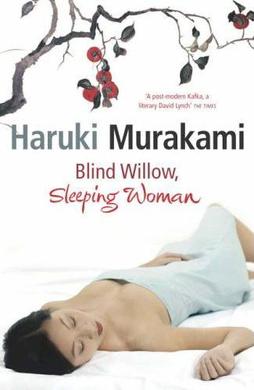
Blind Willow, Sleeping Woman is the fourth collection of short stories by renowned author Haruki Murakami. First released (surprisingly) in English in 2006 (4 years after the release of his previous collection After the Quake), it later received a Japanese edition in 2009. For the most part, the short stories are split evenly between two translators: Philip Gabriel and frequent Murakami translator Jay Rubin.
Running at a generous 362 pages, this novel is Murakami’s biggest and most impressive collection yet, containing 24 stories spanning from the years 1980 to 2005, which were originally published in literary magazines and periodicals such as Harper’s, Granta, McSweeney’s, and The New Yorker; several of which allude to or are incorporated into his later long-form novels.
Although he has currently published 5 short story collections as of 2019 – his latest one, Men Without Women, was published in English in 2017 – this book is, in my opinion, one of the best examples of Murakami’s incredible and broad range. Filling the pages are stories of love, loss, dreams, alternate realities, and sometimes absurdity – everything is top-notch here and really demonstrates his writing capability and talent. A reason for this may be because Blind Willow, unlike his other collections, doesn’t focus on one particular theme (i.e Men Without Women is mainly about men who have ‘lost’ women) and thus the full extent of his range is able to shine through.
Despite the length of this one, it is a great introduction to the master and his storytelling; if you are someone who prefers reading short stories over feature-length novels, I highly recommend it.
 The Art Archive