
In recent years, there have been no type of anime fans quite as envied as the figure collectors. It’s a unique phenomenon that really only caters to fans of Japanese-made media – after all, in the West, what comes to mind when figures are mentioned can be boiled down to only two categories: Either those hyper-realistic figures that you find at your local comic book shop, or… Funko Pops. In Japan, however, your options are nearly endless: classic full-body figurines, actual dolls, nendoroids (smaller ‘chibi’ figures), figmas (pose-able figures), plastic models, garage kits, and more. So big is the market for these figures in Japan (and other countries in Asia), that you can even try your luck at winning figures for just a few tokens at a claw machine game – and thanks to English-language sites like AmiAmi, Tokyo Otaku Mode, and HobbyLink Japan just to name a few, purchasing these straight from the source has become even easier for Western fans. Needless to say, it’s become an endearing hobby for many across the globe, with some collectors even buying tall glass cases to display their items, as your grandma might do with her ceramic statues. And you may scoff, but they have good reason to do this.
Continue reading “Hatsune Miku: A Tale of Two Bootlegs”Author: N.
Hi. I write sometimes.
Started 1/4/2017
Yukikaze: A Troubled Masterpiece (Part 3)

Alright, last part, I promise! Now that I’ve covered the most well-known adaptation of Yukikaze by far, let’s move on to a few lesser-known and obscure attempts to recreate the series. To begin, let’s start with something actually worth looking into.
Continue reading “Yukikaze: A Troubled Masterpiece (Part 3)”Yukikaze: A Troubled Masterpiece (Part 2)

Well, I didn’t expect to finish a two-part analysis this quickly, but here we are. In the first part, I mainly went over the history of this franchise, and why the original source material not getting the proper attention it deserves has had lasting consequences. I’ll admit, I wanted to get this analysis done in one piece, but given all that I’ve got to say about these adaptations… that would be impossible. So, let’s take a look at the many adaptations of Yukikaze and how well they hold up in comparison to the novels… or don’t.
Continue reading “Yukikaze: A Troubled Masterpiece (Part 2)”Yukikaze: A Troubled Masterpiece (Part 1)
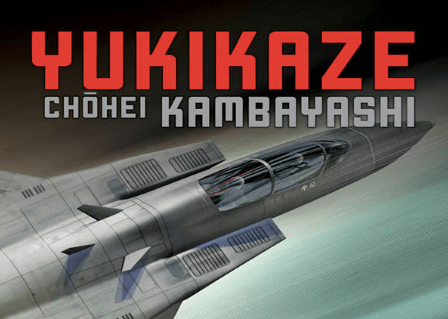
A franchise is a fickle thing. Not every piece of standalone media can become a franchise, and not every franchise can become successful – depending on what your measure of success is, of course – and when it comes to Japanese-produced media, this measure of success is no more apparent when comparing how well it is received in its home country and in overseas territories. To me, no other franchise encapsulates this sort of dichotomy better than Yukikaze, a multi-media series that started out as monthly chapters published in a science-fiction magazine and has since branched out into several different adaptations – none of which have really been that well-received outside of Japan and all of which have problems that hinder whatever possible success they might’ve had. But let’s put in a pin in that for a minute, since you’re probably scratching your head and wondering what the hell a “Yukikaze” is. Let’s get into that.
Continue reading “Yukikaze: A Troubled Masterpiece (Part 1)”A Tribute to Kentaro Miura

( Hey, it’s been a while. Long story short, life has been incredibly busy as of late. But when I heard the news, I knew I wouldn’t be able to move past it unless I paid my proper respects. )
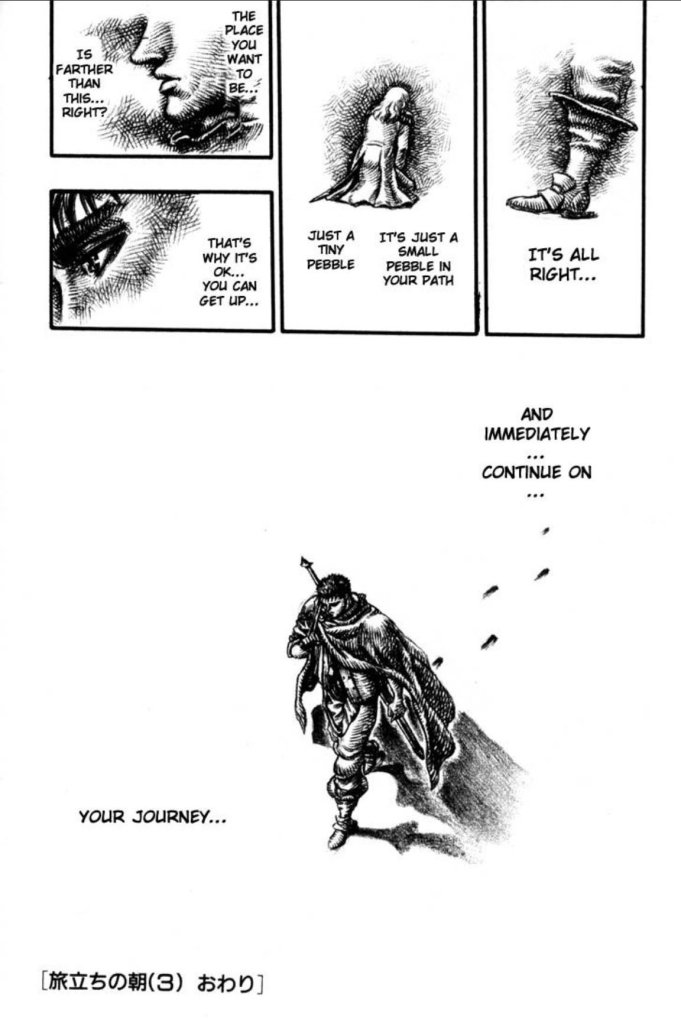
It would be an understatement to say that the animanga community was rocked to their core when it was reported that the creator of Berserk, Kentaro Miura, had passed away on May 6, 2021. He was only 54 years old, leaving his world-renowned masterpiece and life’s work unfinished. But it is not my (or anybody else’s, really) place to speculate on what will happen to Berserk now, if it is to be continued. For now, both fans and non-fans alike are taking the time to reflect on the impact of Miura’s magnum opus and how it has changed their lives.
Though the average non-fan who reads the basic plot summary of Berserk would likely think of it as nothing new, it is undeniable that this manga has had a lasting and far-reaching impact. Video games like Dynasty Warriors and the entirety of the Dark Souls franchise would not have existed without its influence; neither would have the Buster Sword belonging to Final Fantasy VII‘s Cloud Strife or the ‘Dark Knight’ questline and job in Final Fantasy XIV. Miura’s influence on this particular aspect of the game was clear enough for hundreds of Dark Knight players across several different servers to hold vigils in his memory.
Miura’s untimely passing reflected a common but unfortunate issue seen not only amongst the Berserk community but across anime and manga productions: Hiatuses and silence. Miura’s tendencies to take longer and longer hiatuses had sadly become a recurrent trend, and his (or his publisher’s) silence regarding why this was the case led to a lot of speculation, inside jokes, and even frustration at the manga’s slow time to update, with sometimes only one or two new chapters being published per year. With his passing, fans and non-fans alike once again received an important reminder: Though we may never know the specifics of Miura’s many breaks, given the back-breaking standards of manga creation, taking breaks is necessary, and taking out frustration onto a creator who may have already been suffering was never the way to go.
But ultimately, fans won’t remember Berserk‘for all those times it didn’t update or how slow it was to get them. While it’s impact was felt on a wider level through video games, manga, and even heavy metal bands, Berserk is a manga whose themes, characters, and stories have changed the lives of thousands around the world, and have taught them many lessons along the way. It may be known as a manga with emphasis on violence and other heavy subject matters, but it will always be remembered as a manga that taught us that there is always a glimmer of hope as long as we have the will to carry onwards towards a brighter future. When I bought the Official Berserk Guidebook back in 2018, Miura’s many comments throughout and final interview made a lasting impression on my wordview as a Berserk fan and as an artist – he was a man who, even after decades of work, held on to his passion for his greatest work and the medium of art as a whole, and who encouraged others to pursue those passions as well, even it was difficult at times. That is the lesson we should all take to heart.
Thank you Kentaro Miura.
Movie Review: Wonder Woman 1984 (2020)

When the DCEU’s first iteration of Wonder Woman was released 2017, for many, including myself, it was considered the first good (if not fairly decent) DCEU film adaptation of a classic superhero – and not only a classic superhero, but one that inspired generations of women and girls. Of course, a sequel was inevitable, and, after three long years and a global pandemic, it was finally released. So, how does it hold up?
Continue reading “Movie Review: Wonder Woman 1984 (2020)”Analysis: ‘Macross’ & Idol Culture: 38 Years Strong (Part 2)

Thanks for tuning in again! Previously, we discussed the influences and impacts of Macross and the Japanese music scene in the good ol’ 80s and 90s. Finishing off with Macross 7 in 1994, we entered the new millenium with the announcement of a new entry to franchise: Macross Zero, the ultimate prequel to the entire series. How would Zero distinguish itself, music-wise?
Continue reading “Analysis: ‘Macross’ & Idol Culture: 38 Years Strong (Part 2)”Analysis: ‘Macross’ & Idol Culture: 38 Years Strong (Part 1)

Macross. It doesn’t require an introduction. From the airing of its first series in 1982, the Macross franchise has seen very few roadblocks – if the countless sequels, prequels, and spin-offs haven’t already made that obvious. Despite the near infinite franchises in the world of anime that have seen their popularity crash and burn, Macross is one of the few that has managed to stay relevant in the current animanga landscape, and every new entry to the franchise only seems to garner more new fans than the last. But why though?
Movie Review: The Trial of the Chicago 7 (2020)

I’ll admit: I’m a fan of courtroom drama. The theatricals, the stakes, the tension… what’s not to love? There’s something about courtroom scenes in films and other media that really get me on the edge of my seat. However, it is rare that I watch a film (or other piece of media) where the main premise, cliffhanger, and selling point is courtroom drama. Especially when it involves a real-life story that I knew very little about… until now. I’ve watched plenty of great courtroom scenes (acted or otherwise) before: Can Aaron Sorkin’s latest film somehow surpass my expectations?
For the uninitiated: The Trial of the Chicago 7 is, as you can probably already tell, based on a true story. Beginning in 1969 and ending in 1970, the film follows the more-than-100 days long trial of eight (it is lowered to seven later, you’ll see) defendants, each belonging to a different societal or cultural movement, who have all been charged with conspiracy, inciting to riot, and several other misdemeanors regarding the 1968 anti-Vietnam War protests during that year’s Democratic National Convention. A seemingly innocuous trial of eight protestors unfolds, becoming one of America’s most publicized and controversial trials.
First things first: I was blown away by the sheer amount of talent displayed in this film – by talent, I mean both the actors that are displayed and the acting abilities that are shown. I knew little about the cast beforehand, so I was happily surprised when I saw the amount of very recognizable actors casted: Most notably, Sacha Baron Cohen as hippie Abbie Hoffman, Eddie Redmayne as student leader Tom Hayden, and Joseph Gordon-Levitt as prosecutor Richard Schultz, amongst others. But don’t be fooled, these guys aren’t just around for recognition. Every major player is casted and played with pinpoint precision, so much so that you can almost see how this all played out in real-time. Hoffman (Baron Cohen), despite acting like an ostensibly ridiculous, careless hippie, is still given his moments of subtlety, while Schultz (Gordon-Levitt) and opposition prosecutor Kunstler (Mark Rylance) both skillfully play the role of government-servers caught between loyalty and justice with nuance. In short, every actor gives it their all, and by the end you’ll likely be left with many unique perspectives.
Of course, good performances ultimately mean nothing without good writing, and that’s where Aaron Sorkin comes in. Having learned that he’d begun working on the script more than a decade ago in 2007, I’m not surprised by how well the dialogue is written: It’s quippy when it has to be, serious when it has to be, and captures the personalities of every person involved with cleverness and wit. And I believe that it is this writing that managed to make a more than 2-hour long film that takes place almost entirely in a single courtroom pass by all the more quickly.
In conclusion, The Trial of the Chicago 7 may not have the most exciting premise for most people, it is still a well-acted, well-shot, and well-written piece of work that puts a much-needed spotlight on an important cultural and societal event in the history of American protests, 60s movements, and the quest for justice – the last of which is sorely needed today more than ever.
Final score: 10/10
Movie Review: Tenet (2020)

Having seen Inception, and enjoyed it, it would be a lie to say I didn’t have high hopes for Tenet. After all, I enjoyed Dunkirk, Nolan’s prior film, when I saw it three years ago as well. Though I knew little of the plot of this film preceding my viewing of it, what I did know – entropy, time travel, and high stakes – seemed promising, and if anything, it looked to be Nolan’s most ambitious idea put to film yet, and that’s not a statement to be taken lightly. So, what did I think?
The plot is set into motion when the film’s main character, known only as ‘The Protagonist’ (John David Washington), is employed by a top-secret organization known as ‘Tenet’, who are using “inverted” entropy to prevent the outbreak of a possible World War III. After our protagonist tests a couple of ‘inverted’ bullets, he learns that said bullets were inverted by an infamous Russian arms dealer named Sator. To this end, he teams up with Neil (Robert Pattinson) to try and uncover the truth behind Sator’s operation and ensure the future of the human race once and for all.
First things first, I was pleasantly surprised by Washington’s performance, given that he definitely wasn’t as well-known compared to his co-stars. Though his character has no name or even any real backstory, Washington still delivers a great performance of charismatic character that we can all root for. Not to be outdone, Pattinson plays Neil with an undoubtedly equal level of charisma, and the interactions between the two protagonists is fun to watch. While I had some issues with the main ‘hook’ of the film, watching the characters move backwards through time was visually entertaining and definitely impressive, given Nolan’s aversion to CGI, as were the action sequences, which utilized both the actors and vehicles around them in unique ways.
However (and I think this is an opinion shared by many), my enjoyment of Tenet differed from my enjoyment of Inception when the plot started really kicking in. If you couldn’t already tell, the film delves into a lot of difficult concepts, such as entropy & inverted time, and believe me, it does not take either of these concepts lightly. Unlike Inception, where the ideas were still somewhat vague, almost every scene that isn’t an action sequence in Tenet is filled with exposition explaining said concepts, and it can definitely be quite mind-draining at times. Moreover, I found difficulties in enjoying Sator as a villain, since I personally dislike the “homicidal Russian arms-dealer” trope; that, and Branagh’s Russian accent was laughable.
However, despite the obvious reservations with this film, I didn’t dislike it. While at first I was annoyed that the plot wasn’t as well-explained or put-together as it should’ve been, I enjoyed it a lot more when I didn’t try to analyze too much and simply went along for the ride. If you are going to watch Tenet, just keep this in mind: Don’t stress too much, just enjoy it as much as you can.
Final score: 7/10
 The Art Archive