Movie Review: Inception (10th Anniversary Edition)

Inception - CINEMABLEND

I’m going to be real for a second: I’ve never seen Inception, partly because I wasn’t really ‘into’ film at the time and also because I was, like, eight years old. But that doesn’t mean I didn’t know about Inception; at this point, I don’t think there’s anyone that hasn’t. I knew it was the favourite film of a lot of people, that it had a really dope fight scene in a hotel, and that it single-handedly popularized the use of the DUNNN sound effect you hear in basically every trailer ever these days. So, when it was announced that Inception would be re-released in theatres as a celebration of its tenth anniversary and to promote Nolan’s new film Tenet, I knew this was my chance to actually watch the film that has been talked about non-stop for a decade.

So, what even is Inception about? Described in the least complicated way possible, the story follows Cobb (DiCaprio) and his partner Arthur (Gordon-Levitt), who work as spies… of a sort. In short, they use experimental technology to infiltrate and manipulate the subconscious and extract information through dreams. On one mission, their target, Saito (Watanabe), offers the two a seemingly impossible task: placing an idea in an already subconscious mind. In exchange for convincing the son of a rich man to dissolve his father’s company, Saito promises to also dissolve Cobb’s status as a criminal. Taking on the offer, Cobb assembles a team of experts, including Ariadne (Page), a somewhat naïve but talented architecture student. But the team of six are up against the clock, and it will require more than just luck to make the impossible possible.

First things first, I can definitely see why this film is upheld as a classic of modern cinema. Not only does it present a unique idea (well, for the time at least), but it is able to combine this idea with a tight script and good film-making, something that most ‘unique’ films today lack. The characters, while not the most in-depth, offer no shortage of entertaining quirks and talents, and every actor present gives it their all. The score, composed by Hans Zimmer, is tailored to every scene, and the action sequences are nothing short of impressive; you can tell how much work went into them and I’m surprised at how well they hold up 10 years later. Watching this film on the big screen was definitely an experience!

When you’ve got a film as well put-together as one directed by Chris Nolan, it’s difficult to find a fault. If anything, a scene in the film where the team stake out a fortified mountain base, aside from reminding me of Metal Gear Solid, goes on for a little too long and is rather boring to look at compared to the colorful scenes seen previously. Furthermore, as you may have already guessed from my plot description, it is not a film most people can walk away from understanding everything that happened. It definitely requires rewatches, that’s for sure.

But my complains are merely small potatoes compared to the full-course meal that is Inception – an intriguing story, all-star cast, and never-ending excitement. Though some may argue that it is ‘overrated’, I personally believe that it is ultimately deserving of its spot as a modern classic, if all those imitations of it haven’t already proved that. Now, off to watch Tenet!

Final score: 9.5/10
Movie Review: Little Women (2019)

Little_Women_(2019_film).jpeg


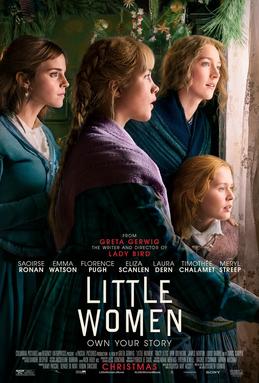
It’s safe to say that Little Women is not only one of the most iconic novels of all time, but it’s also one of the most popular go-to’s when it comes to adapting a novel for the silver screen. With film adaptations of Louisa May Alcott’s classic going back as far as 1917 (though, sadly, this adaptation is now considered lost), it is only fact that each generation has their own version of the famous book. It is also a piece that becomes more relevant with the passage of time, and it was clear that yet another film should be added to the collection. So enters 2019 Little Women, directed by Greta Gerwig, a filmmaker with more than her fair share of praise as of recently. But does it live up to that praise?

Although I think most people probably already know the general plot of Little Women, I’ll try and recap it quickly. The story centers around the four sisters of the March household: the oldest, graceful Meg, spunky tomboy Jo, quiet Beth, and the youngest, the artistic but bratty Amy. Unbeknown to these four girls, their lives are about to change – be it because of romance, secret ambitions, or heartbreak. Chronicling their lives from adolescence to adulthood, the film follows the inseparable four as they live, laugh, cry, and struggle together through the challenges and hardships of life.

Right off the bat, one thing that immediately sets this film apart from the rest is its use of structure and pacing. Instead of simply following the story by-the-book, that is to say starting from when the four are all teenagers and ending when they’re all adults in a linear fashion, Gerwig employs interesting techniques that involve the plot cutting back and forth between different time periods in their lives, all the while making it rather easy to follow (at least, I thought so) and not boring. It’s also clear that Gerwig has definitely learned a lot about cinematography and shot composition since her previous film, Lady Bird. This film is simply gorgeous to look at. Another aspect of this production that blew me away is the amount of acting talent involved (as I wrote this, I found out that Laura Dern, who plays the girls’ mother Marmie, won an Oscar for Best Supporting Actress, which is very much well-deserved!) from everyone involved. I was especially surprised by Timothée Chalamet as Laurie, who I felt was really playing a character, not just playing himself. Of course, it would all be empty without Alexandre Desplat’s charming score, which makes the film’s quiet scenes speak the loudest.

Although this is normally the part where I list my dislikes, I find it very hard to think of any particular gripe I had regarding this film. Yes, not everything in the book is present in the film, but all that mattered to me was that the important ones were. Yes, not every sister gets an equal amount of screentime, but all the actresses did the best they could regardless, and Saoirse Ronan as Jo is such a good performance that it doesn’t really matter if the focus is mostly on her.

Overall, compared the previous film disaster I reviewed, The Rise of Skywalker, Greta Grewig’s Little Women is a breath of fresh air. When you combine a rapidly-improving director with a talented cast, beautiful cinematography, and a tight script, you get a once-in-a-lifetime cinema experience. Whether you’re a fan of the book or not, this is certainly one film you wouldn’t want to miss.

Final score: 9/10

Top Lists: My 5 Favourite Films of 2019

It’s that time of the year again, folks. As I did last year, I will be ranking my 5 favourite films of 2019 (in no particular order), just like every other person that calls themselves a ‘film critic’ is doing. This list was a little difficult to make, mainly because I think there are a few films that I would likely put here (such as The Aeronauts or Greta Gerwig’s adaptation of Little Women) – except for the fact that none of the cinemas around me are showing them and they’ll probably be released too late into the year to make this list, but nonetheless, this will have to do. (Please note that these are my own opinions!) 

5. Burning (dir. Lee Chang-dong) 

Screen Shot 2019-12-17 at 5.40.25 PM.png

I’ll be real with you guys for a minute: I only watched this film because it was an adaptation of a Murakami novel. But it’s definitely a lot more than that: it’s a character study, a murder mystery, and a psychological thriller in one. Combined with great performances from all the actors and an equally as great soundtrack by Mowg, this film both meets and subverts expectations. I don’t know if Murakami watches the adaptations of his films, but I think he’d be proud.

4. If Beale Street Could Talk (dir. Barry Jenkins)

Screen Shot 2019-12-17 at 5.43.09 PM.png

It’s rare that I watch a romance film and even rarer that I recommend one, but this is most definitely an exception. Based on a novel of the same name and directed by the acclaimed Barry Jenkins, this story follows New York couple Tish and Fonny, whose lives are flipped upside-down when the former is arrested for a crime his family is certain he didn’t commit. Amidst tested relationship and a chase to prove his innocence is a fantastic love story, punctuated by great drama, heartfelt moments, and superb acting by every cast member (especially Regina King, who won Best Supporting Actress at the Oscars). A must-watch whether you like romance or not.

3. Fate/Stay Night: Heaven’s Feel II. lost butterfly (dir. Tomonori Sudou)

XWHVTJcAPj2uLuMHQx8I_18_b9832726080cbf23a5192b0010cb6e01_image.jpg

Despite the picture you’re seeing right now, lost butterfly is not some typical romance story. It’s not even a romance story.. not really. The second installment in Type-moon and Ufotable’s adaptation of Fate/stay Night’s third route is definitely a spectacle. While the first movie did a great job at establishing the characters and tone of the visual novel’s darkest and bleakest story, lost butterfly builds on that greatness and cranks it up to eleven. Of course, ufotable‘s animation gets better with each passing movie, and the talented voice cast give it their all. Although the Fate franchise is difficult to get into, this movie certainly shows what has the power to be. Perhaps the third and final movie will be on next year’s list?

2. Children of the Sea (dir. Eiko Tanaka)

Children-of-the-Sea-Review-700x298.jpg

It’s not an end-of-year list unless it includes two animated movies, is it? Set on one fateful summer vacation, Ruka becomes unexpectedly intertwined in the lives of two boys, Umi and Sora, whose connections to the water contains astonishing secrets. While the three get closer, a strange occurrence is discovered: ocean life is disappearing. With her two new friends in tow, Ruka sets out to fix this problem. Based on a popular manga, this movie is no slacker in adaptation. Consisting of beautiful animation, likeable characters, and a wonderful atmosphere, this is one coming-of-age story I’ll never forget.

1. Avengers: Endgame (dir. Anthony & Joe Russo)

avengers-_endgame_-_publicity_still_-_h_2019_.jpg

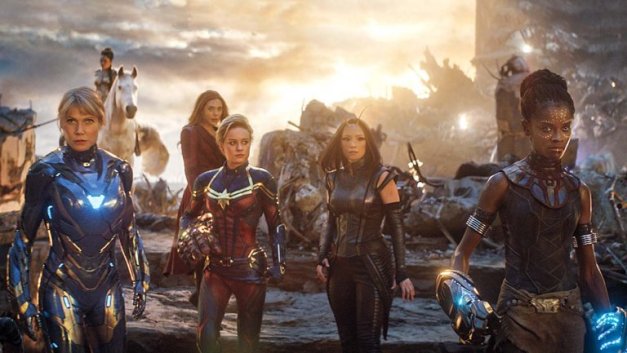
Has it really been more than a year since Infinity War came out? It’s felt like so long since I put it on last year’s list. As it turns out, the hype for this film totally paid off, both literally and figuratively. Despite its moments of comic book silliness and drama, Endgame improves upon its predecessor in almost all aspects, including epicness. Not only is this an entertaining experience for Marvel fans, but for the general public as well – you can’t really say that for a lot of superhero movies. That’s an achievement in and of itself. It’s safe to say that people will still be talking about this spectacle for years to come, mark my words!

Movie Review: Star Wars – The Rise of Skywalker (Spoiler-free!)

Screen Shot 2019-12-23 at 11.20.04 PM.png

So, it finally happened. Six years, two (canon) movies, two (spin-off) movies, and millions of dollars have led to this very moment. Thousands of hours have been spent planning the ending to this grand saga, one that, six years ago, hadn’t been seen for over a decade in the Star Wars universe. It’s definitely been a wild ride, with epic highs and lows (see: The Last Jedi) and leaps and bounds. All that being said, now that it’s finally over, how was it really?

First off, I’d like to say: wow, this movie is not kind to people who have epilepsy. My goodness. Watch at your own risk; my eyes still hurt. By now, I assume you all have a general idea of how the plot will go: Emperor Palpatine (yes, that Palpatine) is back, so buckle up. Rey is growing stronger, but she still is afraid of who she really is. Kylo Ren’s loyalty to the dark side is being tested by the minute, and the Resistance is ready to take a final stand. Amongst tested loyalties and uncertainty, which side will emerge victorious?

Let’s start by listing what I liked about this movie. It’s visually stunning, whether you watch it in 3D or not. The action scenes are intense (if not a bit too fast-paced) and some of the cinematography is downright stunning, which sounds weird when talking about a movie where people fight with giant glowsticks, but it is true. Our main three have some great interactions with one another, which is certainly more than I can say for The Last Jedi, where the main trio was separated for most of the film. Aside from our main trio, the other cast members do a good job as well, with Adam Driver definitely being my favourite new actor from this trilogy. Whether you like Kylo’s ending or not, you have to admit that he’s giving it his all. For old-timey and hardcore fans, there’s plenty of fanservice and cameos, which you will likely enjoy if you’re into that stuff. Overall, there is a lot going on in this movie, but that’s where my problems with it begin.

Due to (I think) the mainly negative response fans had to The Last Jedi, this film feels like JJ Abrams and co. were rushing to undo it by doing pretty much the opposite of what TLJ at least tried to do differently. In short, there’s a bit too much of what hardcore fans like – returning characters, old settings, and epic space battles. Moreover, because the previous story was a bit slow in its plot, this film is trying to cram everything of what I just mentioned above and more into a two-hour and a half runtime. New settings, characters, and plot devices are introduced every moment, and the editing department is trying to finish this story so quickly that you rarely ever get time to breathe before you’re shown the next plot point or chase scene. Aside from a few quiet moments of reflection here and there, the whole film is more or less like this, which left me very confused as to what I was actually supposed to focus on. Personally, although TLJ left me feeling quite conflicted as to how this trilogy would end, it was hard for me to dislike something that honest and ambitious. With this movie, although it doesn’t have the same low points as TLJ, it never hits the same high points as TFA, leaving it feeling bland and watery.

In conclusion: Rise of Skywalker isn’t as terrible as some people make it out to be. On the whole, it’s a serviceable conclusion to this trilogy, and regarding fanboys, there’s a lot for them to enjoy. However, despite the team’s best efforts, its oversaturation of fanservice, action, and story beats leave it feeling lackluster, and I doubt that, ten years from now, people will look back on this finale as fondly as they’ll look back on, say, Avengers: Endgame.

Final score: 6.5/10

Murakami Mondays: Kafka on The Shore (2002)

Kafkaontheshore.jpg

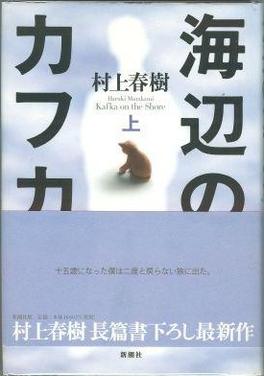
Kafka on The Shore (lit. Umibe no Kafuka) is the tenth novel by author Haruki Murakami, first published in Japan in 2002 and translated into English three years later by Philip Gabriel, frequent Murakami translator. Its 2005 English version was featured on The New York Times list of ’10 Best Books of 2005′ and it even received the acclaimed World Fantasy Award in 2006. Consisting of 505 pages, it treads the middle ground between a long Murakami novel and a short one, though it leans towards the former.

Organized in a format unusual to the majority of his other novels, focus is placed on whether each chapter is an odd or even one, as two distinct but connected storylines take place depending on this chapter layout. The odd-numbered chapters chronicle the journey of 15-year old Kafka, who runs away from home on a quest to find his missing mother and sister, while picking up several allies along the way. The even-numbered chapters showcase the perspective of Nakata, an illiterate elderly man with the ability to talk to cats, who finds himself far away from the comforts of his home. As the story continues, the plot deepens: Kafka is questioned for murder, Nakata tracks down a cat killer, and plot points thought to be random and inconsequential turn out to hold the biggest clues of all.

I’ll admit, I have a bit of bias towards this particular book, namely because it was the first piece of fictional Murakami I read (not the first – that would be Underground, but that’s for another Monday) and it was the reason I found myself so drawn into his work, not to mention it introduced me to the ‘magical realism’ genre. I still enjoy it after all these years, surprisingly. The characters are interesting, the moments of ‘magic’ feel magical, and the story is one of the better-paced ones. Overall, I highly recommend it, for Murakami fans, non-fans, and fans of a good surreal fantasy story alike.

Murakami Mondays: A Wild Sheep Chase (1982)

Haruki_murakami_a_wild_sheep_chase_9780375718946.jpg

A Wild Sheep Chase (lit. An Adventure Surrounding Sheep) is the third novel by author Haruki Murakami, first published in Japan in 1982, and translated into English seven years later in 1989 by frequent Murakami translator Alfred Birnbaum. It is considered an independent sequel (that is to say, a spiritual sequel) to Pinball, 1973 and is the third (and final) book in the ‘Trilogy of the Rat’; it is preceeded by Pinball and Hear the Wind Sing. Interestingly, this trilogy was released in English out-of-order, as Pinball (the second book) was the first to be translated, followed by Hear the Wind Sing (the first) and this novel. Also, while the previous two were re-translated in 2015, this novel has yet to receive one.

Taking place in a post-WWII Japan, the detective noir-style story (which also includes a chain-smoking unnamed narrator) follows our recently divorced protagonist, who, after posting a photo in a magazine ad sent to him by his old friend ‘The Rat’ (who is a recurring element in the trilogy, obviously), is contacted by a mysterious man representing ‘The Boss’, which control Japan’s elite. Having been told that a sheep pictured in the ad is somehow the secret source behind the power of ‘The Boss’, and that his life will be over if the sheep is not found within two months, our protagonist and his unusually perceptive girlfriend must travel to the north of Japan to find the strange sheep, all while encountering new and old friends, victims – and chasing an immovable force.

Despite being rather short and being part of a trilogy (meaning you’d have to read the other two novels if you want to understand anything thats going on here), A Wild Sheep Chase is rather enjoyable. It blends together both Japanese and English literature tropes in front of a Japanese contextual background, so even if you don’t know or aren’t interested in Japanese history regarding the time period of the book, it still ‘feels’ like a typical American detective story. As a Murakami fan, reading this was a unique experience, as the early Murakami novels have a very different style compared to those of today – a lot more youthful, slangy, and allegorical. It’s like a time machine. That being said, if you don’t mind reading the previous two, A Wild Sheep Chase is a fun time.

Murakami Mondays: South of the Border, West of the Sun (1992)

South_of_the_Border,_West_of_the_Sun_(Haruki_Murakami_novel_-_front_cover).jpg

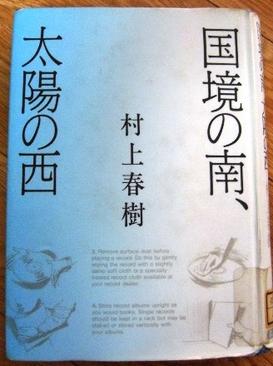
South of the Border, West of the Sun is the seventh novel by author Haruki Murakami, first published in Japan in 1992 and many years later in English by frequent Murakami translator Philip Gabriel in 1999. It was released four years after Dance Dance Dance, a novel I’ve also covered in this series. Despite being classified as a novel, this book is in a rather strange position compared to Murakami’s other works as it cannot be neatly placed into one category. At 192 pages, it is clearly shorter than your average novel, but at the same it is not short enough to be considered a short story. Therefore, it would be better to call this a ‘short novel’.

Starting with the common theme of a man ‘losing’ a woman, this story follows 36-year-old Hajime, the owner to two successful bars and father of two children, as he reunites with former childhood friend Shimamoto, who mysteriously refuses to relay any information on where she’s been all these years and constantly haunts Hajime with ‘what ifs’. This sets in a motion a chain of events in which he must choose between his loving wife and family and retreating into the wonder of his past.

I’ll admit that the premise alone got me interested. It’s rare that a Murakami novel features a married protagonist, and an emphasis on childhood friendship. Thankfully, this short novel is written well and has enough depth to keep you invested. Moreover, it is one of the few Murakami stories where the protagonist is morally ambiguous – while most of his protagonists are on the side of ‘good’ (even if reluctantly) and generally likable, Hajime makes questionable decisions and even considers cheating on his current wife with Shimamoto, a decision that would certainly turn readers against him. Without spoiling too much, this book is definitely one of Murakami’s better short-form works, and I highly recommend it if you prefer a book you could finish in a day.

Murakami Mondays: Colorless Tsukuru Tazaki and His Years of Pilgrimage (2013)

Colorless_Tsukuru_Tazaki_and_His_Years_of_Pilgrimage.jpg

Colorless Tsukuru Tazaki and His Years of Pilgrimage is the thirteenth novel by author Haruki Murakami, first published in Japanese in 2013 and in English only a year later in 2014. It was released three years after IQ84, Murakami’s longest ever novel yet, with more than 900 pages total. The book was released in English by Philip Gabriel, another one of Murakami’s frequent translators.

Unlike the majority of Murakami’s works (including both long and short-form novels alike), Tsukuru Tazaki dials down on the surrealism and mystique that has often characterized Murakami’s writing, choosing instead to focus on a simpler narrative. The story follows the perspective of the titular Tazaki, a 36-year-old railway engineer who has been constantly plagued wondering why his group of high school friends cut all ties with him sixteen years ago. Now a grown man, he is convinced by his girlfriend Sara to seek the truth, and so he decides to go on a quest to mend his relationships with his former friends and get to the bottom of the mystery.

Although this novel is well-written overall, and I can definitely understand why Murakami would choose to write something this simple (especially given that he’s finished an absolutely massive plot-layered story years earlier), for a novel that took three years to write, it’s rather underwhelming. I was excited to see a Murakami protagonist who actually wasn’t a loner (or at least wasn’t formerly a loner), but compared to his other main characters, Tazaki falls rather flat, though only in comparison. Moreover, despite Murakami being a brilliant writer, I felt that much of the writing in this novel was rather shallow, and it was even more disappointing that he chose to leave most of this story’s mysteries unresolved and ambiguous, which is strange considering the great lengths Tazaki goes through in his attempt to solve them.

In conclusion, Tsukuru Tazaki isn’t a bad novel by any means, and if you’ve never read Murakami before, you may enjoy it, but compared to his best works (and even his other novels in this category) it is noticeably weaker in both style and presentation. Ultimately, whether you choose to read it or not is up to you.

Murakami Mondays: The Wind-Up Bird Chronicle

Wind-up_Bird_Chronicle.jpg

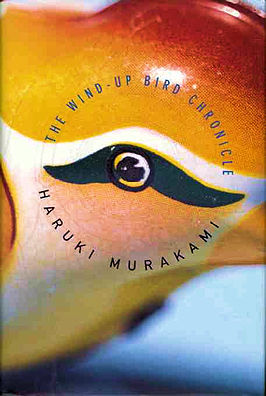
The Wind-Up Bird Chronicle (Nejimakitori Kuronikuru) is the eight novel by author Haruki Murakami, first published in Japanese in between the years 1994-1995, and was later released English by long-time Murakami translator Jay Rubin in 1997. The original Japanese edition was released in three parts, while the English language edition (and the most common one today) is a single volume of over 600 pages, making it one of Murakami’s longest yet.

While a few chapters from the novel were published in The New Yorker and a slightly altered version of the first chapter was featured in the short story collection The Elephant Vanishes (not to mention the novel’s protagonist, Noboru Wataya, appears in another short story in this collection), this novel is the where all these characters and story beats are placed together to create something more coherent.

Because of this novel’s (very) large page count, you’d likely assume that it’s rather dramatic and intense, plot and content wise – and it is, but not in the way you’d expect. Beginning with the protagonist (Noboru Wataya) being tasked by his wife to find their missing cat, the plot is suddenly turned upside-down as Noboru discovers one morning that his wife has mysteriously vanished, and the rest follows him as he uncovers the mysteries and intricacies of her disappearance, all the while encountering eccentric allies and antagonists.  Although, yes, the novel does have its moments of melodrama and theatrics, Murakami takes a more subtle and nuanced approach to the situations faced by Noboru, with several scenes focusing on his loneliness and introspection, in classic Murakami style.

When it comes down to it, despite how intimidating its length and size appear, The Wind-Up Bird Chronicle is one of Murakami’s best, and will definitely stick with you a long time after you read it.

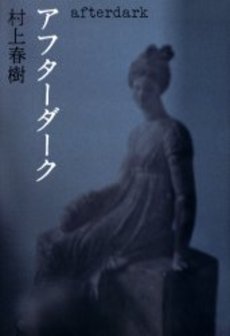
Murakami Mondays: After Dark (2004)

Murakami_After_Dark.jpg

After Dark is the eleventh novel by Haruki Murakami, first published in Japanese in 2004 and later in English in 2007, released 2 years after Kafka on the Shore, one of his longest novels. It was released in English by frequent Murakami translator Jay Rubin.

In contrast to his Murakami’s previous novel Kafka on the Shore and most of his other works, After Dark is quite short, with only 201 pages, and in an interesting deviation, the entire story from start to finish takes place over the course of one night, starting at 11:56 PM and ending at 6:52 AM. This concept, especially when compared to his other novels which can often take place over the course of years and even have decades of backstory, is unique for a Murakami book, while the themes and general tone are similar to his other works: several parts take place between reality and dreams and there’s hints of surrealism throughout.

I was worried that, for the absurdly long length most of his novels are, that the short timespan of After Dark would be messy, but thankfully this one handles it well – It has just enough story to keep you invested but not so much that you start to believe this can’t all happen over the course of a night. If you aren’t a fan of doorstoppers, I recommend this one, and if this is your first time reading a shorter Murakami novel, as long as you don’t expect anything too dramatic, you’ll surely enjoy it.