Murakami Mondays: Blind Willow, Sleeping Woman (2006)

BlindWillowSleepingWoman.jpg

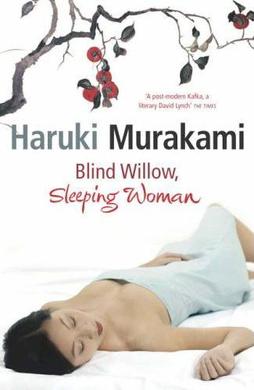
Blind Willow, Sleeping Woman is the fourth collection of short stories by renowned author Haruki Murakami. First released (surprisingly) in English in 2006 (4 years after the release of his previous collection After the Quake), it later received a Japanese edition in 2009. For the most part, the short stories are split evenly  between two translators: Philip Gabriel and frequent Murakami translator Jay Rubin.

Running at a generous 362 pages, this novel is Murakami’s biggest and most impressive collection yet, containing 24 stories spanning from the years 1980 to 2005, which were originally published in literary magazines and periodicals such as Harper’s, Granta, McSweeney’s, and The New Yorker; several of which allude to or are incorporated into his later long-form novels.

Although he has currently published 5 short story collections as of 2019 – his latest one, Men Without Women, was published in English in 2017 – this book is, in my opinion, one of the best examples of Murakami’s incredible and broad range. Filling the pages are stories of love, loss, dreams, alternate realities, and sometimes absurdity – everything is top-notch here and really demonstrates his writing capability and talent. A reason for this may be because Blind Willow, unlike his other collections, doesn’t focus on one particular theme (i.e Men Without Women is mainly about men who have ‘lost’ women) and thus the full extent of his range is able to shine through.

Despite the length of this one, it is a great introduction to the master and his storytelling; if you are someone who prefers reading short stories over feature-length novels, I highly recommend it.

Murakami Mondays: Dance Dance Dance (1988)

image.png

Dance Dance Dance is the sixth novel by acclaimed Japanese author Haruki Murakami, which was first published in 1988, a year after the release of Norweigan Wood. After the release of Norwegian Wood, which catapulted him to both national and worldwide fame, Murakami was initially not able to cope with the sudden pressures of being a celebrity, and much of the production of this novel involved him releasing his stress and anxiety,  thus making it a ‘healing experience’ for him. It was translated six years later in 1994 by previously-mentioned Alfred Birnbaum, whose translation is still considered the preferable one and the one I read.

This particular novel started several major themes that would later become hallmarks of a Murakami novel: surrealism, loss, sexuality, abandonment, and making human connections. The protagonist of the story, more or less a stand-in for Murakami himself, is at the beginning of the story alone and isolated, but later meets a cast of eccentric and colorful characters, each with their own unique backstory and ties to the main character; this is also a staple of many later Murakami novels such as Kafka by the Shore and The Wind-Up Bird Chronicles.

One somewhat confusing aspect of the novel is its relation to Murakami’s “Trilogy of the Rat”, a series of three books (Hear the Wind Sing, Pinball, and A Wild Sheep Chase) that focus on an unnamed narrator and his friend known only as “the Rat”. Although this novel is a sequel to the trilogy and shares some similarities to it, whether or not it is considered an actual part of the series is debatable.

Overall, despite the debate over whether or not it’s part of the “Rat Trilogy”, Dance Dance Dance can still be read and enjoyed for the most part, even if the more surreal trappings are a bit confusing to follow if you aren’t familiar with Murakami’s surrealist fiction works. It is 393 pages long, slightly over the length of Norwegian Wood, but as more events and story beats occur in this novel, it will likely feel shorter. Recommended for surrealism fans or those who feel isolated at the moment.

Murakami Mondays: Norwegian Wood (1987)

image

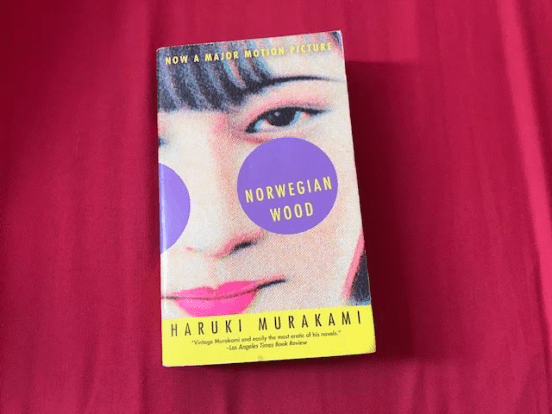
Norwegian Wood (Noruwei no Mori) is a coming-of-age novel by acclaimed Japanese author Haruki Murakami, which was first published in 1987 and was his fifth consecutive novel at the time, written after the release of Hard-Boiled Wonderland and The End of the World in 1985. Despite having released four well-received novels before this, Norwegian Wood is the book that catapulted Murakami to stardom, not only in Japan but abroad, and it’s easy to tell – compared to Hard-Boiled Wonderland, which was published in 1985 but wasn’t translated in English until 1991, Norwegian Wood received its translation only 2 years later in 1989, and since then almost every Murakami book has gotten translated in the span of less than 2 years or so.

Another thing of note is that this book has two translations: the original 1989 translation by Alfred Birnbaum and the updated translation by Jay Rubin in 2000. Although I do not have the 1989 translation, Wikipedia states that it was mainly used by Japanese students learning English and even included an appendix of sorts for several English words and phrases used in the novel. If you are not a Japanese student or if you are comfortable with your English language abilities, I’d recommend the more common Jay Rubin translation.

Despite Murakami’s proficiency and his prolific writing, Norwegian Wood stands out amongst his other novels for several reasons. Unlike most of his other works which often deal with surrealism and fall into the category of “speculative fiction”, Norwegian Wood is a story taking place in average 1960s Tokyo and nothing surreal interferes with the world or its characters. The basic story follows college student Toru as he develops relationships with two different women – the kind but emotionally/mentally unstable Naoko and the outgoing but bossy Midori. Unlike most stories dealing with love triangles, both women are written well, especially in the case of Naoko; despite dealing with an unnamed mental illness, she’s well-rounded and empathetic, which is uncommon when compared to most portrayals of mentally ill people in media.

Overall, even though this is one of his earlier works, it’s one of his best and in general it is wonderfully written. I’d highly recommend this book to new readers of Murakami, so long as you can deal with the 386 page length and the fact that not all of his novels will be as normal and quaint as this one.

Movie Review – Spider-Man: Far From Home

large_far-home-poster.jpg

After pretty much everyone on the planet saw Endgame and put in their two cents regarding the franchise’s biggest blockbuster (including myself), questions began turning to the next anticipated Marvel release – the sequel to the first film that really introduced Tom Holland as Spiderman – Far From Home. Once fans and the general populace heard that it would be set after the events of Endgame, questions turned to speculation and theories. After the incredible epic that was Endgame, how would other films in the MCU even compare? What could possibly be a bigger threat than Thanos? Could Peter Parker of all heroes pick up the pace?

But not too fast. What exactly happens in Marvel’s next film after their biggest and boldest hit yet? As it turns out, it’s quite simple. Peter Parker, still recovering after the effects of  Thanos snap and dealing with average high school problems, is excited about the class trip to Europe – finally a chance to relax, hang out with his friends, and who knows, maybe even confess to MJ! However, his plans are thwarted when mysterious beings known as Elementals start showing up all over the world and causing mass destruction… even his school trip becomes a target! Nick Fury and other agents fully trust Peter to deal with the issue, but he’s conflicted – with great power comes great responsibility after all. Things are made more complicated when an empathetic hero called Misterio offers to work with him and is even willing to understand Peter’s issues. But is Peter ready to leave his ‘friendly neighborhood Spider-Man’ persona behind?

To start off, one thing that I’m glad this movie addresses is the effects of people coming back from the ‘blip’ on society (i.e people being made homeless because of the ‘blip’ and some coming back the same age but with previously younger family members now being older than them) and the mental toll of both the snap and the loss of his father figure Tony Stark have on Peter. I personally feel like Far From Home handles Peter’s mental state and conflicting emotions very well, and it’s easy to both sympathize and emphasize with him – we’ve all had to deal with choosing between our responsibilities and what we really want. Moreover, we can understand why Peter doesn’t exactly want to be involved in all this Avenger stuff, since at the end of the day he’s just a friendly high school kid in a spider-themed mask who can do cool backflips. Tom Holland’s portrayal of the character gets better with every new release, and even the members of the supporting cast get their own moments to shine. Because this is a Spider-Man movie and by law it should be light-hearted in tone, it is filled to the brim with hilarious jokes and gags, but it still takes the time to let the hard-hitting scenes pack a punch.

Despite this film having come out after the very well-received Endgame and thus some were expecting it to be a letdown in comparison, it is pretty good. But it does have some issues. While I will admit that the visual effects and CGI in Marvel films are improving all the time (and this movie is no exception) and are cool to look at, this one in particular has a ton of action sequences and big epic battles that go on for a long time and leave you wondering when there’s going to be a scene that won’t make your eyes hurt. Also, some characters have returned from the snap with their personalities changed – for example, Nick Fury and the new agents of S.H.I.E.L.D as a whole don’t command as much authority as they used to and Fury is more of a comedic relief than anything (though he still has moments of awesome). Oh, and Misterio’s costume is so ugly it makes my eyes bleed.

In conclusion, Spider-Man: Far From Home is certainly no Endgame, but it doesn’t have to be. As long as you don’t mind a teen high school comedy mixed in with your superhero fare, Far From Home is a surprisingly thematic and engaging film, with plenty of hilarity and fun times along the way. As the first movie to set the stage for the next phase of the MCU, it’ll be interesting to see where this franchise is headed next.

Final score: 7.5/10

TV Review: Good Omens (2019)

0.jpeg

When I first heard that Neil Gaiman and Terry Pratchett’s 1990 collab novel Good Omens had gotten a very well-liked TV adaptation via Amazon Prime, I was more than a little confused. After all, being the incredible legends that they are – or were, in the case of Terry; rest in peace – hardly any of their works have received proper adaptations, if any at all (Coraline is still the bomb, though). Why release it after more than two decades since the release of the novel? Whose idea was this? Why Amazon Prime – doesn’t Netflix own everything these days? Anyway, that’s beside the point. Having seen the show receive glowing reviews from pretty much everyone and their grandma, I decided to give this one a fair shot, given that I don’t watch TV all that often. I bet you’re all on the edge of your seats waiting to hear my opinion.

But let’s back off for a second. What could a story from the brilliant minds of Neil and Terry even be about? As it turns out, it’s quite simple: Aziraphale and Crowley, angel and demon respectively, have been friends for thousands of years (though Aziraphale would never admit to it) and as the representatives of Heaven and Hell on Earth, they are tasked with keeping an eye on the Antichrist, a young boy who is destined to bring about the end of the world as we know it. The unlikely pair want to ensure that the child is raised in such a way that he can never choose between good or evil, thus postponing the End Times for some other day. However, things don’t exactly go according to plan, and with less than a week till Armageddon, the two must find a way to sabotage the end of the world, maybe meet some eccentric side characters along the way, re-evaluate the meaning of their friendship, and answer the question of whether or not Good and Evil will ever be able to co-exist. Fun times and plenty of Queen music ensues!

One thing that I’ll just get out of the way first, I absolutely adored the two leads. David Tennant as Crowley and Michael Sheen as Aziraphale are fantastic actors (no surprise) and they nailed the dynamic between the two polar-opposite protagonists. Truly, every scene they’re in is a joy to watch and it’s safe to say that they steal the show. If anything, watch it for them. Another worthy thing of note is that the show is hilarious. Really. Neil and Terry when put together are a powerhouse of unique comedic storytelling, and despite the dramatic stakes at large, every episode gave me something to laugh about. Not to mention the tight and clever script (done by Gaiman himself!) that certainly kept me invested throughout the show’s six-hour runtime. Production and costume design was very impressive, really showing the creativity of the crew when it came to bringing both the book’s real and otherworldly locations and inhabitants to life. The stark contrast between the grimy and flea-ridden Hell to the pristine, white-washed Heaven is truly a sight to behold.

When comes to the things I didn’t like regarding this show, there’s not a lot to say, honestly. Some people have already made comparisons regarding certain plot points and events from the book being omitted from the show, but as a person who hasn’t read the book (yet), I can’t make these sorts of negative opinions. What I will say, though, is that some episodes have a certain unbalanced quality to them – some scenes go on for too long and some are over in the blink of the eye. Another annoyance that I had a few times was that the side characters were in scenes that dragged on for a while, so much so that I wanted to just skip ahead. Not that the side characters or their respective actors are particularly bad or anything (I think they’re just fine) but I was way more invested in Aziraphale and Crowley than I was with them. But hey, that’s just my opinion.

In conclusion, despite some minor setbacks as mentioned above, Good Omens is an otherwise engaging, refreshing, funny, and thought-provoking show that’s certainly worth six or so hours of your time. With a stellar cast, great performances, fun design choices, and a tightly-knit script, it’s a one-of-a-kind show from a one-of-a-kind writer. You wouldn’t want to miss it. I’m glad I didn’t!

Final score: 8.5/10

Analysis: 8 Reasons You SHOULD Try The Final Fantasy VIII Remaster

ff8-1280x720.jpg

2019 has certainly been a year for the unexpected. Not only is the Final Fantasy VII Remake actually going to see the light of day thanks to a spectacular trailer and palpable release date (mark your calendars for March 3rd of next year, you guys!) shown at Square Enix’s E3 panel a few days ago, but after years and years of constant radio silence, the whole drama over Squenix losing the source code, and more snubbing than most Oscars nominees , Final Fantasy VIII is finally (emphasis on finally) being remastered for the PS4, Xbox One, PC, and Nintendo Switch, set to release sometime later this year.

So… why should you care? It’s understandable that some may be immediately turned off by this game, and that isn’t a surprise – for whatever reason, Square Enix loves treating this game like the butt-monkey of the Final Fantasy franchise and has pretty much actively thwarted any remasters, remakes, or re-releases of this game for years now. That, and the heart-stompingly popular VII being its predecessor, made it a lesser quality experience in the eyes of many gamers at the time. However, time hasn’t abandoned this game, and now a few months after its 20th anniversary, more and more have softened their views towards it, and perhaps this remaster can, at last, shed some light on this dark horse. And with that tragic history out of the way, let me present 8 reasons (see what I did there?) to try the remaster.

final-fantasy-viii-ps1-cover-front-30863-1488659320.jpg

1. An Insanely Unforgettable Story 

Let me just get this out of the way real fast – the plot of VIII is absolutely insane. Within the first few hours, you (playing as Squall, the main character – I’ll get to him later) have your face permanently scarred, get sent on a dangerous mission as your final exam (since Squall and the rest of the gang live in a military academy, by the way), find yourself in a run-in with a group of resistance members, engage in the assassination of important political figures, meet a cute girl at a ball, and somehow get drawn into the evil schemes of a sorceress who wants to become the all-powerful – using something called “Time Compression”. So, yeah, there’s time travel craziness involved. Oh, and there’s a monster that lives in the school’s basement. Some may label the story as crazy and overtly dramatic, but that’s what makes it so fun in the first place. VIII’s plot is a rollercoaster ride that never stops, and all you have to do is sit back and enjoy the ride.

2. A Stunning Soundtrack 

This one should be obvious, as pretty much every game in the Final Fantasy franchise has had a critically acclaimed soundtrack, all thanks to the patron saint of the franchise, Nobuo Uematsu, and this one is certainly no exception. From the bombastic and incredible “Liberi Fatali” that plays in the opening to the more relaxing “Balamb Garden” to the incredibly beautiful “Eyes On Me” performed by veteran singer and actress Faye Wong, VIII’s soundtrack is a testament to the versatile talents of Uematsu and the hearing these amazing pieces of music in-game adds so much more to the experience. Just take my word for it.

3. Graphics Galore

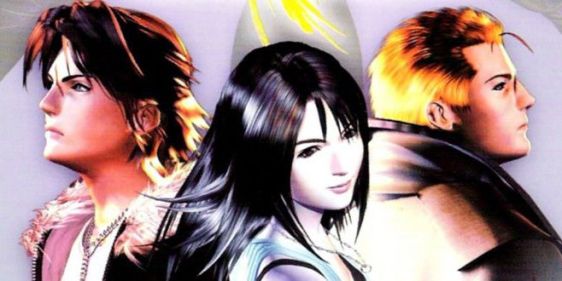
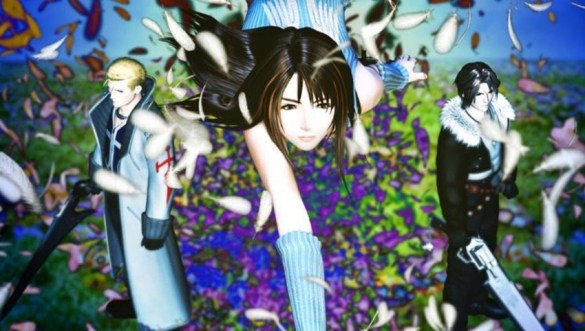
If you asked any gamer back in 1999, they would tell you that VIII was the pinnacle of graphic design and quality. Gamers playing VIII after VII witnessed an overwhelming and exciting change in the future of gaming – the low-poly blobs that were used for the characters in VII were greatly upgraded: Squall and co. became realistically-proportioned characters who had a larger variety of unique movements and animations. Even the backgrounds were upscaled and improved, and not to mention the gorgeous FMV cutscenes, which still hold up even by today’s standards. While the character models and backgrounds have been cleaned up and made a lot less pixel-like for the remaster, one can still witness the FMVs and other cutscenes, leaving a lasting impression on how far video games have come.

Final-Fantasy-8-3.jpg

4. A Colorful Cast 

The cast of Final Fantasy VIII are, quite literally, colorful, and you can thank Tetsuya Nomura for that. But besides that, the cast of this game, from your party members to your antagonists, have unique and interesting traits that, while annoying at first, become more likable as you continue playing, and by the end, you’ll really feel as if you finally belong with a group of supportive friends and confidants. Your party members, from the hot-headed Zell to the shutterbug Selphie to the suave Irvine to the mature Quistis are all charming and endearing (not to mention Rinoa, more on her later) and even your rival, Seifer, has his moments of awesome, along with his own little gang of polar-opposite lackeys – the ice queen Fujin and the brash Raijin. Whether a fellow student or a time-bending villain, there’s always someone to love.

5. Minigame Madness

Every Final Fantasy has its minigames – fun little games inside the actual game that allow you to pass the time between your impending doom and maybe earn some more points – but one are remembered quite as much as Triple Triad, a card game that you can play with NPCs anywhere, anytime, and that gets harder as more rules are added as the game progresses. Although some found the game as an annoyance, it can be an ultimately rewarding experience once you get the hang of it. Prepare to be addicted!

6. Dialogue Done Right 

During the production of VIII, director and Squenix legend Yoshinori Kitase mentioned that his goal for the dialogue was that it should be more realistic and employ less of the slapstick comedy used in previous games, allowing the emotions of the characters to really shine through. And it shows: while the dialogue at surface level is somewhat nonchalant and unassuming, it also shows an undercurrent of something deeper – every character has little ticks and anxieties that they let slip through the cracks of their outward facade. Writer Kazushige Nojima attempted to craft dialogue that was emotional, raw, and real – a novelty for the time and one of the main positives of the game as a whole.

nhdpj3xa1tzmdupiolft.jpg

7. Love In a Helpless Place 

Although love stories are now considered commonplace in the Final Fantasy mythos,  VIII was the first game to place a love story front and center as one of its main themes – a love between the lonely and reserved Squall Leonhart and the energetic and passionate Rinoa Heartilly. These two are a pair that, at first, couldn’t even stand being in the same room together, much less actually forming connections. But throughout the course of the game, the two work together and create an inseparable, unbroken bond, one that not even time itself will break. Squall and Rinoa aren’t the only lovebirds of note though – the game also focuses on a mysterious man called Laguna and his relationship with two women, Julia and Raine. Who is this man and why is his relationship with these ladies so important? Play and find out.

8. Inside The Mind of Squall 

Squall, for all the snubbing his game receives, has consistently been a favorite amongst all Final Fantasy protagonists and characters alike. How come? Thanks to Nojima, we players can actually see inside the mind of our introverted protag, as his inner monologue shows up a lot in the game, allowing players to see the boy underneath the man’s exterior. Squall is a man of few words but thousands of feelings and convictions, and being able to witness him become more open with his friends and loved ones is definitely a sight to behold. His quiet nature is also a point of admiration and relatability for many players, as I’m sure we can all relate to the quiet and emotional high school kid inside of all us. Not only is Squall a great protagonist, but he’s also a great character, one who’s character growth will leave you feeling the most immense satisfaction.

So that was my 8 reasons to try the Final Fantasy VIII remaster! Whether you plan on actually buying the game when it is eventually released or not, I hope this list has convinced you somewhat. Just remember to have fun and enjoy this wild ride!

Anime Review: I Want to Eat Your Pancreas

93b9cf2c33fdc72b89ada0c77a015686.jpg

Before anyone asks: Yes, that’s the actual title of this film. I know. It’s a weird and silly enough title to turn one completely off on watching it. At first, I was only willing to give it a passing a glance and go “Huh, that’s anime for you” and never touch it again. However, having seen one of my acquaintances watch it and highly enjoy it, I decided to save it for a rainy day and hopefully get around it at some point. As you can clearly tell, I did get around to watching it; otherwise you wouldn’t be reading this review. But before we get into it, what’s this even about?

Directed by Shin’ichiro Ushijima and adapted from a former web-novel of the same name by Yoru Sumino, I Want to Eat Your Pancreas (Kimi no Suizō o Tabetai in Japanesefollows the life of a introverted and reclusive high school boy (who makes it a point never to say people’s names out loud or reveal his own) and his accidental meeting with Sakura Yamauchi, a bright and peppy girl in his class (also his disinterested library assistant). This boy-meets-girl story is twisted upside-down when he realizes that Sakura has terminal pancreatic cancer – and he’s the only person outside her immediate family who knows. Not wanting to waste a moment, Sakura immediately invites him to be her “partner” in her bucket list escapades, to which he hesitantly agrees – but will he be able to stay by her side until the end?

I’m personally not the biggest fan of the whole “sickness romance” genre, and the last I remember consuming of it was when I read The Fault in Our Stars all those years ago. However, this film is surprisingly interesting and subversive in that sense. The relationship between our MC and Sakura is slowly but carefully built up, and it never tries to be too dramatic or melancholic. Sakura herself isn’t all moody about her condition either, and her excitement in crossing items of her bucket list is well-matched with the more down-to-earth MC, who always reminds her of the reality but is never overbearing or annoying about it. This ying-yang pair influence each other in various ways throughout the almost two-hour long film, and their influences can be understood. The animation, although not anything overly special or bombastic, remains consistent throughout, and there are a a few scenes that stand out as being especially beautiful.

Despite this praise, there’s more things that may annoy one about this film other than the oddball title. If the almost two-hour runtime doesn’t already make you bored, it should go without saying that the first third or so is quite slow-paced, and it takes a while before the MC is able to break out of his book-covered shell and get the ball rolling. Moreover, there’s a few extended scenes that consist of little more that characters contemplating in either silence or with soft piano music playing in the background (great soundtrack, by the way) that may leave more than a few people spiritless. However, if you’re willing to stick through these minor issues, it’s an ultimately rewarding experience.

In a way, this film is less about coming to terms with dying but more about coming to terms with living and what that all means. Even though you may not understand it or where its all going at first, everything will make sense in the end. And who knows, you may even have a changed perspective on life!

Final score: 8/10

Movie Review – Avengers: Endgame (Spoiler-Free!)

Avengers-Endgame-Banner-2-de7cf60.jpg

Ladies and gentlemen and others, we’ve finally made it. After 11 adventurous years, 22 feature-length films, many sold-out tickets, and much hype, the second part of Infinity War and the final film in Marvel’s Avengers series has finally arrived, and our long, arduous journey has come to a close. Now featuring more characters than ever before, speculation-fueled trailers and 181-minute runtime, everyone was both excited and anxious for the ultimate ending to cinema’s ultimate superhero series. After all, the last hurdle’s always the highest. I was able to see it the day after it came out in Vietnam (thankfully), and destiny said that a review must be made. So, how was Endgame?

For the sake of keeping this review as spoiler-free as possible, I am forced to keep the wall of text that usually serves as a plot recap short, but I will try nonetheless. To quickly recap the last film, everyone’s favourite evil purple man Thanos acquired all six of the Infinity Stones and wasted no time going along with his plan: wiping out 50% of the population of Earth and every planet in the galaxy, leading to the deaths of many of our beloved heroes. Now, despite their grief over lost partners, family members, and friends, the remaining Avengers realize that they must set aside their anguish for a chance – just one chance – of bringing back their comrades and ending Thanos’ plans once and for all.

Firstly, many have complained about the three-hour runtime being too long, but personally I did not find it to be that big of an issue, though I think it could’ve been shorter. Whether the scenes in the movie are action-packed or not, each one is able to deliver something that can make you smile, laugh, or cry throughout. Although not every character is given the same amount of screen time (for obvious reasons), every character is given a moment to shine, whether in battle or in dialogue. As always, the special effects and CGI were stunning (no doubt, as this is the most expensive Marvel caper to date), and the action sequences paired with Alan Silvestri’s iconic score are top-notch, giving the best that Marvel has to offer. Also as usual, every actor in this film is putting on a great performance, some that are so great that it made me wonder if it was illegal to have so many actors have such good chemistry and interactions with one another. Despite being marketed as the ultimate, craziest, and coolest superhero flick, it’s genuine heartfelt moments and hilarious call-backs to previous entries in the MCU that remind you how much effort has been put into the series and how this finale really is a love-letter to all Marvel fans.

Of course, being a three-hour long movie, there were bound to be a few slip-ups here and there. A few of the jokes don’t land as well as they should or sometimes feel a bit inappropriately placed, and despite me being one of those people who can sit through long runtimes, I do feel like this film could’ve used a few cuts and edits here and there to make it seem like less of a slog. While most people complained that the first half felt too long for them, I had no problem with the first half as I think that it sets up the story pretty well, but it was the ending that felt a bit dragged on – I almost thought I was watching Return of the King again.

In conclusion, the grand finale of Marvel’s Avengers series may have its setbacks, but it is on the whole a film worth watching – whether you’re a Marvel fan, casual observer, or something in-between. It is a movie that manages to entertain both sides of the spectrum, through great action, heartfelt moments, comedic dialogue, unapologetic comic book-ness, and an ending that will no doubt touch the hearts of many.

Final score: 9/10

Movie Review – Shazam!

https---blogs-images.forbes.com-scottmendelson-files-2018-07-Shazam-movie-official-costume-image-cropped-1200x674.jpg

In general, it’s no secret that the newer DCEU films have not been well received, per se. With many complaints and criticisms of the films being (or trying to be) darker and grittier, DC seemed to have realized this, and decided to try a blend of action-comedy instead. Their first foray into this new style, Justice League, was almost universally panned, while their next attempt, Aquaman, got a little more appreciation for its attempt at making the character more engaging to viewers, since the “man who talks to fish” is mostly viewed as a bit of joke. Speaking of jokes, DC’s latest, Shazam! (yes, you have to add the exclamation point), advertised itself as a mostly comedy-oriented, feel-good family film. But how good can a DC movie be?

Taking place in modern-day good old Philadelphia, foster kid Billy Batson spends most of his time trying to search for his missing mom and evading various crimes – at least, he does until he is put in yet another a group home, comprised of a family of several fun members, one of which is the superhero-obsessed Freddy Freeman, who Billy initially dismisses along with the rest of them. However, one day Billy is suddenly summoned by no other than Shazam himself, who chooses him as his successor and the ‘new champion’. When he returns home, he discovers that he has become not only a superhero, but also an adult! With all these new powers in store, Billy and Freddy team up to discover all the amazing things he can do. Meanwhile, a mysterious businessman, Sivana, has more nefarious motivations – he’s become the vessel for the Seven Deadly Sins and is planning on exacting revenge upon whoever dares stop him. Does Shazam dare stop him, and how on Earth will he do it?

Because Wonder Woman was, at that point, the only DC film that I liked, I went into this movie cautiously, unsure of what I’d think of it. Of course, my use of the past tense in that last sentence should tell you that that is not the case any longer. Truth be told, this film was a lot better than I expected. The main character, Billy, has all the zest of teenager and his friendship with Freddy is one of the best aspects of the whole thing, portraying two completely different guys bonding over shared dreams and desires with surprising emotional depth for a family film. Of course, neither of the two are perfect virtuous angels, and they make a point of showing us that, something rarely seen in these types of superhero films. Once the supporting cast of Billy’s foster family was introduced, I was worried that they would bog down the story as well, but they surprisingly add to the experience, giving us the humanizing, down-to-earth depiction of a family who, despite differences, really do care for each other.

The film was surprisingly hilarious, with jokes that both humorously parodied superhero movies and felt fresh at the same time, with many jokes that end up being cleverly re-incorporated at later points. And, despite advertising itself as a comedy, it has surprising moments of emotional weight and actual depth, handling serious subject matters with subtlety and nuance, as well as showcasing what it really means to be a family and the (literal) power of friendship.

However, like all movies, and especially all superhero movies, it does have its flaws. Being a more ‘family’-like film compared to DC’s other fare, some moments stand out as being a bit too silly and cartoonish amongst their handling of more realistic and mature themes. Speaking of mature themes, while some are handled well, others are placed in the most out-of-place moments you would expect, which leads to quite a few moments of total mood whiplash in the film. And yes, there are moments of genuine hilarity, but a few of these moments go on for a while, enough to make me wonder when the joke was going to end.

In conclusion, while the misguided and awkward moments in the film are noticeable, they do not distract from the sum of its parts. Whether you like or dislike DC and their superheroes, or perhaps you don’t really care at all, Shazam! is definitely worth watching – despite its flaws, it’s a heartwarming and eye-opening story about the meaning of family and the nature of being a superhero, wrapped up in a bow of genuine fun and self-depreciating comedy.

Final score: 7.5/10

Top Lists: My Top 10 Underrated ‘Final Fantasy’ Ladies

So, Final Fantasy. This long-running and critically acclaimed video game franchise has not only produced some of the most beloved RPGs of all time, but some of the most well-known female characters in all of gaming history. Just think about it: how many people (specifically, gamers) have you seen gushing over Tifa Lockhart or putting characters like Yuna and Rinoa on their “Top Video Game Babes” lists? Chances are, you’ve definitely at least heard of these girls, and for good reason. However, this is going to be a little different, since, of course, not all fan love is divided equally, and there are plenty of Final Fantasy females who do not receive as much appreciation as they deserve, which is why I’ve created a list of 10 underrated ladies who I believe need some love from the fanbase. Please note that these are my own opinions!


10. Shantotto (FFXI)

1502802866886

Despite being the main ‘representative’ character for XI; appearing in crossovers, all the Final Fantasy fighting games, and even popular enough amongst the staff to receive her own expansion DLC in her home game, Shantotto still remains as a kind of forgotten character, which is shame, because she’s definitely something else. A supremely powerful Black Mage with a iconic laugh (O-hohohohoho!) and a habit of making every sentence rhyme, she possesses an air of superiority, smugness, and a short fuse, yet she is still loyal to her cause, and sometimes her thirst for knowledge can bring out the best in her. She definitely shouldn’t be judged by her size!

9. Faris Scherwiz (FFV)

dffoo_faris.png

Oh, Final Fantasy V. The fifth mainline entry in the series tends to be overlooked by most fans, given its (very) simple story compared to its game-breaking predecessor and its leaning towards being more comedy-oriented than the rest of the games… but that still doesn’t change the fact that Faris is awesome! Raised as a male from an early age, Faris eventually became a courageous and determined pirate captain, if not a little rude and rough-spoken sometimes. Her introduction (by her kidnapping our main characters no less) changes the core events of the story, and its nice to see her become more protective over her fellow Light Warriors as the game continues. Oh, and she has a neat little twist in her story, too.

8.  Prishe (FFXI)

Prishe_FFXI_Ikeda_Art

Oh, would you look at that, another XI representative character! Like Shantotto, Prishe was popular enough to become a major character in her home game, and was added in one of the fighting games, Dissidia 012 Duodecim (that was a long one..).  And, like Shantotto, she’s something else. At first, Prishe is just a confident, loud, and excitable tomboy who shows hints of being easily agitated and being impatient at times. Oh, and she swears a lot. However, despite initial appearances, she has times where she becomes more introspective and sad, such as when she ponders her destiny and the prospect of immortality. Her revelations over the course of the story even lead her to become more heroic and self-sacrificing because she believes that her life is worth nothing – making her an interesting contrast against most Final Fantasy characters who experience these same revelations, but become more villainous as a result. The mighty Prishe is here!

7. Penelo (FFXII)

wallpaper_final_fantasy_xii_03_1600.jpg

Sometimes, it’s your fellow female characters who upstage you. Of course, often being considered the ‘black sheep’ of the mainline entries, one could argue that all of XII’s characters are in some way ‘underrated’, but I feel that Penelo suffers from this the most, which is a shame. Compared to the more stand-out ladies in the game, such as rebel princess Ashe and the sensational warrior Fran, Penelo’s calm and careful persona may not place front-and-center all the time, but it’s specifically her normalcy that makes her appealing – she provides a humanizing component representing the lives of average people caught in the crossfires of war and strife, keeps the entire party grounded in reality, and even forms and endearing friendship with Larsa, a boy on the other side of the conflict. Be it a helping hand or a proper scolding, she is always reliable.

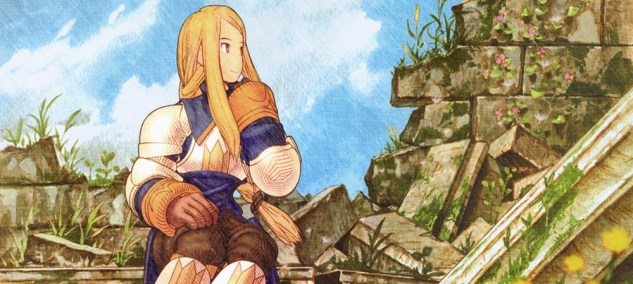
6.  Agrias Oaks (FF Tactics) 
32111-headhead.jpg

Another contender for ‘black sheep’ of the franchise, Tactics is a spin-off game which greatly emphasizes war, relationships, and, well… tactics. There are dozens of major characters in this game, but Agrias definitely deserves a mention. A trustworthy bodyguard to Princess Ovelia, Agrias is a Holy Knight sworn to the sword through-and-through, and she possesses a strong sense of duty and honor, given her high-ranking position. As characters in the game constantly seem to switch sides and backstab one another, her unwavering loyalty to her nation and aura of justice are particularly striking. She has a really cute birthday sidequest, as well. Who knew the stone-cold knight could be so adorable?

5. Yugiri Mistwalker (FFXIV)

tumblr_oszbcndnew1shn8hmo1_1280.png

Considering XIV and its hundreds of NPCs to try and keep relevant to the story, its a wonder some even get selected at all. While XIV has several prominent female characters in the Scions, I’d like to draw attention to a lesser-known member of the honorary group. Initially a Au Ra refugee from a fallen homeland, Yugiri became an assistant to the Scions out of gratitude, and assists them in whatever they need, be it covert operations or liberations. At first, she is simply a quiet, decisive, yet humble woman who lives on integrity – the pinnacle of what an essential ninja should be. Her steadfast determination in helping others is quite honorable, and it is this determination which inspires the people of other fallen homelands to stand up to tyrannical forces. I’d love to see what she’ll do in the new expansion – fingers crossed!

4. Rosa Joanna Farrell and Rydia (FFIV)

Screen Shot 2019-04-05 at 11.23.57 AMrydia_fmv.png

Aw, am I cheating by including two characters? Well, stay mad, because I couldn’t choose between these two. IV is considered an old-time RPG favorite, so why shouldn’t these characters be treated as such? Both of these ladies are wildly different, not only in design but in personality as well: Rosa is a gentle and polite young woman, while Rydia starts off as a scared little girl who is left shocked after the destruction of her hometown, Mist. Nonetheless, the two show incredible perseverance throughout the course of the game: Rosa becomes an accomplished healer and diplomat, while Rydia starts using her magical abilities as a summoner for the good of mankind and opens up to the rest of her party members. There’s a lot more to say, but this list is long enough as it is. Let’s just say that these two show a lot of character in just a little pixels!

3. Literally all the female class members in Class Zero (FF Type-0)

konachan.com-116541-cater-cinque_final_fantasy-deuce-final_fantasy-final_fantasy_type_0-moogle-queen-rem_tokimiya-ripu-seven_final_fantasy-sice-skirt-sword-weapon.jpg

So, you thought I was cheating when I put two girls for one number? Well, I hope you’re prepared for seven of them! I’ve started to notice a pattern here: underrated game equals underrated girls. As part of the ‘darker and grittier’ Fabula Nova Crystallis spin-offs series (which includes FFXIII and FFXV), the characters are made to look more realistic, which is why this group of ladies may be hard to tell apart at first – but their personalities more than make up for it. From the ditzy oddball that is Cinque to the rude but somewhat sincere Sice, all of them get their chance to shine alongside their classmates and in battle, with many unique customizations and abilities to perform, and segments where you can learn more about who they are and what they stand for. Whether you like the more realistic outlook and style of Type-0 or not, one (or more) of these ladies will certainly take your fancy.

2. Cissnei (FF Crisis Core)

QYWRBWq

All fans of VII will be familiar with the Turks – an elite black-ops squad belonging to the ominous Shinra HQ – which originally only consisted of members Reno, Rude, Tseng, and Elena in the original game. However, with the addition of several more materials that now make up the Compilation Of Final Fantasy VII, we’ve seen several new Turks members, but here I’ll focus on one of the more notable ones: Cissnei. Originally making her appearance as a playable character in the (sadly) now defunct mobile game Before Crisis, Cissnei was made more known to the world with her appearance in the prequel game Crisis Core. Although at most being a side character, her interactions with our protagonist Zack Fair are quite charming, and there’s a lot more going on with her and her involvement with the Turks beneath the surface. Not to mention that she looks real cute in a swimsuit!

1. Freya Crescent (FFIX) 

ix-art-freya-9405.jpg

Wow, we’re finally at the number one spot on this list, and we’ve only just gotten to our first anthropomorphic animal character! All jokes aside, Freya is seriously awesome. I’ve spoken about her before in a previous analysis, but to add on to that: If you take Freya at surface value, she’s a skilled and capable dragon knight (also known as a Dragoon, the best Final Fantasy class – don’t @ me..!) with a sharp and resourceful mind and a neat character design, which is already pretty cool, but how about digging deeper? Not only can she joke around with our butt-monkey (literally) protagonist Zidane, but she is shown to be able to cast aside her doubts and team up with others when needed, even with her former enemies. Moreover, she faces (and has faced) much tragedy throughout her life, yet she still holds out hope and stays humble, by choosing to live for the future by preserving the memories of her past. It’s a mighty shame that the story seems intent on putting her on the backburner after the first half, because, in all honesty, she is one of the most striking female characters in the whole series, and definitely deserves more admiration.


Well, that completes my list of underrated ladies in Final Fantasy, but I’d like to hear what you think. Who do you personally think is underrated and needs more love from the fans? Please feel free to leave a comment and tell me what you think. Otherwise, thanks for reading!