Retro Retrospective: Lupin III (Part 4)

money-car.gif

Welcome back, folks! Last time, I covered the weirdest Lupin TV series and a controversial OVA amongst other things, and it happened to end on a sad note. Fear not, for I’m sure this will be a lot less of a downer. Let’s get right into it, and what better way to start than by introducing an integral part of Lupin tradition!

This tradition is, of course, the Lupin III Yearly Specials, which were new animated made-for-TV films made by TMS, which aired on NTV every year, between 1989 and 2013. Before I get into these (and I’m sorry that I didn’t mention this earlier) I feel the need to mention how these came about: after the unexpected flop that was The Fuma Conspiracy, and the poor reception of the Pink Jacket TV series and its tie-in movie, TMS had pretty much given up on trying to revive the Lupin III franchise… until they realized that Japan had not yet given up on Lupin, and they just needed a new tact. Enter the yearly specials, which, along with OVAs and movies, took up 26 whole years until a new TV show started airing in 2015. Thankfully, there’s still a lot of material to chew on, so let’s begin … by taking a trip to the Big Apple.

New York sure does sound like a perfect place for a monumental heist, doesn’t it? The first yearly special, Lupin III: Bye-Bye Liberty Crisis! (otherwise known as Goodbye Lady Liberty) aired on April 4, 1989, and was directed by Osamu Dezaki, who directed several anime classics such as Astro Boy, Ashita no Joe, Space Adventure Cobra, and Rose of Versailles, as well as storyboarding several episodes of Green Jacket. The film, which follows the gang as they attempt to steal a precious gem hidden in the Statue of Liberty while evading a mysterious cult, proved to be a huge success, in no small part due to Dezaki’s involvement. He would return to the director’s chair four more times for these specials, so please, keep his name in mind!

lupin.jpg

The 80s era of Lupin III ends here, folks, and it’s safe to say that it showed both fans and critics alike several new and experimental pieces of Lupin media, whether they were received well or not. Next time, we’ll start the 90s era of Lupin history, so look forward to that. Until next time!


Retro Retrospective: Lupin III (Part 3)

1038594-hayao-miyazakis-lupin-3rd-theaters-september-14-19.jpg

Welcome back, folks! Last time, I covered two of Lupin’s famous jackets, a weird live-action film, and the early beginnings of an anime legend, amongst other things. Turns out, the fact that this is “part three” is a great coincidence… but no more beating around the bush; let’s get right into it!

I hope you guys don’t miss the 70s too much, because the 70s-era Lupin has ended, baby! Unfortunately, the 80s (for Lupin at least) didn’t start off too successfully. In 1982, an animated series, which was to be called Lupin VIII, was planned. It was to be a French-Japanese co-production, to be centered around the descendants of Lupin, Jigen, Goemon, and Zenigata, taking place in the far future. Sadly, it was never completed. Interestingly, it was going to be directed by Rintaro (of Galaxy Express 999 and Captain Harlock fame), and a pilot episode with fully-finished animation, music, and sound effects had been completed, but it was canceled before it even got a chance to air, which has been largely attributed to Leblanc’s estate wanting a huge sum of money for use of the Lupin name.

This lack of Lupin wouldn’t last long, however…
tumblr_ouxqfkncPO1w190qro1_500.gif

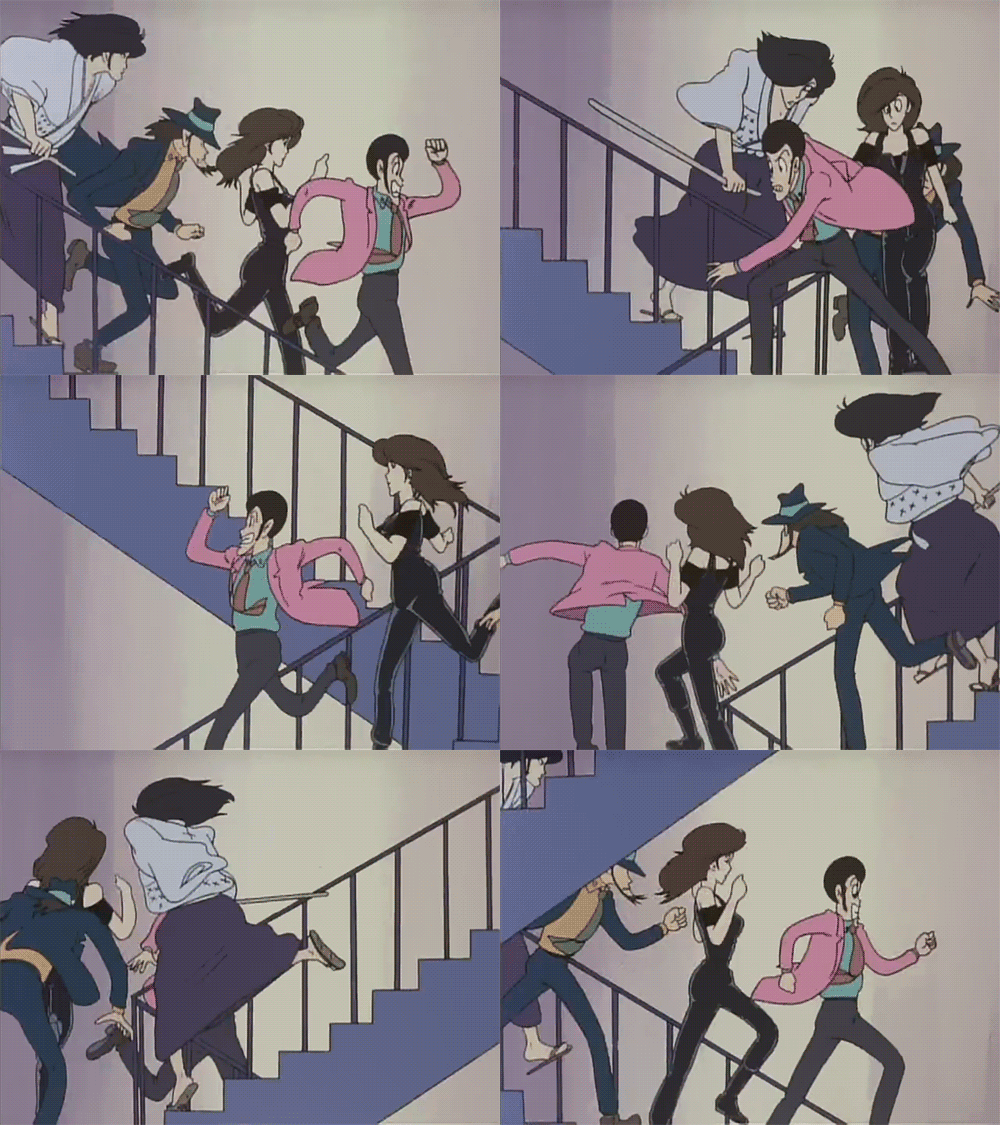
1984 saw the release of the third TV series: Lupin III Part 3, otherwise known as Lupin III Pink Jacket (you get the gist of this now, right?), which ran from the spring of that year to November 6, 1985, airing 50 episodes total. In my humble opinion, while this is a competent TV series, it isn’t as good as the previous two, with it’s outright bizarro episode structures and incredibly wonky animation, not to mention the fact that it really isn’t that different from its predecessors. But hey, if you’re into 80s weirdness and gag comedy… this is it.

Of course, at this point, a feature film had to be made. Enter Lupin III: Legend of the Gold of Babylon, released on July 13, 1985, and co-directed by Seijun Suzuki and Shigetsu Yoshida. Although this film features much better animation and a more straightforward plot, it’s definitely the lesser of the three TV-tie-in movies, and it would be ten years until the franchise saw another theatrical release. However, what was released next caused shockwaves and outcries amongst fans, and is still being talked about today, mostly for not-so-good reasons.

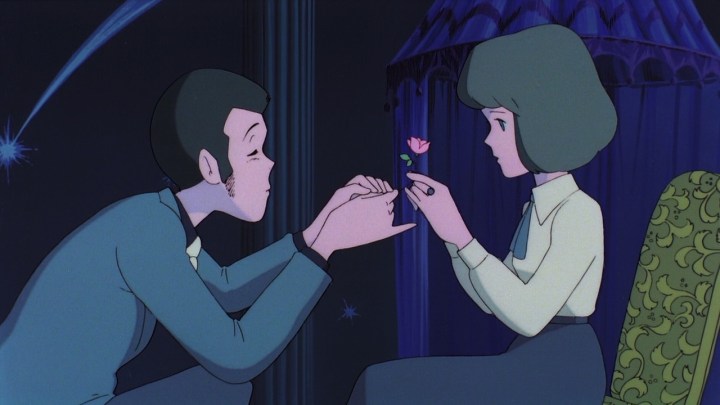
Lupin fans might already know what I’m talking about: Lupin III: The Fuma Conspiracy, the first of the Lupin III OVAs, shown in theaters on December 26, 1987 and later released on home video the following year. The OVA, done by TMS, follows the gang as they visit Japan for the first time in the series. When Goemon’s wedding is interrupted by ninjas and his bride Murasaki stolen, a suspicious plot involving secret treasures is uncovered, and it’s up to Lupin and the crew to rescue the bride and take the treasure for themselves. In my opinion (and I’m sure a lot of fans will agree with me on this), this OVA has some of the most gorgeous, fluid, and smooth animation in the series, second to Castle of Cagliostro, and this one isn’t even a movie! Moreover, the new setting was a refreshing new take for the series, and (this is purely an opinion) Murasaki is a total cutie.
promo_Toonami_LupinIII_Sat_60.jpg

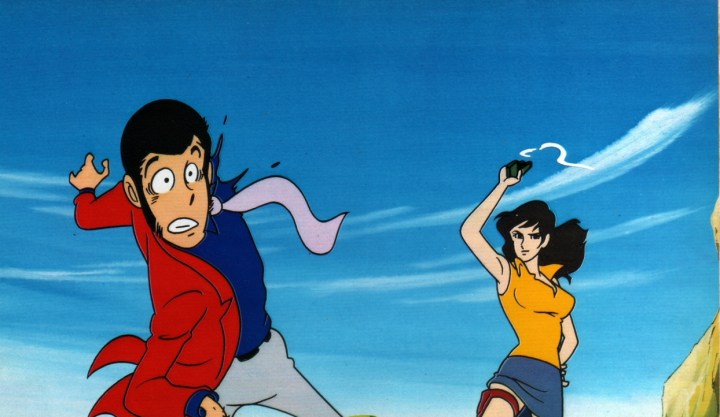
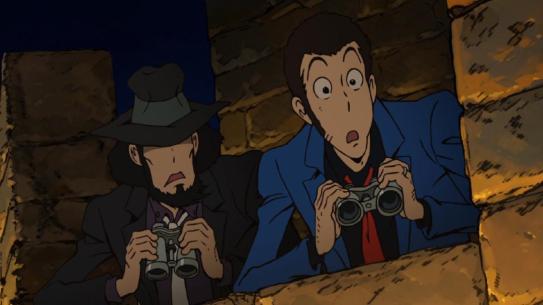
That’s not the shockwave, though, and brace yourselves, because you’ll be making the same face our friends Jigen and Lupin are making above. Although it was praised for its great animation by critics and fans, most fans had something else to say about it, and what they said was not pretty. You see, TMS was going through budgetary problems, which means they had to choose between two things while making the OVA: incredible animation or a beloved voice cast. They chose the former, since all five VAs of the Lupin III main cast were the highest-paid voice actors in Japan at the time, and there was no way they could afford all of them given what they were going through. The new cast, comprising of Toshio Furukawa as Lupin, Banjo Ginga as Jigen, Kaneto Shiozawa as Goemon, Mami Koyama as Fujiko, and Seizo Kata as Zenigata, was not well-received by Lupin fans at the time… and that’s a bit of an understatement.

These actors were just doing a gig (and they had all done incidental parts and one-off characters in Pink Jacket, so they knew the series well enough), but if you were to hear fans of the time react to this change, they may as well have burned Tokyo to the ground. Despite the fact that these voice actors were (and still are) very talented and respected in their own right, fans were very upset at the loss of their much-loved previous cast, and the new cast received a ton of hate mail (particularly Furukawa), so much so that translated scans  of interviews with this cast (from the Fuma program booklet) show that they praise their ‘superiors’ to high heaven and seem downright apologetic to be playing their characters, a clear sign that they knew how much criticism they were going to receive. Sadly, this change also left a dent in the relationship between Yasuo Yamada and Monkey Punch due to a misunderstanding, which unfortunately was never mended fully. Thankfully, even the most die-hard of fans have warmed up to this recasting over time, although it took thirty years and the deaths of two of the replacement VAs for this to happen.

I’m feeling a bit regretful about leaving Part 3 on a sad note, but not to worry, I’m sure the next part will be a lot less sad… I hope. Tune in next time for more Lupin goodness!

Retro Retrospective: Lupin III (Part 2)

animage-07-1978-lupin-iii-interview.jpg

Welcome back! In the previous Retro Retrospective, I went over the basic premise of Lupin III and introduced the core cast. Now that you’ve had a chance to get to know them better, let’s get right into it. Remember, the names of all the adaptations (as well as important names associated with the franchise) will either be in bold or in italics.

The first installment of Lupin III was, of course, in manga form. The series was the brainchild of Japanese manga artist Kazuhiko Katō (under the pen name Monkey Punch), who became inspired after reading 15 of Maurice Leblanc’s stories, many of which featured Leblanc’s fictional French master thief… Arsène Lupin. According to him, the aim of the series was “to produce a comedy adventure series that reflected the traits of Leblanc’s character”. In addition, he was also inspired by the likes of Agatha Christie novels, James Bond, The Three Musketeers, and the films of Alfred Hitchcock. The Lupin III manga began serialization in the Weekly Manga Action magazine starting August 10, 1967. Originally, the series was expected to last only three months, but due to its popularity, it reached up to a staggering 14 volumes (94 chapters), eventually ending on May 22, 1969.

At this time, anime producers were taking note of Lupin III’s success, and wondered if it could possibly gain more popularity as an animated TV show. Thus, the Lupin III pilot film was created in 1969. The 12-minute short film of sorts, directed by Masaaki Osumi, was the first animated adaptation of the series, and was intended to garner interest from the public and secure funding. One notable aspect of this pilot film is that it was shot and recorded twice, meaning it had two different voice casts, one for the CinemaScope pilot, one for the TV pilot. Also notable is that only two of the voice actors were retained for both pilots – Kiyoshi Kobayashi (as Jigen) and Eiko Masuyama (as Fujiko).

Eventually, the first TV adaptation began airing on YTV in the fall of 1971 – Lupin III Part 1, otherwise known amongst fans as Lupin III: Green Jacket, for obvious reasons. It was broadcast for 23 episodes, the last one ending on March 23, 1972. At first, it was directed by Masaaki Osumi (director of the pilot), but he was later replaced by then-newcomers Hayao Miyazaki and Isao Takahata. Sound familiar? Keep those names in mind!

5c80ba953641c906658e3f4d51ce224e018eadc8_hq.gif

Here comes the money! It didn’t take long for the actual film industry to catch up to Lupin, either. Lupin III: Strange Psychokinetic Energy, released in the summer of 1974, was both the first theatrical and first live-action film of the series. In contrast to the darker themes of Green Jacket, this film was very heavy on the slapstick comedy, insane gravity-defying stunts, and general wackiness. Strangely enough, it included all five cast members… except Goemon. Perhaps he was just too serious for something as kooky as this?

Goemon would not be absent in the next adaptation, however. Lupin III Part 2, also known as Lupin III: Red Jacket, began airing on NTV in the fall of 1977. The longest-running TV adaptation by far, Red Jacket ran for 155 episodes before ending on October 6, 1980. Red Jacket is one of the more well-known Lupin adaptations, thanks to it being shown on [adult swim] in the US before Green Jacket. In comparison to its predecessor, Red Jacket was a lot more comedy-oriented. In addition, it created and cemented the most famous Japanese voice cast arrangement for the series: Yasuo Yamada as Lupin, Kiyoshi Kobayashi as Jigen, Makio Inoue as Goemon, Eiko Masuyama as Fujiko, and Goro Naya as Zenigata. With one exception, this lineup would remain unchanged for the next 18 years.

While Red Jacket was still airing, two feature animated films were released, one of which would become a beloved classic as the years went by. The first of these films was Lupin III: The Secret of Mamo (also known as Lupin vs. The Clone), released on December 16, 1978. Besides it being the first animated theatrical adaptation, the only other aspect of note is that it is very much science-fiction based. Cashing in on Star Wars, perhaps?

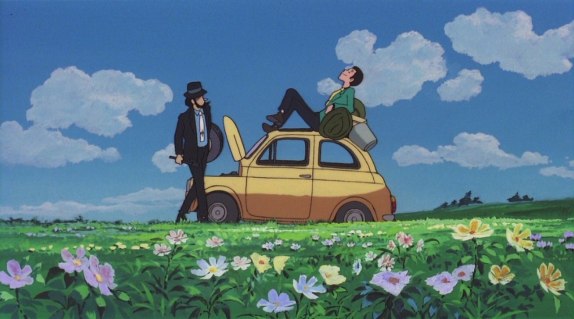
Nevertheless, it was the second of these movies which would prove to be the most well-known amongst anime fans, and this movie was Lupin III: The Castle of Cagliostro, released the following year. It was directed by none other than Hayao Miyazaki, who went on to form the acclaimed Studio Ghibli with Isao Takahata a few years later. While the two had worked on Green Jacket, as well as two episodes of Red Jacket (to be specific, these were episodes 145 and 155), this was the first time Miyazaki would be handed a directing job. While it wasn’t initially considered a box-office success, its charming style and fun animated action sequences, coupled with numerous re-releases, made it incredibly popular amongst people who weren’t even fans of the series!

CastleCagliostro4_757_426_s.png

That’s all for now, folks! Tune in next time, where I’ll hopefully go over the next Lupin series, in which he wears a very different jacket… place your bets now!

Retro Retrospective: Lupin III (Part 1)

64f09a5ed1e6571.jpg

Ah yes, good old Lupin III, the series that still continues to this day, and is the gift that keeps on giving. Whether it’s the exciting action sequences, the slapstick comedy, or the fun characters, this is a franchise that only seems to capture the hearts of more and more people as it grows older, like fine wine. It’s been about a year since its 50th anniversary, and in honour of Part 5 airing, I’ll be taking a look back one of Japan’s most iconic anime series, and (hopefully) be of use for anyone who wants to start watching Lupin III.

But not so fast! Although every Lupin III adaptation has a different plot and setting, the story is always going to revolve around the adventures of the five members of the main cast, which consists of:

Arsène Lupin III: the grandson of the infamous Arsène Lupin; Lupin is the main character, for all intents and purposes. He is known around the world as a famed  ‘gentleman thief’, and once he’s set his eyes on something to steal, he’ll stop at nothing to get his hands on it, whether it be through clever disguises or the use of fancy gadgets. Even though he acts like quite the goofball and gets stuck in undesirable situations on the reg, he’s a lot smarter than one would imagine.

Jigen Daisuke: an always reliable and deadly marksman who never shoots to miss; Jigen is Lupin’s right-hand man, partner-in-crime, and closest friend. Thanks to his past as a hitman, he is proficient in using all kinds of firearms, including revolvers, pistols, and even anti-tank rifles. Despite his dry, sarcastic remarks and general annoyance with having to act as the straight man to Lupin’s antics, he is incredibly loyal and would follow him to the ends of the earth if necessary.

Goemon Ishikawa XIII: the ‘third man’ of the team, Goemon is the thirteenth generation descendant of the dissident samurai Ishikawa Goemon. In comparison to Jigen’s gun-tooting, Goemon’s weapon of choice is Ryūsei/Zantetsuken, a sword which can cut through almost anything. He is also the most quiet and reserved member of the five, which lands him in the position of the comically serious at times.

Fujiko Mine: resident femme fatale and crafty schemer, Fujiko is more than just her beauty: she’s also an intelligent thief, and has no problem using her feminine charm to get her way. She and Lupin have a rather on-off relationship – sometimes she’s his associate, sometimes his rival. In addition, she’ll often double-cross him or make deals with his current enemy for her own gain. However, Lupin is so infatuated with her that he more often than not forgives her.

Inspector Zenigata: Inspector Koichi Zenigata – often affectionately referred to as “pops” by Lupin – is a policeman working for the ICPO, and has made it his life goal to arrest him, no matter what it takes. Sadly, although he is very clever and competent in his investigations, Lupin is always one step ahead of him somehow, leaving the two stuck in a perpetual cat-and-mouse game! Though he doesn’t want to admit it, he has a bit of a ‘enemy mine’ soft spot for Lupin – he’ll often compromise with him and even save his life on occasion.

Thus ends part 1 of this retrospective, where the core cast of Lupin III have been established. You’re going to be seeing these names a lot (duh..) in this retrospective, so take your time and become acquainted with them, won’t you? More to come in part 2!

Movie Review: Ant-Man and The Wasp

images.jpeg

When I first saw the trailer for Marvel’s first post-Infinity War (yes, I just made this up) movie, my first reaction was: really? Did we need a sequel to Ant-Man? Why would Marvel’s first movie after the epic and grand blockbuster that was Infinity War be a sequel to Ant-Man, widely considered one of the MCU’s weaker entries? However, I still kept my head high, hoping it could be something refreshing, seeing as it promised a movie in which the female lead could be the star of the show just as much as her male counterpart – in this case, Hope van Dyne dons a suit for the first time to join her new partner Scott Lang… as The Wasp.

Continuing from the previous Ant-Man,  Scott Lang is looking forward to finally getting off house arrest – he only has three more days to go, and after that, as far as he’s concerned, freedom is all his. However, after he receives a strange vision he thinks is being sent by the missing wife of Dr. Hank Pym, he reluctantly contacts them, thinking it isn’t much to worry about… until he wakes up in Hope’s car. Hope and her father believe his vision is a message from her, and they want him to wear the Ant-Man suit again, in the hopes of bringing her back from the Quantum Realm. This time, he’s not alone: Hope is joining him as his partner-in-justice: The Wasp. However, getting her mother back won’t be easy, as the two’ll have to deal with several foes who want their hands on Hank’s multi-dimensional lab, including corrupt businessmen, a former work associate, and a mysterious young woman with quantum-related powers, only known as “Ghost”.

First of all, I’m surprised by how much more memorable this film was in comparison to its predecessor. Overall, it had a much more compelling and emotionally-driven narrative, which allowed us to see the different sides to the characters a lot more. For example, Dr. Hank Pym  proves that he’s much more than just a grumpy old genius, and Hope’s character description doesn’t both start and end with “sassy female lead”. Lang’s ex-convict friends (Luis and the gang) have larger roles here, but thankfully, they don’t come off as completely useless and annoying like they did in the first film, and they get their own shots at being heroes. In addition, the ‘villains’ are a lot more interesting, definitely much more so than Yellow Jacket before them (FYI, I had to look it up because he was so bland that I forgot he even existed). Although she is played by a relative newcomer, Hannah John-Kamen makes Ghost both an incredibly terrifying and yet an incredibly vulnerable villain, portraying both sides of her personality perfectly.

Despite it’s promises of being a very comedic movie, I felt that a few of its jokes fell a little… flat. Perhaps I haven’t gotten over the emotional brunt of Infinity War just yet, or I experienced severe mood whiplash, but said jokes were quite hit-or-miss: there’d be something hilarious one minute, and one joke that goes on a bit too long the next. In fact, one of the gags was enough to slow down the plot considerably, making me worry that they had lost track of their pacing and sense of direction completely. Thankfully, after that gag is over, the movie holds its head up and picks up the pace again. Moreover, I found some of the decisions the characters made questionable, especially given their situation, and it seemed like they made out-of-character decisions just to set up further joke moments along the line.

In conclusion, Ant-Man and The Wasp is in no way as good as Infinity War – and, obviously, nothing in the MCU ever will be. However, despite its weird reason for existing, some flat one-liners, and some stupidity, it’s still an entertaining summer superhero flick – perhaps after what happened in Infinity War, we needed it.

Final score: 7/10

Anime Review: Adieu Galaxy Express 999

Screen Shot 2018-07-03 at 6.23.35 PM.png

Time for a little-known piece of trivia: did you know that the classic 1979 anime film Galaxy Express 999 had a sequel? I didn’t, either. Alas, this seems to be the fate that many sequels share, especially those of classic anime. Seriously, how many people do you think know about the existence Eureka Seven AO or Ghost in the Shell: Innocence? Sadly, many sequels, whether or not they’re done in TV, movie, manga etc. form, are more often than not, forgotten about. However, whether or not they’re actually good, satisfactory, manage to tie up a story or present a newer one (while still keeping similar elements as the previous incarnation) is an entirely different ball game. When I discovered that there was a sequel to GE999, I found almost no reviews online, so I decided to take matters into my own hands and watched the film in its entirety. Thank me later. Maybe this’ll show up on Google one day. Let me know if it does.

But I digress. The plot of Adieu Galaxy Express 999 (also known as Adieu Galaxy Express 999: Final Station Andromeda) goes as follows: Set two years after the events of the first film, our main protagonist, Tetsuro Hoshino, now a bit older, has joined an Earth resistance fighting against the Machine People, led by Queen Promethium, who is still a fearsome entity despite having lost her physical form in the previous film. He has abandoned all hope of ever seeing his beloved Maetel or the Galaxy Express 999 itself ever again.. until he receives an automated message from Maetel, urging him to rejoin her on the 999 for an unknown reason. When he does, she is nowhere to be seen, and the train starts behaving erratically, moving on its own course. Tetsuro, once again, must embark on a journey away from his venerated Earth, to distant planets, all the while dealing with vicious enemies and meeting up with fellow allies, both new and old. And this time, he vows to find Maetel, defeat Queen Promethium, and end this conflict once and for all.

Screen Shot 2018-07-03 at 7.23.03 PM.png

Here’s my main case for this sequel: it’s a great film, but it’s also a terrible film. I’ll explain by listing what I enjoyed about it. First of all, the animation was simply stunning; director Rintaro (who also directed the first GE999 film and the 1978 Captain Harlock TV series) was certainly no slouch in that department. He made full use of his visual creativity and his position as director, making almost every sequence in the movie into an arthouse moment, which I’m sure must’ve blown people away in 1981, considering it still looks good even now. In many ways, the animation is much better than its predecessor, and visually, its much better than the original. That screencap I put up there won’t do it justice. In addition, many of the questions that are posed in the first movie are wrapped up, albeit a bit hastily.

However, this is where my praise must unfortunately stop, because almost everything else in the movie is… not good. You see, although it was marketed as the conclusion to the Galaxy Express series, neither the manga nor the TV adaptation would actually be concluded until a few months later. Not to spoil anything, but after watching it all the way through, the notion that even the film itself tried to make the ending seem like it had all the gravity of being the legit ending of the sci-fi story is very odd, considering it was nothing of the sort for the majority of its 2 hour runtime. This brings me to my next, slightly exaggerated issue: nothing happens. Yes, many of the questions were wrapped up (as mentioned above), but besides that, pretty much nothing of narrative importance occurs. The first film had the narrative of Tetsuro on a quest for vengeance against the Machine People for killing his mom, while at the same time learning about what it means to be human by learning about and growing closer to Maetel, Captain Harlock, Tochiro, and others, the narrative for this one is… the 999 is somehow going off-course and nobody knows where it’s going, and Tetsuro wanting to find Maetel again because, well, she told him to come.

Screen Shot 2018-07-01 at 8.21.17 PM.png

Remember those impressive animation sequences I mentioned earlier? Although they are gorgeous from an art perspective, they are, 90% of the time, placed in a scene where nothing of emotional importance happens. The first movie very much rode off of the emotions of the characters while at the same time having an over-arching narrative, and there, Rintaro’s artfully-crafted sequences worked a lot better, since there was actually something the viewers could experience and relate to happening in the scene, whether it be sadness, happiness, anger, etc. Here, although all of the characters from the previous film were present, nothing is done with them emotionally (or narratively for that matter), therefore all those artsy scenes, which were meant to make the audience feel something, lose all their intended emotional value.

In conclusion, Adieu Galaxy Express 999 is not a film with no redeeming qualities, In fact, I’d personally say it’s a bit hard to dislike it simply because of how wonderful and artistic it looks. But if you’re considering watching this, watch it for the visuals alone, otherwise you’ll be disappointed. You’re probably better off watching the first film instead.

Final score: 5/10