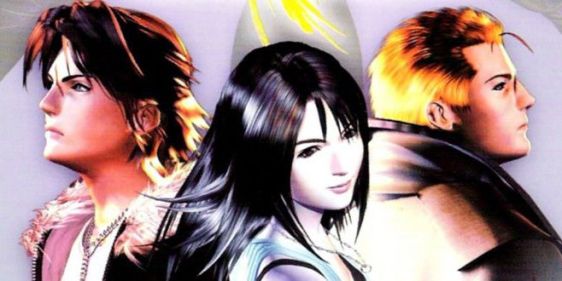
Analysis: 8 Reasons You SHOULD Try The Final Fantasy VIII Remaster

ff8-1280x720.jpg

2019 has certainly been a year for the unexpected. Not only is the Final Fantasy VII Remake actually going to see the light of day thanks to a spectacular trailer and palpable release date (mark your calendars for March 3rd of next year, you guys!) shown at Square Enix’s E3 panel a few days ago, but after years and years of constant radio silence, the whole drama over Squenix losing the source code, and more snubbing than most Oscars nominees , Final Fantasy VIII is finally (emphasis on finally) being remastered for the PS4, Xbox One, PC, and Nintendo Switch, set to release sometime later this year.

So… why should you care? It’s understandable that some may be immediately turned off by this game, and that isn’t a surprise – for whatever reason, Square Enix loves treating this game like the butt-monkey of the Final Fantasy franchise and has pretty much actively thwarted any remasters, remakes, or re-releases of this game for years now. That, and the heart-stompingly popular VII being its predecessor, made it a lesser quality experience in the eyes of many gamers at the time. However, time hasn’t abandoned this game, and now a few months after its 20th anniversary, more and more have softened their views towards it, and perhaps this remaster can, at last, shed some light on this dark horse. And with that tragic history out of the way, let me present 8 reasons (see what I did there?) to try the remaster.

final-fantasy-viii-ps1-cover-front-30863-1488659320.jpg

1. An Insanely Unforgettable Story 

Let me just get this out of the way real fast – the plot of VIII is absolutely insane. Within the first few hours, you (playing as Squall, the main character – I’ll get to him later) have your face permanently scarred, get sent on a dangerous mission as your final exam (since Squall and the rest of the gang live in a military academy, by the way), find yourself in a run-in with a group of resistance members, engage in the assassination of important political figures, meet a cute girl at a ball, and somehow get drawn into the evil schemes of a sorceress who wants to become the all-powerful – using something called “Time Compression”. So, yeah, there’s time travel craziness involved. Oh, and there’s a monster that lives in the school’s basement. Some may label the story as crazy and overtly dramatic, but that’s what makes it so fun in the first place. VIII’s plot is a rollercoaster ride that never stops, and all you have to do is sit back and enjoy the ride.

2. A Stunning Soundtrack 

This one should be obvious, as pretty much every game in the Final Fantasy franchise has had a critically acclaimed soundtrack, all thanks to the patron saint of the franchise, Nobuo Uematsu, and this one is certainly no exception. From the bombastic and incredible “Liberi Fatali” that plays in the opening to the more relaxing “Balamb Garden” to the incredibly beautiful “Eyes On Me” performed by veteran singer and actress Faye Wong, VIII’s soundtrack is a testament to the versatile talents of Uematsu and the hearing these amazing pieces of music in-game adds so much more to the experience. Just take my word for it.

3. Graphics Galore

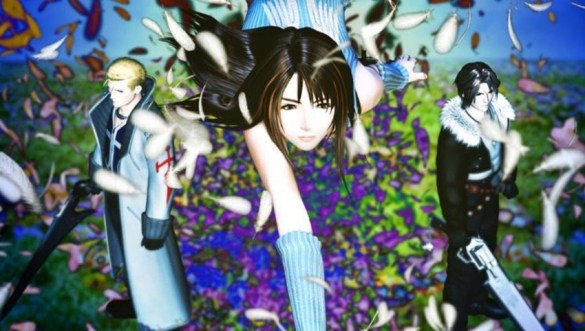
If you asked any gamer back in 1999, they would tell you that VIII was the pinnacle of graphic design and quality. Gamers playing VIII after VII witnessed an overwhelming and exciting change in the future of gaming – the low-poly blobs that were used for the characters in VII were greatly upgraded: Squall and co. became realistically-proportioned characters who had a larger variety of unique movements and animations. Even the backgrounds were upscaled and improved, and not to mention the gorgeous FMV cutscenes, which still hold up even by today’s standards. While the character models and backgrounds have been cleaned up and made a lot less pixel-like for the remaster, one can still witness the FMVs and other cutscenes, leaving a lasting impression on how far video games have come.

Final-Fantasy-8-3.jpg

4. A Colorful Cast 

The cast of Final Fantasy VIII are, quite literally, colorful, and you can thank Tetsuya Nomura for that. But besides that, the cast of this game, from your party members to your antagonists, have unique and interesting traits that, while annoying at first, become more likable as you continue playing, and by the end, you’ll really feel as if you finally belong with a group of supportive friends and confidants. Your party members, from the hot-headed Zell to the shutterbug Selphie to the suave Irvine to the mature Quistis are all charming and endearing (not to mention Rinoa, more on her later) and even your rival, Seifer, has his moments of awesome, along with his own little gang of polar-opposite lackeys – the ice queen Fujin and the brash Raijin. Whether a fellow student or a time-bending villain, there’s always someone to love.

5. Minigame Madness

Every Final Fantasy has its minigames – fun little games inside the actual game that allow you to pass the time between your impending doom and maybe earn some more points – but one are remembered quite as much as Triple Triad, a card game that you can play with NPCs anywhere, anytime, and that gets harder as more rules are added as the game progresses. Although some found the game as an annoyance, it can be an ultimately rewarding experience once you get the hang of it. Prepare to be addicted!

6. Dialogue Done Right 

During the production of VIII, director and Squenix legend Yoshinori Kitase mentioned that his goal for the dialogue was that it should be more realistic and employ less of the slapstick comedy used in previous games, allowing the emotions of the characters to really shine through. And it shows: while the dialogue at surface level is somewhat nonchalant and unassuming, it also shows an undercurrent of something deeper – every character has little ticks and anxieties that they let slip through the cracks of their outward facade. Writer Kazushige Nojima attempted to craft dialogue that was emotional, raw, and real – a novelty for the time and one of the main positives of the game as a whole.

nhdpj3xa1tzmdupiolft.jpg

7. Love In a Helpless Place 

Although love stories are now considered commonplace in the Final Fantasy mythos,  VIII was the first game to place a love story front and center as one of its main themes – a love between the lonely and reserved Squall Leonhart and the energetic and passionate Rinoa Heartilly. These two are a pair that, at first, couldn’t even stand being in the same room together, much less actually forming connections. But throughout the course of the game, the two work together and create an inseparable, unbroken bond, one that not even time itself will break. Squall and Rinoa aren’t the only lovebirds of note though – the game also focuses on a mysterious man called Laguna and his relationship with two women, Julia and Raine. Who is this man and why is his relationship with these ladies so important? Play and find out.

8. Inside The Mind of Squall 

Squall, for all the snubbing his game receives, has consistently been a favorite amongst all Final Fantasy protagonists and characters alike. How come? Thanks to Nojima, we players can actually see inside the mind of our introverted protag, as his inner monologue shows up a lot in the game, allowing players to see the boy underneath the man’s exterior. Squall is a man of few words but thousands of feelings and convictions, and being able to witness him become more open with his friends and loved ones is definitely a sight to behold. His quiet nature is also a point of admiration and relatability for many players, as I’m sure we can all relate to the quiet and emotional high school kid inside of all us. Not only is Squall a great protagonist, but he’s also a great character, one who’s character growth will leave you feeling the most immense satisfaction.

So that was my 8 reasons to try the Final Fantasy VIII remaster! Whether you plan on actually buying the game when it is eventually released or not, I hope this list has convinced you somewhat. Just remember to have fun and enjoy this wild ride!

Analysis: 9 Things Final Fantasy IX Taught Me

FFIX-Featured-Image.jpgReleased by Squaresoft (now more widely known as yours truly, Square Enix) in the year 2000, Final Fantasy IX is the ninth installment in the mainline Final Fantasy series, and is, as of right now, one of the most critically acclaimed games in the entire franchise. Praised for  its creative graphics, nostalgic elements, easy-to-learn battle system, and unique characters, the game is nothing short of an engaging experience for all ages and backgrounds. Nevertheless… what is a Final Fantasy game without its moral lessons? From IV’s theme of “everyone and anyone can change for the better” to VII’s message on protecting the planet, this series has always been one thats been able to teach its players valuable life lessons, and let players choose their own interpretations of said lessons. So, I’m going to go over 9 things that the 9th game in the Final Fantasy franchise – as well as my personal favourite; don’t come at me – has taught me.

  1. You must always remain true to yourself. Many of us can relate to the struggle of trying to stay true to your own core values when you are stuck in a situation that won’t or cannot permit it – be it a strict work environment or an unsympathetic family. Garnet, the deuteragonist and lead heroine, struggles with this belief as she is forced to watch her home ravaged, come to terms with her real past, and deal with responsibility as a princess (and later on, the queen) of Alexandria – so much so that at one point she succumbs to the traumatic stress, which leaves her temporarily mute and with a difficulty concentrating during battles. However, despite all this, Garnet emerges from her battles – internal and external – as a confident and more experienced person… still keeping her core values and her strong will with her, and staying true to her beliefs until the very end.

Screen Shot 2019-03-03 at 10.46.13 PM.png

2. What you do for your friends, your friends will do to you. It’s a well-known saying that what goes around, comes around, and it certainly applies to friendship. Of course, almost every Final Fantasy game has the core message of friendship, but I feel that here it is a special case. Zidane, our rebellious and monkey-like protagonist, finds many of his new allies a bit weird and off-putting at first, but gradually opens up and forms bonds with them over the course of the story. This comes to a head when Zidane falls into a deep depressive state when his true nature as a Genome (a soulless being that only exists to cause war and chaos) is revealed, and he tries to cut himself off from his allies, believing himself to be unworthy of their friendship. Nonetheless, his friends are unwilling to give up on him, and remind him of all the things he’s done for them, how him being a Genome doesn’t matter to them, and how they want to do for him what he did for them. This powerful scene, coupled with the amazing You’re Not Alone theme, really drives home the point: friendship goes a long way!

3. You are not your past. All of us have events in our history that we’d rather forget and that we’d rather not tell to anyone. These events can take their hold on us and influence us in their own way. Vivi, the game’s resident Black Mage, is an adorable and well-meaning little fellow, but behind that exterior hides a dark past: all Black Mages were created from scratch by Kuja (our antagonist) to be  disposable footsoldiers for Queen Brahne’s army, and Vivi is the prototype Black Mage, which is why he is capable of showing emotions. Vivi is shocked, and begins to wonder if his entire existence and raison d’être is just to be a mindless killing machine, but as he continues aiding his friends in their journey, he begins to accept himself for who he is now and puts the past behind him for the greater good. Vivi may be one of the most iconic Final Fantasy characters for his unique design, but the impact he’s left on players isn’t just skin-deep! Good job, Vivi!

Screen Shot 2019-03-03 at 10.46.39 PM.png

4. Be accepting of others, no matter what. Accepting other people for who they really are is something that is easier said than done. Zidane has difficulties trying to understand his motley crew of allies at first – after all, is it easy to accept a toddler wizard with philosophical tendencies, a stubborn knight who’s armor clanks every time he moves, and a giant Qu who thinks only of seeking “yummy-yummies”, amongst others? In fact, our protagonist only seems to accept them into his team out of obligation, or because he had no other choice in the matter. Nevertheless, as the game goes on, he begins welcoming his newfound friends for who they are – even if they do happen to be a little weird! This acceptance from him greatly improves their bond, and it is precisely this acceptance that the group thanks him for when he falls into his depressive state late in the game – which proves that getting to know others is insanely valuable. As Zidane himself says: “You don’t need a reason to help people”.

5. Nobody is useless. In this day and age, it’s easy for one to believe that their own efforts are fruitless and that they will amount to nothing. As a matter of fact, our main antagonist, Kuja, admits to feeling like his entire life was misguided and that he feels ‘useless’ after Zidane decides to save him. Zidane, however, rebukes Kuja – despite all the destruction he has caused – and tells him that “no one’s useless”. Not  only does this scene speak volumes about both of their characters, but it’s true: every character in the game, even the villains, minor characters, and NPCs show their skills and prove their worth in the story, no matter how small that role may look like in the beginning. It goes to say that there are no small roles… only (quite literally, in this case) small actors!

Screen Shot 2019-03-03 at 10.47.02 PM.png

6. Sometimes, disobeying orders is the right thing to do. Now, I’m not trying to encourage petty crimes here, but sometimes not following your intended orders – whether they be made up or already set in stone – proves to be an advantage. No other character in the game represents this better than Steiner, the knight captain with a cranky disposition and a near-permanent frown. At the start of the game, Steiner is unwaveringly loyal towards Queen Brahne and will do anything to keep Princess Garnet safe, even if it means joining Zidane – who he resents, Zidane being a womanizing thief and all. However, after the Queen shows her true colours, Steiner is torn and confused on whether he should blindly follow whoever he’s told to follow. In the end, he decides to go against the Queen and place his trust in Garnet, and even forms a respectful relationship with Zidane, telling himself that he’ll think his alliances for himself from now on.

7. You cannot change the past or future, but you can the present. There are moments in our lives where we begin wishing that we could’ve changed something, anything, to get any kind of better result. Other times we find ourselves overthinking the future. A character who exemplifies this is Freya, a Burmecian anthropomorphic rat who regrets not being able to tell her love, Sir Fratley, how she truly felt in the past, and wanders the world in search of him. When the two are finally reunited, she’s heartbroken when he reveals that he lost his memory and doesn’t remember her at all, and she frets over what will happen to their relationship in the future. Be that as it may, Freya makes the decision to quit worrying about such meaningless, and by the end, she is shown with Sir Fratley, who finds himself falling in love with the same woman he left years ago, deciding (at least for now) to continue living in the present and live it to the fullest.

Screen Shot 2019-03-03 at 10.47.30 PM.png

8. Influences help you grow. Our parents have always warned us about people who may be bad influences to us, but what about those who end up becoming our guardian lights? None of the main characters are capable of confiding or placing much faith in each other, as all of them view the others as a bit strange and odd. Despite this, they gradually are able to influence each other in nuanced ways – such as Garnet gaining her courage from Zidane and Zidane coming to terms with his mistakes through Garnet. These subtle yet effective influences certainly show the character development and growth of the main party in a big way, and it just goes on to say that even the people you may not initially trust can have a great effect on your life.

9. The journey is more important than the destination. I know, I know. This here phrase has more-or-less become common sense now, and it is a phrase that has been repeated in several Final Fantasy games. However, this phrase has never resonated with me in other FF games than it has with IX. In this game, although it was important, defeating Kuja and seeking the truth behind Queen Brahne’s chaotic reign was never the focus for me – what I really enjoyed the most was exploring the world of Gaia, listening to the one-of-kind soundtrack (courtesy of Nobuo Uematsu) while going about the various towns (Border Village Dali, anyone?) , and witnessing the lively and entertaining character dialogue and moments with the main cast. When it was all over, I found myself longing for my journey, not my quest, back. These small moments, for me, are forever unparalleled, and this adventure is definitely one I will never forget.

maxresdefault.jpg

Analysis: Why Filler Worked In Sailor Moon (The 90s TV Show)


Screen Shot 2019-02-02 at 5.22.40 PM.png

So, Sailor Moon. Originally a magical girl manga written and illustrated by Naoko Takeuchi that began serialization in 1992; it became an instant hit and, since then, has never looked back. As of 2019, the world-renowned manga has been adapted in several forms: anime series, films, television specials, musicals, video games, tabletop games, a live-action TV show, and recently a 4D theme park attraction at Universal Studios Japan. And that’s not even counting the amount of fan-produced content! Basically, calling Sailor Moon merely a ‘success’ is a bit of an understatement if I’ve ever heard one, and loyal fan communities are still thriving almost thirty years later. However, no matter which adaptation is brought up first, focus will almost certainly be driven to the 90s anime show, which many consider their favorite childhood show; for some their favorite show of all time. But why is this? I’ve been rewatching and examining the show in closer detail, and I’ve found the answer: filler.

Before we dive headfirst into the answer, we must first establish what ‘filler’ is, exactly. If you were to look at the literal dictionary definition, filler is defined as thus: an item serving only to fill space or time in a newspaper, broadcast, or recording. The definition made by anime fans is not far off. Essentially, “filler” is a word used to describe episodes in anime that deviate from the source material and/or story and fill up episode time while the writers try to get the plot back on track or wait for the mangaka to continue it properly.  There’s certainly some infamous examples of great swathes of filler episodes in anime, including – dare I say it – Naruto (sorry, Naruto fans). Of course, most of the 90s show’s 200 episodes (yes, 200 episodes) are comprised of filler, but what makes Sailor Moon’s filler episodes better and generally more beloved than say, Naruto’s? (I said I was sorry!)  Let’s get right into that.

Now, I’m not going to try and be “fake deep” here. Sailor Moon as a whole isn’t very deep – what you see is what you get. But, no matter how silly what you saw was, there was always meaning to it, thanks in no small part to the three main directors of the show: Junichi Sato, Kunihiko Ikuhara, and Takuya Igarashi, who are well-known figures behind some other incredibly popular magical girl anime, such as Ojamajo Doremi and Revolutionary Girl Utena. So, while Takeuchi was working hard finishing a new chapter of the manga every month or so, these three had to keep the story going in some way or another until said chapter was published. The differences in pacing are quite noticeable, for sure – Sailor Moon Crystal (the newest adaptation, which follows the manga to a T) has a first season of only 26 episodes, while 90s Sailor Moon’s first season consisted of 46. They were given general outlines of the general story, but what did they do that made the often ridiculous filler so memorable?

Screen Shot 2019-02-02 at 5.22.47 PM.png


What they did, to be precise, was take an already great cast of characters and use filler to develop them further. The development in each episode didn’t come as any sort of grand revelation or epiphany for the characters – rather, the writers made sure that whichever character (or character) was given the spotlight in said episode would at least learn one new lesson. For example, Hotaru learning to open up to Chibiusa, Ami getting over her struggles with shyness, and Minako’s decision to keep being a Sailor Guardian despite her obstacles. Sometimes, these episodes was even used to pair up characters that would rarely be seen together in the manga – such as Usagi and Haruka – and the episode would revolve in having the oddly-matched characters work together and forming a new bond. Moreover, filler episodes, being the constant source of hilarity (intentionally or not), often gave a bit of levity to the more serious characters, like Luna or Setsuna, simply by putting them in comedic situations! Most filler episodes would focus on friendship – the core theme of the show – and by the end of any given episodes, the main characters would have a stronger and deeper bond.

This filler benefit didn’t just end at our goody-goody main characters, though. The same treatment was applied to the many villains as well. Although most of Sailor Moon’s villains (besides the main big bad of every arc) would be introduced in one chapter and killed off in the next, the show took great liberties with these one-off characters, and made their best efforts to make them more humorous and sometimes more human. For example, the quirky mini-boss team Witches 5 in third arc, while being shoddy one-hit-kill baddies, became gossipy witches who constantly vie with each other for attention and pull pranks by leaving live snails in lockers. Fisheye, a member of the Amazon Trio in the fourth arc, often questions his actions, and even our main character is genuinely nice towards him when he shows a change of heart. Despite the differences between these two changes, they made the villains a lot more entertaining.

In conclusion, no, Sailor Moon’s filler isn’t perfect; some episodes certainly didn’t work as well as others. That can be said about a lot of filler in anime. Yet, despite this, so many people turn to episodes such as these when they need a bit of lighthearted fun and character development moments. When I look back on what I enjoyed most about the 90s show, I realize it was how enjoyable episodes like these were – where one could catch up on the story, learn a thing or two, and, most importantly, have fun!

Screen Shot 2019-02-02 at 5.22.55 PM.png


Analysis: Monogatari’s Well-Written Terrible Character

Nadeko_profile.png

WARNING: This analysis contains SPOILERS for Bakemonogatari and the Monogatari Series Second Season, as well as minor spoilers for Nisemonogatari. 

Monogatari (lit. “Story”) is the go-to name for a long-running series of light novels penned by the indefatigable Nisioisin, which center around high-school student Koyomi Araragi, who survives a vampire attack, and thus finds himself having to help characters involved in all sorts of paranormal situations – from ghostly possessions and psychological oddities to mythical apparitions and spiritual beasts from classic folklore. While the multitudes of stories and characters presented in this here series are usually seen as Nisioisin’s best, even becoming some of anime’s most beloved characters, one character in particular gets singled out as being the worst of them all by fans – Nadeko Sengoku. However, I feel that these fans have mistaken intentionally-caused distaste for bad writing, as well as mixing up the terms ‘liking a character’ and ‘liking a person’. So, I’m going to examine her in detail and do my best to explain why people feel the way they do about her, as well as give my personal opinion. Strap in.

30c6e8b39c84656183c42408de316067863cd618_hq.gif

But first, some backstory. After dealing with the acid-tongued Hitagi Senjouhara and the lost spirit Mayoi Hachikuji in the first volume of Bakemonogatari, volume two sees Araragi confront the tomboyish Suruga Kanbaru, but before the first part of the series ends, he must aid one more person in need – Nadeko Sengoku, who’s been cursed by the jagirinawa, which causes her body to adopt snake-like scales that will eventually kill her if it persists. With Araragi’s help, the curse is lifted, and life goes back to normal, yadda yadda.

Normal story, yes? Right. In Bakemonogatari, Nadeko was about as normal a character as you could get. She’s a middle-schooler who’s quite recognizable due to her penchant for wearing oversized hats, as well as long bangs that almost cover her eyes, both of which act as her main defense against making eye contact. She often stutters and mumbles (if she’s not staying completely silent), and refers to herself in the third-person. She’s polite, quiet, easily amused, and always goes along with whatever people ask of her. As you can probably tell, she’s quite cute and has no noticeable flaws; the root of her malady wasn’t even directly caused by her own problems or years of suffering (unlike the three girls before her) – rather, she rejected a boy’s love confession and he cursed her out of his own anger. Her theme song involves her singing about having a crush! She’s even voiced by Kana Hanazawa to boot! What’s not to like?

tenor.gif

Indeed, Nadeko was your typical moeblob ‘cute anime girl’ in the Nadeko Snake arcbut all that starts to unravel as the story progresses. In Nisemonogatari, despite only making what could be called a ‘cameo’ in an episode, it’s clear that she has changed; having abandoned her usual ‘few sizes too big’ style of clothing, keeping her bangs out of her eyes with a headband, and inviting Arargi to her house. It’s a cute little moment between the two – they play a few games, exchange quips, and it’s nice seeing Nadeko not covered in scales or in a perpetual state of trying-not-to-cry. However, there’s a more ominous shift in personality to be seen here. During his visit, she constantly tries to attract Araragi’s attention by way of flirting, showing off her outfit, and playing Twister. Unfortunately, her mother comes back home before she can continue, and after our protagonist leaves the home, he comments that she “has the glare of a serpent”. Already the cracks in the foundation are starting to show, but surely it isn’t a problem, right? All girls have secret crushes after all.

tumblr_oqkl6ugRCJ1tvso1qo6_540.gif

A few arcs pass, and little is heard or seen of ‘Little Miss Bangs’, but once the Nadeko Medusa arc starts, the viewer can see her real self for the first time. After Ougi Oshino confronts her on her tendency to use her innocence to escape responsibility, she is pressured by her classmates to do something about the recent curses floating around town as her class representative, and, although she doesn’t want Araragi to get involved with her own problems involving the snake deity Kuchinawa, he finds her and takes her to his house to rest. She reunites with her childhood friend Tsukihi (one of Araragi’s sisters), who further questions her on her indecisiveness and the fact that she uses Araragi as an excuse to reject confessions from male classmates. This leads to Tsukihi cutting off her forelocks (her main defense up until this point) and revealing that Araragi already has a significant other – namely, Hitagi Senjouhara, the first person he’d saved after the vampire attack. Still paralyzed with shock and anger, she snaps at her teacher and her class, resigns to Kuchinawa’s request, and becomes a Medusa-like oddity – an oddity born out of her delusions of love and a broken heart – something she willingly accepts becoming just to have her love requited. Following this, she flies into a jealousy-and-envy-induced rage and almost ends Araragi’s life multiple times before she is stopped by Hitagi via phone call, the conflict thereby stops, and Nadeko is left to contemplate her own actions.

tumblr_mukwjvviND1r7jzano1_500.gif

It was at this point in the series that people really began calling Nadeko the “worst girl” and “worst character” – for her sudden personality shift; for wanting to kill Araragi; for still having the gaul to say she loves him while trying to stab him to death, for not remaining the shy and cute girl they’d all known and loved.

Nevertheless, something I feel that fans of the series have forgotten when staking their claims of Nadeko being the “worst girl” is that Nadeko, as a person, is not meant to be liked.  She’s manipulative, jealous, constantly makes excuse after excuse, lies to herself and others, blames her problems on other people, and actively uses her innocent charm, obedience and cuteness as a front to exploit others and always get what she desires, even unconsciously, and when she doesn’t, she becomes a mess. To quote series antagonist Kaiki Deishuu: “She’s cute, childish, and creepy. She seemed artificial. I thought it was almost as if she was forced to act pretty. She’s got a smile on her face, but it’s a stiff one. She’s trying to use her bangs as a shield against eye contact, or well, it even looks like she’s cowering in fright. What’s she so afraid of?”. To sum it up, Nadeko is an absolutely despicable person in every way, but that doesn’t mean that her arc, or her character itself, is poorly written, nor is she the “worst”, as fans so love to claim.

tenor.gif

In fact, when you take a closer look at her character as a whole, there’s a lot to like. There’s plenty of subtle hints and nuances that hint to her real self, like Araragi’s “serpent glare” quote above. There’s also her out-of-character flirting with our protagonist; her whole bedroom looks like a Barbie dollhouse – saccharine, almost too saccharine – and the fact that her first name is the alternate reading of the name nadeshiko (撫子), which is also used to designate a “perfect woman” under Japanese standards – something Nadeko might look like at first glance, but certainly isn’t. Her star sign is Gemini – a sign often characterized as being “two-faced” – and her second theme song is essentially a parody of the first, using similar visual and auditory motifs, except for the lyrics being a lot creepier, signaling her change in personality. Speaking of personality, the long and drawn-out sequences during the Nadeko Medusa arc where she slowly unravels is very well-done, and the scene where she ‘snaps’ at school is incredible, in no small part due to Kana Hanazawa’s voice acting talent. Seeing her show herself for the horrible person she really is, coming to terms with it, and trying to improve, no matter how difficult it may be, makes her arc one of the most interesting of them all.

In conclusion, yes, Nadeko is not a good person. She’s far from perfect, but calling her the “worst girl” simply because of that is undermining her whole character arc and subsequent development. If Monogatari fans could differentiate Nadeko Sengoku as a character and as a person, there would be a lot less animosity directed towards her, and more appreciation for how compelling and engaging she is a character. I’m interested to see how she changes in the future, and if she takes the lessons of her past to heart. Remember: even the toughest of snakes can shed their skin.

DecisiveYellowFlicker-small.gif


Analysis: Captain Harlock 2013 – A Re-Examination

Screen Shot 2018-08-11 at 5.54.26 PM.png

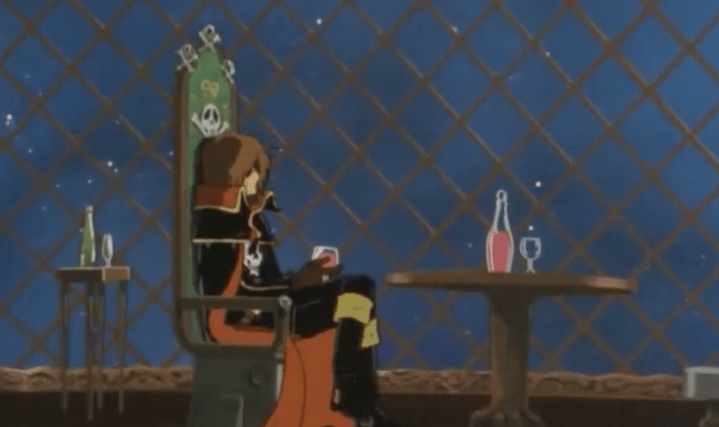
Oh boy, here we go again. You might remember that, around 6 months ago, I wrote a review on the 2013 Captain Harlock film, and most of it was filled with praise. Fast-forward to this summer, where I spent quite a bit of time re-watching other Harlock media. After that, I watched the 2013 film again, and this time I began rethinking my opinions on it, and came to a very different conclusion: Harlock 2013… is not good. And here’s why. Spoilers abound, of course. I’ll try to explain things in as much detail as I can, but if you want the bigger picture, watch the film first and come back to this. Also, I didn’t bother getting screencaps from it, so every cap in this analysis is from the ’84 TV show Endless Orbit SSX, just so you know. Anyhow, let’s get into it.

PART 1: PRELUDE 

Before I really start this off, there’s probably a few of you wondering if there’s anything I actually liked about this film. Well, yes. I praised the animation and cinematography, which is entirely made up of CGI and motion-capture, and I’ll still praise it. It looks fantastic for an all-CG film, and the characters are still visually recognizable, even if you’re an older fan of the franchise. Something else I feel that I should mention is that, on my second watch, I watched the English dub of the film. Now, I didn’t exactly have the highest expectations for it, considering that almost all dubbed Harlock properties are okay-ish at best and bad at worst. Thankfully, dubbed Harlock has been getting better over time, with Cosmo Warrior Zero (released in 2001) and Endless Odyssey (released in 2002) both receiving pretty good dubs (Zero in particular), and luckily this film was no exception. Sure, it’s not the perfect dub (case in point: several characters get their names changed for no reason and the writers can’t seem to decide what to call the Gaia Sanction), but all the voice actors did their job just fine and none of the characters sound off, so overall it’s a generally favorable dub. So, to recap: the visuals and the dub are satisfactory. Now, let’s get into the not-so-great stuff.


PART 2: A STUDY IN CHARACTER ASSASSINATION

(HARLOCK EDITION)
Screen Shot 2018-08-11 at 6.15.31 PM.png

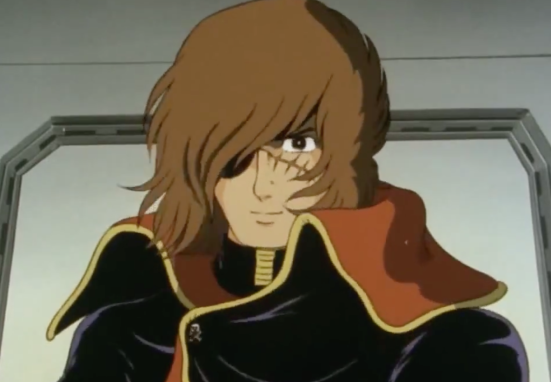
It’s safe to say that Captain Harlock as a franchise has changed over the years. With every iteration of the series, there’s always new characters, new stories, and new experiences. However, there has always remained one constant: the space pirate himself. So, let’s quickly go over Harlock, what makes him human, and what makes him a great character.

To put it simply, Harlock is a rebel-turned-space pirate captain who, alongside his like-minded crew, fight for freedom and independence of Earth from the Illumidas, a race of aliens who want to take over Earth and the rest of the galaxy. He also maintains a valuable relationship with Tochiro Ooyama, his best friend, a computer engineering prodigy who designed his ship, the Arcadia. He allows anyone onto his ship, as long as they fight for their own wishes, and desires, and he never makes them have to share their reasons for wanting freedom to anyone else. Even though he’s viewed as an outlaw and a traitor by the Illumidas and the corrupt Earth government, Harlock will always put himself and his ship in between his home and any outside threat, no matter how dangerous it is. In addition, he has a strong code of honor, free will and self-control, which includes an aversion to taking human life. For example, in EE SSX‘s final battle between Harlock and Dr. Zone (the overarching villain), Harlock refuses to kill him despite Zone begging him to. Why? In his own words: “because you and I are both of Earth”. In fact, it took very serious circumstances for him to even consider such a course of action. Despite how poor the state of Earth is in every series, Harlock never gives up hope that Earth can change, no matter the odds, and he and his crew will do whatever it takes to restore peace to the place they call home.

Screen Shot 2018-08-12 at 6.55.47 PM.png(Harlock and the aforementioned Tochiro)

I hope you remembered all those important character traits, because they all take a very heavy blow in 2013 Harlock. At this point, I’ve got to mention something: this isn’t the first time an attempt at a darker and more threatening Harlock has been made. The 2003 Endless Odyssey had Harlock be a more stoic (almost to the point of self-parody) man who had no problem killing humans, but other than that, he was still mostly the same person. However, the best I can say about him in this film is that he’s recognizable from a purely visual standpoint, and, in all other respects, he’s about as far from the original character as you can get.

In this adaptation, Harlock isn’t fighting an alien race – instead, he’s pitted against the all-human Gaia Sanction, a powerful authoritarian government who, like the Illumidas, want to control Earth and are secretly hiding the true state of Earth, which has really become a barren wasteland, from everyone. By pitting Harlock against an all-human enemy, the aspects of his code of honor and self-control are completely thrown out of the window. Likewise, his entire demeanor has changed as well. Sure, Harlock’s attitude has been subject to change, i.e the goofier Harlock seen in Zero, but this time, he’s like the Harlock in Endless Odyssey, only 10 times more stoic, and is rarely ever seen interacting with any of the members of his crew, aside from giving them orders when in battle and the occasional conversations with Yama, the protagonist. Also, remember how I said Harlock would accept anyone onto his ship on the condition that they fight for what they personally believe in? Yeah, no. Within the first few minutes of this film, you see Harlock’s crew send a few men who wanted to enter the ship plummeting to their deaths (it’s okay, they survive somehow) because they didn’t give the crew the ‘correct’ answer for wanting to join them. Something else occurred to me upon rewatch, and that was how little screen time he actually has. In short: I’m pretty sure Jar Jar Binks had more screen time in all three of the Star Wars prequels than Captain Harlock did in a film called, y’know, Captain Harlock. This, in turn, means that Harlock has no real character arc or development, which, in every other adaptation of anything from the Leijiverse, he would get, no matter how big or small his role in them are. Case in point: in Adieu Galaxy Express 999, where Harlock is merely a cameo role, he learns that, in the end, sometimes he can’t save everyone, and he grows more supportive of Tetsuro (the main character) as the story goes on.

But I haven’t gotten to the worst part of his character yet. If that were it, I could argue that he’s still fighting for a noble goal, which is bringing freedom back to Earth, even if he’s got just about as much personality and charisma as a soggy paper towel. However, the filmmakers decided to take a darker approach here too, and it ended up being the worst decision ever made. Take a sip, because this is going to be a bit hard to digest. So, almost around the halfway point, we the viewers learn the biggest plot revelation by far: Harlock himself was the man who inadvertently destroyed Earth using Dark Matter. This comes as a shock to the whole crew, but it turns out that there’s another twist – that Harlock’s cure for all this is worse than the disease. It turns out that, after years of outright lying to his crew that they were going to find a way to reverse time to save Earth, his real plan is to create a black hole using Dark Matter, which will – wait for it – destroy the entire universe, which in turn will trigger another Big Bang, and thus the universe will eventually be reborn. Furthermore, this occurs around the hour mark (like I previously mentioned), and, combined with his scant screen time thus far, new viewers are going to feel very confused, since they barely know him enough to agree with him or want to see him succeed. With this revelation, the Harlock who always believed in hope and would protect Earth with his life is gone, and is replaced with a borderline psychopath. Moreover, the aforementioned Dark Matter incident, like a superhero origin story, gave Harlock the power to accomplish nearly impossible feats and made him immortal. Now I can truly say that 2013 Harlock isn’t even human anymore. He just isn’t, and it’s honestly saddening.


PART 3: A STUDY IN CHARACTER ASSASSINATION 

(EVERYONE ELSE EDITION) 
Screen Shot 2018-08-12 at 6.17.58 PM.png

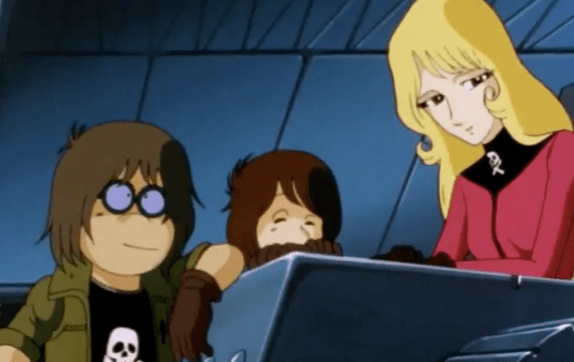
(Just a small part of Harlock’s crew! From left to right: Tochiro, Tadashi, and Kei Yuki)

Although Harlock is the title character and face of the franchise, Harlock wouldn’t have been half as interesting without his ragtag crew onboard the Arcadia, who are all unique, have their own goals, and have good reasons to be loyal towards their captain. These characters, besides being fundamental parts of Harlock’s quest, also have their own character arcs, and they learn as much from Harlock as Harlock learns from them. Alas, these characters were not spared from this adaptation either. I’ll try not to go into too much detail, seeing as this whole thing is already quite long, but I’ll try to get my point across as much as I can.

First up is La Mime, the last-of-her-kind, harp-playing, alien woman who serves as Harlock’s assistant and one of his closest friends, and who is usually the first to warn the crew of any danger. Although her look here has completely changed, opting for a more green color palette and a pirate uniform instead of her usual alien garb, she’s one of the few more familiar faces in this film. However, she doesn’t exactly have much character, and I could just describe here using one word: “ethereal”. Her role isn’t exactly touched upon, and her relationship with Harlock is barely alluded to. Moving on…

Next is Kei Yuki, the naïve young bridge officer and lieutenant with a passion for science who fights for freedom on behalf of her dead father, who was killed by the Illumidas. In this film, she’s your typical “strong female heroine” who can fire two guns at the same time, has the attitude of a drill sergeant, and, instead of having a solid moral compass, is hopelessly loyal to Harlock, even after finding out about his true plan. Also, fanservice. Seriously, was that zero-gravity shower scene necessary?

Last but certainly least is first mate Yattaran (whose name is changed to Logan in the dub), the socially awkward and introverted man who nonetheless has a great aptitude for physics and a love of building models of ships and airplanes. Like Kei, his character is changed to the typical “boisterous, annoying, and sarcastic nerdy guy” fare. Nothing much to say here.

Special mention must go to Tochiro Ooyama. Poor, poor Tochiro. Now, I could write essay upon essay on why the friendship between him and Harlock is incredible and can move even the toughest guy alive to tears, but point being: Tochiro is probably the second most important character in the Harlock mythos, and the relationship between the two is consistently expanded upon in every adaptation. Even in adaptations where Tochiro has died before the story began, his character as a ghostly presence in the ship’s main computer is at least mentioned, and sometimes there are whole flashback episodes dedicated to telling the two’s backstory, with the 1981 film Arcadia of my Youth being one of the best. Here, he only appears once or twice in Harlock’s flashbacks, has zero speaking lines in said flashbacks, his relationship with Harlock is only given a passing glance, and his ‘ghost in the computer’ shtick is hardly touched upon, making me wonder why they even added that detail in the first place. Poor Tochiro. You deserved better.


PART 4: YAMA AND THE PAPER-THIN CONFLICT
Screen Shot 2018-08-09 at 5.20.34 PM.png

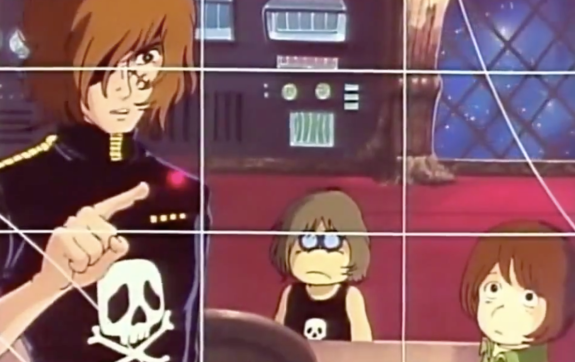
Despite Harlock being a fantastic and iconic character, he, most of the time, isn’t exactly the main character per se. In the original manga, the 1978 TV anime, and a few other adaptations, this position is handed to Tadashi Daiba, a young man who witnessed his father, the famous scientist Dr. Daiba, being killed by the Illumidas. Now filled with a need for fight for freedom more than ever, Tadashi joins forces with Harlock, who greatly admired Dr. Daiba for standing up to the corrupt Earth government. Although starting out as an audience surrogate, Tadashi eventually experiences conflict and grows because of it; by the end becoming somebody that he knows he, his father, and Harlock can be proud of.

Yama (or Logan in the dub), who’s essentially this film’s Tadashi (some fans even call him “CG Tadashi”), goes through a similar process: he starts out as a Gaia spy sent to infiltrate the Arcadia, and for a period of time, acts as an audience surrogate, asking plenty of questions about the Arcadia and the like. When it is revealed that Harlock knew from the get-go that he was a spy, Yama has to deal with the conflict of whether or not to join Harlock (thus betraying the Gaia) or returning to the Gaia and continuing to work for his brother Isora (or Ezra in the dub), thus betraying Harlock in the process. While this is an interesting and unique concept in theory, the way it’s executed completely undermines the whole thing.

Yama betrays both sides of the conflict so often in a 2-hour movie that his character arc ends up looking like sine waves, and neither side is fleshed out enough to make you want to root for Yama joining either of them. Harlock’s scenes with Yama are so few and far between that, when Yama betrays the Gaia for him, you don’t really understand it because Yama barely knows Harlock at this point, though by the end of the film Yama  apparently understands Harlock enough to side with him permanently, and even agrees to take up his identity. Likewise, the conflict between Yama and his older brother Isora is only shown in brief character interactions and flashbacks, so when the big reveal comes that the brothers’ childhood friend is only a hologram and has been dead for years, and when Isora destroys her life support system out of anger that she loves Yama more than she loves him, it’s hard to emphasize with Isora since his character doesn’t have much of a presence. This revelation, like Harlock’s, also comes up at a strange point in the movie, making it a lot more of a let down, though I doubt any amount of good pacing could help salvage such an absurd love triangle. I’d say that the closest real bonding moment the two brothers have is when Isora dies, and he, in his dying moments, encourages Yama to join Harlock, which is… very weird. So, while I would’ve loved to see this conflict get more in-depth, the film’s pacing issues and lack of characterization make the whole contention very underwhelming and disappointing.


PART 5: TO CONCLUDE

Screen Shot 2018-08-12 at 6.06.29 PM.png

In conclusion, I’m not against the idea of changing up long-running pieces of fiction. After all, Captain Harlock has existed for a long time, so I can emphasize with the film executives wanting to take the series in a new direction and shed some new creative light onto it. However, when you sacrifice what made the original property so amazing and beloved in the first place in favor of change, the end result is not going to turn out right. And that’s exactly what happened with Captain Harlock 2013.

Sadly, this film is turning out to be one of the most accessible parts of the whole franchise, even landing a spot on one of the most popular streaming services: Netflix. Because of this, I fear that this film is going to be the first Harlock media that new viewers will be exposed to, and I personally do not want this to happen. Space Pirate Captain Harlock as a franchise truly is something special – it’s hopeful, heartwarming, heartbreaking, awe-inspiring, and much, much more. Of course I want more and more people to know about it, I just don’t want it to start with this film. Six months ago, I truly believed that this was one of the best the franchise had to offer, and I’ll tell you this: if I hadn’t reached out and watched more Harlock media, if my experience ended with this film alone, I never would’ve become a fan in the first place. But I’m glad I did. I’ll hereby end this re-examination with this: if you want to get into Harlock, just keep on searching and never lose hope. You’ll find the perfect adaptation that suits you one day. For now, just continue searching in the Sea of Stars. Until next time.