Murakami Mondays: Kafka on The Shore (2002)

Kafkaontheshore.jpg

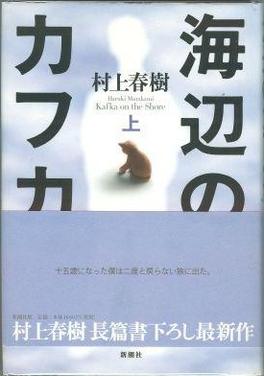
Kafka on The Shore (lit. Umibe no Kafuka) is the tenth novel by author Haruki Murakami, first published in Japan in 2002 and translated into English three years later by Philip Gabriel, frequent Murakami translator. Its 2005 English version was featured on The New York Times list of ’10 Best Books of 2005′ and it even received the acclaimed World Fantasy Award in 2006. Consisting of 505 pages, it treads the middle ground between a long Murakami novel and a short one, though it leans towards the former.

Organized in a format unusual to the majority of his other novels, focus is placed on whether each chapter is an odd or even one, as two distinct but connected storylines take place depending on this chapter layout. The odd-numbered chapters chronicle the journey of 15-year old Kafka, who runs away from home on a quest to find his missing mother and sister, while picking up several allies along the way. The even-numbered chapters showcase the perspective of Nakata, an illiterate elderly man with the ability to talk to cats, who finds himself far away from the comforts of his home. As the story continues, the plot deepens: Kafka is questioned for murder, Nakata tracks down a cat killer, and plot points thought to be random and inconsequential turn out to hold the biggest clues of all.

I’ll admit, I have a bit of bias towards this particular book, namely because it was the first piece of fictional Murakami I read (not the first – that would be Underground, but that’s for another Monday) and it was the reason I found myself so drawn into his work, not to mention it introduced me to the ‘magical realism’ genre. I still enjoy it after all these years, surprisingly. The characters are interesting, the moments of ‘magic’ feel magical, and the story is one of the better-paced ones. Overall, I highly recommend it, for Murakami fans, non-fans, and fans of a good surreal fantasy story alike.

Murakami Mondays: A Wild Sheep Chase (1982)

Haruki_murakami_a_wild_sheep_chase_9780375718946.jpg

A Wild Sheep Chase (lit. An Adventure Surrounding Sheep) is the third novel by author Haruki Murakami, first published in Japan in 1982, and translated into English seven years later in 1989 by frequent Murakami translator Alfred Birnbaum. It is considered an independent sequel (that is to say, a spiritual sequel) to Pinball, 1973 and is the third (and final) book in the ‘Trilogy of the Rat’; it is preceeded by Pinball and Hear the Wind Sing. Interestingly, this trilogy was released in English out-of-order, as Pinball (the second book) was the first to be translated, followed by Hear the Wind Sing (the first) and this novel. Also, while the previous two were re-translated in 2015, this novel has yet to receive one.

Taking place in a post-WWII Japan, the detective noir-style story (which also includes a chain-smoking unnamed narrator) follows our recently divorced protagonist, who, after posting a photo in a magazine ad sent to him by his old friend ‘The Rat’ (who is a recurring element in the trilogy, obviously), is contacted by a mysterious man representing ‘The Boss’, which control Japan’s elite. Having been told that a sheep pictured in the ad is somehow the secret source behind the power of ‘The Boss’, and that his life will be over if the sheep is not found within two months, our protagonist and his unusually perceptive girlfriend must travel to the north of Japan to find the strange sheep, all while encountering new and old friends, victims – and chasing an immovable force.

Despite being rather short and being part of a trilogy (meaning you’d have to read the other two novels if you want to understand anything thats going on here), A Wild Sheep Chase is rather enjoyable. It blends together both Japanese and English literature tropes in front of a Japanese contextual background, so even if you don’t know or aren’t interested in Japanese history regarding the time period of the book, it still ‘feels’ like a typical American detective story. As a Murakami fan, reading this was a unique experience, as the early Murakami novels have a very different style compared to those of today – a lot more youthful, slangy, and allegorical. It’s like a time machine. That being said, if you don’t mind reading the previous two, A Wild Sheep Chase is a fun time.

Murakami Mondays: South of the Border, West of the Sun (1992)

South_of_the_Border,_West_of_the_Sun_(Haruki_Murakami_novel_-_front_cover).jpg

South of the Border, West of the Sun is the seventh novel by author Haruki Murakami, first published in Japan in 1992 and many years later in English by frequent Murakami translator Philip Gabriel in 1999. It was released four years after Dance Dance Dance, a novel I’ve also covered in this series. Despite being classified as a novel, this book is in a rather strange position compared to Murakami’s other works as it cannot be neatly placed into one category. At 192 pages, it is clearly shorter than your average novel, but at the same it is not short enough to be considered a short story. Therefore, it would be better to call this a ‘short novel’.

Starting with the common theme of a man ‘losing’ a woman, this story follows 36-year-old Hajime, the owner to two successful bars and father of two children, as he reunites with former childhood friend Shimamoto, who mysteriously refuses to relay any information on where she’s been all these years and constantly haunts Hajime with ‘what ifs’. This sets in a motion a chain of events in which he must choose between his loving wife and family and retreating into the wonder of his past.

I’ll admit that the premise alone got me interested. It’s rare that a Murakami novel features a married protagonist, and an emphasis on childhood friendship. Thankfully, this short novel is written well and has enough depth to keep you invested. Moreover, it is one of the few Murakami stories where the protagonist is morally ambiguous – while most of his protagonists are on the side of ‘good’ (even if reluctantly) and generally likable, Hajime makes questionable decisions and even considers cheating on his current wife with Shimamoto, a decision that would certainly turn readers against him. Without spoiling too much, this book is definitely one of Murakami’s better short-form works, and I highly recommend it if you prefer a book you could finish in a day.

Murakami Mondays: Colorless Tsukuru Tazaki and His Years of Pilgrimage (2013)

Colorless_Tsukuru_Tazaki_and_His_Years_of_Pilgrimage.jpg

Colorless Tsukuru Tazaki and His Years of Pilgrimage is the thirteenth novel by author Haruki Murakami, first published in Japanese in 2013 and in English only a year later in 2014. It was released three years after IQ84, Murakami’s longest ever novel yet, with more than 900 pages total. The book was released in English by Philip Gabriel, another one of Murakami’s frequent translators.

Unlike the majority of Murakami’s works (including both long and short-form novels alike), Tsukuru Tazaki dials down on the surrealism and mystique that has often characterized Murakami’s writing, choosing instead to focus on a simpler narrative. The story follows the perspective of the titular Tazaki, a 36-year-old railway engineer who has been constantly plagued wondering why his group of high school friends cut all ties with him sixteen years ago. Now a grown man, he is convinced by his girlfriend Sara to seek the truth, and so he decides to go on a quest to mend his relationships with his former friends and get to the bottom of the mystery.

Although this novel is well-written overall, and I can definitely understand why Murakami would choose to write something this simple (especially given that he’s finished an absolutely massive plot-layered story years earlier), for a novel that took three years to write, it’s rather underwhelming. I was excited to see a Murakami protagonist who actually wasn’t a loner (or at least wasn’t formerly a loner), but compared to his other main characters, Tazaki falls rather flat, though only in comparison. Moreover, despite Murakami being a brilliant writer, I felt that much of the writing in this novel was rather shallow, and it was even more disappointing that he chose to leave most of this story’s mysteries unresolved and ambiguous, which is strange considering the great lengths Tazaki goes through in his attempt to solve them.

In conclusion, Tsukuru Tazaki isn’t a bad novel by any means, and if you’ve never read Murakami before, you may enjoy it, but compared to his best works (and even his other novels in this category) it is noticeably weaker in both style and presentation. Ultimately, whether you choose to read it or not is up to you.

Murakami Mondays: The Wind-Up Bird Chronicle

Wind-up_Bird_Chronicle.jpg

The Wind-Up Bird Chronicle (Nejimakitori Kuronikuru) is the eight novel by author Haruki Murakami, first published in Japanese in between the years 1994-1995, and was later released English by long-time Murakami translator Jay Rubin in 1997. The original Japanese edition was released in three parts, while the English language edition (and the most common one today) is a single volume of over 600 pages, making it one of Murakami’s longest yet.

While a few chapters from the novel were published in The New Yorker and a slightly altered version of the first chapter was featured in the short story collection The Elephant Vanishes (not to mention the novel’s protagonist, Noboru Wataya, appears in another short story in this collection), this novel is the where all these characters and story beats are placed together to create something more coherent.

Because of this novel’s (very) large page count, you’d likely assume that it’s rather dramatic and intense, plot and content wise – and it is, but not in the way you’d expect. Beginning with the protagonist (Noboru Wataya) being tasked by his wife to find their missing cat, the plot is suddenly turned upside-down as Noboru discovers one morning that his wife has mysteriously vanished, and the rest follows him as he uncovers the mysteries and intricacies of her disappearance, all the while encountering eccentric allies and antagonists.  Although, yes, the novel does have its moments of melodrama and theatrics, Murakami takes a more subtle and nuanced approach to the situations faced by Noboru, with several scenes focusing on his loneliness and introspection, in classic Murakami style.

When it comes down to it, despite how intimidating its length and size appear, The Wind-Up Bird Chronicle is one of Murakami’s best, and will definitely stick with you a long time after you read it.

Murakami Mondays: After Dark (2004)

Murakami_After_Dark.jpg

After Dark is the eleventh novel by Haruki Murakami, first published in Japanese in 2004 and later in English in 2007, released 2 years after Kafka on the Shore, one of his longest novels. It was released in English by frequent Murakami translator Jay Rubin.

In contrast to his Murakami’s previous novel Kafka on the Shore and most of his other works, After Dark is quite short, with only 201 pages, and in an interesting deviation, the entire story from start to finish takes place over the course of one night, starting at 11:56 PM and ending at 6:52 AM. This concept, especially when compared to his other novels which can often take place over the course of years and even have decades of backstory, is unique for a Murakami book, while the themes and general tone are similar to his other works: several parts take place between reality and dreams and there’s hints of surrealism throughout.

I was worried that, for the absurdly long length most of his novels are, that the short timespan of After Dark would be messy, but thankfully this one handles it well – It has just enough story to keep you invested but not so much that you start to believe this can’t all happen over the course of a night. If you aren’t a fan of doorstoppers, I recommend this one, and if this is your first time reading a shorter Murakami novel, as long as you don’t expect anything too dramatic, you’ll surely enjoy it.

Murakami Mondays: Blind Willow, Sleeping Woman (2006)

BlindWillowSleepingWoman.jpg

Blind Willow, Sleeping Woman is the fourth collection of short stories by renowned author Haruki Murakami. First released (surprisingly) in English in 2006 (4 years after the release of his previous collection After the Quake), it later received a Japanese edition in 2009. For the most part, the short stories are split evenly  between two translators: Philip Gabriel and frequent Murakami translator Jay Rubin.

Running at a generous 362 pages, this novel is Murakami’s biggest and most impressive collection yet, containing 24 stories spanning from the years 1980 to 2005, which were originally published in literary magazines and periodicals such as Harper’s, Granta, McSweeney’s, and The New Yorker; several of which allude to or are incorporated into his later long-form novels.

Although he has currently published 5 short story collections as of 2019 – his latest one, Men Without Women, was published in English in 2017 – this book is, in my opinion, one of the best examples of Murakami’s incredible and broad range. Filling the pages are stories of love, loss, dreams, alternate realities, and sometimes absurdity – everything is top-notch here and really demonstrates his writing capability and talent. A reason for this may be because Blind Willow, unlike his other collections, doesn’t focus on one particular theme (i.e Men Without Women is mainly about men who have ‘lost’ women) and thus the full extent of his range is able to shine through.

Despite the length of this one, it is a great introduction to the master and his storytelling; if you are someone who prefers reading short stories over feature-length novels, I highly recommend it.

Murakami Mondays: Dance Dance Dance (1988)

image.png

Dance Dance Dance is the sixth novel by acclaimed Japanese author Haruki Murakami, which was first published in 1988, a year after the release of Norweigan Wood. After the release of Norwegian Wood, which catapulted him to both national and worldwide fame, Murakami was initially not able to cope with the sudden pressures of being a celebrity, and much of the production of this novel involved him releasing his stress and anxiety,  thus making it a ‘healing experience’ for him. It was translated six years later in 1994 by previously-mentioned Alfred Birnbaum, whose translation is still considered the preferable one and the one I read.

This particular novel started several major themes that would later become hallmarks of a Murakami novel: surrealism, loss, sexuality, abandonment, and making human connections. The protagonist of the story, more or less a stand-in for Murakami himself, is at the beginning of the story alone and isolated, but later meets a cast of eccentric and colorful characters, each with their own unique backstory and ties to the main character; this is also a staple of many later Murakami novels such as Kafka by the Shore and The Wind-Up Bird Chronicles.

One somewhat confusing aspect of the novel is its relation to Murakami’s “Trilogy of the Rat”, a series of three books (Hear the Wind Sing, Pinball, and A Wild Sheep Chase) that focus on an unnamed narrator and his friend known only as “the Rat”. Although this novel is a sequel to the trilogy and shares some similarities to it, whether or not it is considered an actual part of the series is debatable.

Overall, despite the debate over whether or not it’s part of the “Rat Trilogy”, Dance Dance Dance can still be read and enjoyed for the most part, even if the more surreal trappings are a bit confusing to follow if you aren’t familiar with Murakami’s surrealist fiction works. It is 393 pages long, slightly over the length of Norwegian Wood, but as more events and story beats occur in this novel, it will likely feel shorter. Recommended for surrealism fans or those who feel isolated at the moment.

Murakami Mondays: Norwegian Wood (1987)

image

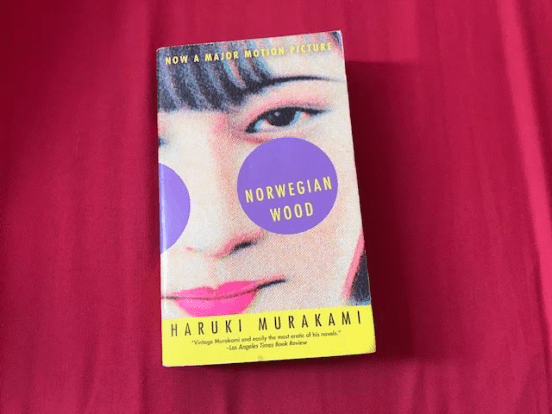
Norwegian Wood (Noruwei no Mori) is a coming-of-age novel by acclaimed Japanese author Haruki Murakami, which was first published in 1987 and was his fifth consecutive novel at the time, written after the release of Hard-Boiled Wonderland and The End of the World in 1985. Despite having released four well-received novels before this, Norwegian Wood is the book that catapulted Murakami to stardom, not only in Japan but abroad, and it’s easy to tell – compared to Hard-Boiled Wonderland, which was published in 1985 but wasn’t translated in English until 1991, Norwegian Wood received its translation only 2 years later in 1989, and since then almost every Murakami book has gotten translated in the span of less than 2 years or so.

Another thing of note is that this book has two translations: the original 1989 translation by Alfred Birnbaum and the updated translation by Jay Rubin in 2000. Although I do not have the 1989 translation, Wikipedia states that it was mainly used by Japanese students learning English and even included an appendix of sorts for several English words and phrases used in the novel. If you are not a Japanese student or if you are comfortable with your English language abilities, I’d recommend the more common Jay Rubin translation.

Despite Murakami’s proficiency and his prolific writing, Norwegian Wood stands out amongst his other novels for several reasons. Unlike most of his other works which often deal with surrealism and fall into the category of “speculative fiction”, Norwegian Wood is a story taking place in average 1960s Tokyo and nothing surreal interferes with the world or its characters. The basic story follows college student Toru as he develops relationships with two different women – the kind but emotionally/mentally unstable Naoko and the outgoing but bossy Midori. Unlike most stories dealing with love triangles, both women are written well, especially in the case of Naoko; despite dealing with an unnamed mental illness, she’s well-rounded and empathetic, which is uncommon when compared to most portrayals of mentally ill people in media.

Overall, even though this is one of his earlier works, it’s one of his best and in general it is wonderfully written. I’d highly recommend this book to new readers of Murakami, so long as you can deal with the 386 page length and the fact that not all of his novels will be as normal and quaint as this one.