Retro Retrospective: Lupin III (Part 6)

lupiniii.png

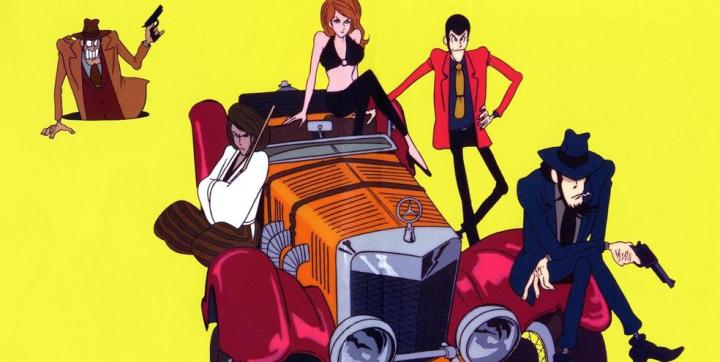
Welcome back, folks! The last episode might’ve ended sadly, but we must remember to embrace it however we can and look towards the future. With this in mind, let’s (hopefully) recap the last of 1990s Lupin.. be prepared to say goodbye! Sniff..

Anyway, I’ve always thought that the 90s was a bit of a weird time to be a Lupin fan. With the sudden influx in the popularity of animanga (both in Japan and the rest of the world), new ideas were pouring out of every nook and cranny in the industry, and TMS wanted to keep Lupin fresh in the minds of otaku… so they experimented with plenty of ideas and styles, some more successful than others, of course. The first TV special to be released after Farewell to Nostradamus was The Pursuit of Harimao’s Treasure in 1995, a bland experience that brought nothing really new to the table, except for one of the most outlandish villains in Lupin history – a neo-Nazi by the name of Herr Maphrodite… now that’s a villain name that wouldn’t fly in 2018.

Surprisingly, a new theatrical film was quickly released the following year in April, this one titled Dead Or Alive. Unlike Pursuit, this film boasted quite a few changes in format – it was the first Lupin to be animated using computer-generated graphics (which were considered all the rage at the time), and was the first (and only) piece of Lupin animation that would be directed by the main manga man himself, Monkey Punch. However, it wasn’t exactly well-received: the animation looks and sounds cheap and the main storyline is all over the place, which was perhaps to be expected, as the film suffered from troubled production. Not only did Monkey Punch direct because there was a short deadline (which probably contributed to the lackluster animation) and he was pressured to accept the offer, he also claimed that the other staff involved (mainly screenwriter Hiroshi Sakakibara) “saved” the movie, and as the final nail to the coffin, stated that he never wants to direct again.

lupin-iii-1.jpg

Lupin and crew examine an Apple Macintosh computer – a detail that was added in because Monkey Punch is a fan of them.

A failure wouldn’t stop the good people over at TMS, however, and the next few years would see more TV specials. Osamu Dezaki ended his streak of directing credits for the TV specials after Pursuit, and the next special, Secret of the Twilight Gemini, was released the following year and directed by Gisaburō Sugii, who is well known for directing more lighthearted anime, such as Arashi no Yoru ni and the TV adaptation of Touch – a children’s story and a high-school romance respectively. He’s also the director of Night on the Galactic Railroad, one of my personal favorite anime movies, so it came as a surprise that Twilight Gemini is rather watery, offering nothing besides it being set in the backdrop of a Moroccan civil war – very subtle, team.

Over the next few years, nothing much of Lupin would be released, save for your average annual TV special – the dramatic Island of Assassins in 1997, the hilariously almost-gag-dubbed Memory of the Flame: Tokyo Crisis in 1998, and De Capo of Love: Fujiko’s Unlucky Days (or The Columbus Files) in 1999, which featured a plot involving resident femme fatale Fujiko becoming an amnesiac. It was directed by Shinichi Watanabe (don’t confuse him with Cowboy Bebop director Shinichiro Watanabe), who’s most-well known work is Excel Saga, an off-the-wall comedy anime released around the same year. Other than the specials, the company Heiwa began producing Lupin-themed pachinko (the Japanese equivalent of arcade games/slot machines) in 1998, with eleven total as of now. Also of note is the first – believe it or not – musical adaptation of Lupin III, simply titled I’m Lupin, performed in November 1999. I’m not the biggest musical person, but it’s a bit sad that little to no information about this musical exists online other than its existence, so it’d be nice if it was available somehow!

Thus ends the pre-2000s era of Lupin III… next time, I’ll start covering all the Lupin media released in the new millennium. Stay tuned!

Retro Retrospective: Lupin III (Part 5)

zTI0979h2hb11wN6Oba6qqZ4DBH.jpg

Welcome back! It’s been a while since the last Retro Retrospective, hasn’t it? Well, it’s time to get back on track and continue with the history of Lupin III! Last time, I mentioned an important staple in the franchise – the TV specials. Remember that! Now, the show must go on.

But first we must backtrack a bit, and shed some light onto a part of the Lupin franchise I forgot to talk about: video games. As far as video games go, I haven’t heard much about them and I have nothing to say about any of them, so you’re free to take a look at them if you wish. The first Lupin video game was released by Taito as a stealth arcade game in 1980. A laserdisc video game titled Cliff Hanger was released to arcades in the US. While it used footage from Cagliostro and and Mamo as cutscenes, it changed the character’s names and has a completely original plot. Since then, several other Lupin video games have been created for many different gaming platforms, such as the Nintendo DS and the Sony Playstation. Now that that’s out of the way, let’s get into it.

The next year, another TV special was shown. Mystery of the Hemingway Papers, released on 20 July 1990, was directed by Osamu Dezaki (remember him?), features Lupin and the gang in the Mediterranean island of Colcaca in pursuit of a box said to hold the draft of Ernest Hemingway’s (yes, I know) final novel, which supposedly describes the locations of great riches. This special is interesting in that it’s the first to have a dangerous conflict between members of Lupin’s gang: not only is Colcaca divided into two factions at war for the Hemingway papers, but Jigen and Goemon have, for their own reasons, teamed up with each of the two factions. So, not only is Lupin trying to uncover the treasure while stopping the war from getting out of hand, he also has to stop two of his friends from possibly having to kill each other, a storyline that has since been repeated several times in the franchise.

In the next two years, two more television specials (both directed by Dezaki) would be released (Steal Napoleon’s Dictionary and From Russia With Love), neither of which were especially notable, but in 1993 Voyage to Danger (or Orders to Assassinate Lupin) was released, this time directed by Masaaki Osumi, director of classic anime TV shows such as Attack No.1 and his adaptation of Moomin, as well as being the director of the Lupin pilot film. This TV special is notable for having a focus on Zenigata, showcasing his respect for Lupin and even helping the gang out of sticky situations.


jlVUTSu.jpg

Unfortunately, while recording lines for Voyage to Danger, Lupin’s voice actor Yasuo Yamada fell suddenly ill, and by the end of the recording process he had to record while in a chair. Nevertheless, Dragon of Doom (or Burn, Zantetsuken!) was released the following year, being the first (and only) special taking place in Hong Kong, but thankfully not the last Lupin media to be centered around (mostly) Goemon.

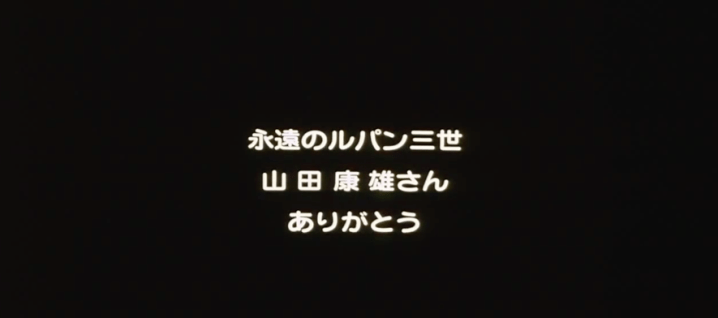
In 1995, there was much excitement surrounding Lupin III, as there was a new theatrical film announced, 10 years after Legend of Gold of Babylon was shown in theaters. The fourth theatrical film in the Lupin franchise, Farewell to Nostradamus (sometimes weirdly referred to as To Hell With Nostradamus!) entered Japanese theaters on April 22, 1995, and is probably the Lupin film with the most epic proportions: a nearly 2 hour long runtime, several different locations for the gang to travel to, high-speed action scenes, and a plot of grand scale involving a doomsday cult. Unsurprisingly, the film was a huge success in Japan. However, the film’s production was faced with tragedy: A few months before release, Yasuo Yamada, who’s health had been on the decline, died of a brain hemorrhage at the age of 62. Kanichi Kurita, a comedian and Yamada’s apprentice, took up the role, and the film was able to be completed on time. Nonetheless, Yamada’s death caused great sadness amongst not only his fellow voice actors, but the fans as well, who all knew him as the voice of their beloved gentleman thief. The film itself is tinged with mournfulness and a sense of loss, as it ends on a rather subdued note, with Iori Sakagami’s somber and wistful “Ai no Suzuki” as the ending song. And last, but not least: after the ending credits are done rolling, a farewell message shows up on screen: “To the eternal Lupin III, Yasuo Yamada: Thank You”.

Screen Shot 2018-09-23 at 5.44.39 PM.png

Retro Retrospective: Lupin III (Part 4)

money-car.gif

Welcome back, folks! Last time, I covered the weirdest Lupin TV series and a controversial OVA amongst other things, and it happened to end on a sad note. Fear not, for I’m sure this will be a lot less of a downer. Let’s get right into it, and what better way to start than by introducing an integral part of Lupin tradition!

This tradition is, of course, the Lupin III Yearly Specials, which were new animated made-for-TV films made by TMS, which aired on NTV every year, between 1989 and 2013. Before I get into these (and I’m sorry that I didn’t mention this earlier) I feel the need to mention how these came about: after the unexpected flop that was The Fuma Conspiracy, and the poor reception of the Pink Jacket TV series and its tie-in movie, TMS had pretty much given up on trying to revive the Lupin III franchise… until they realized that Japan had not yet given up on Lupin, and they just needed a new tact. Enter the yearly specials, which, along with OVAs and movies, took up 26 whole years until a new TV show started airing in 2015. Thankfully, there’s still a lot of material to chew on, so let’s begin … by taking a trip to the Big Apple.

New York sure does sound like a perfect place for a monumental heist, doesn’t it? The first yearly special, Lupin III: Bye-Bye Liberty Crisis! (otherwise known as Goodbye Lady Liberty) aired on April 4, 1989, and was directed by Osamu Dezaki, who directed several anime classics such as Astro Boy, Ashita no Joe, Space Adventure Cobra, and Rose of Versailles, as well as storyboarding several episodes of Green Jacket. The film, which follows the gang as they attempt to steal a precious gem hidden in the Statue of Liberty while evading a mysterious cult, proved to be a huge success, in no small part due to Dezaki’s involvement. He would return to the director’s chair four more times for these specials, so please, keep his name in mind!

lupin.jpg

The 80s era of Lupin III ends here, folks, and it’s safe to say that it showed both fans and critics alike several new and experimental pieces of Lupin media, whether they were received well or not. Next time, we’ll start the 90s era of Lupin history, so look forward to that. Until next time!


Retro Retrospective: Lupin III (Part 3)

1038594-hayao-miyazakis-lupin-3rd-theaters-september-14-19.jpg

Welcome back, folks! Last time, I covered two of Lupin’s famous jackets, a weird live-action film, and the early beginnings of an anime legend, amongst other things. Turns out, the fact that this is “part three” is a great coincidence… but no more beating around the bush; let’s get right into it!

I hope you guys don’t miss the 70s too much, because the 70s-era Lupin has ended, baby! Unfortunately, the 80s (for Lupin at least) didn’t start off too successfully. In 1982, an animated series, which was to be called Lupin VIII, was planned. It was to be a French-Japanese co-production, to be centered around the descendants of Lupin, Jigen, Goemon, and Zenigata, taking place in the far future. Sadly, it was never completed. Interestingly, it was going to be directed by Rintaro (of Galaxy Express 999 and Captain Harlock fame), and a pilot episode with fully-finished animation, music, and sound effects had been completed, but it was canceled before it even got a chance to air, which has been largely attributed to Leblanc’s estate wanting a huge sum of money for use of the Lupin name.

This lack of Lupin wouldn’t last long, however…

tumblr_ouxqfkncPO1w190qro1_500.gif

1984 saw the release of the third TV series: Lupin III Part 3, otherwise known as Lupin III Pink Jacket (you get the gist of this now, right?), which ran from the spring of that year to November 6, 1985, airing 50 episodes total. In my humble opinion, while this is a competent TV series, it isn’t as good as the previous two, with it’s outright bizarro episode structures and incredibly wonky animation, not to mention the fact that it really isn’t that different from its predecessors. But hey, if you’re into 80s weirdness and gag comedy… this is it.

Of course, at this point, a feature film had to be made. Enter Lupin III: Legend of the Gold of Babylon, released on July 13, 1985, and co-directed by Seijun Suzuki and Shigetsu Yoshida. Although this film features much better animation and a more straightforward plot, it’s definitely the lesser of the three TV-tie-in movies, and it would be ten years until the franchise saw another theatrical release. However, what was released next caused shockwaves and outcries amongst fans, and is still being talked about today, mostly for not-so-good reasons.

Lupin fans might already know what I’m talking about: Lupin III: The Fuma Conspiracy, the first of the Lupin III OVAs, shown in theaters on December 26, 1987 and later released on home video the following year. The OVA, done by TMS, follows the gang as they visit Japan for the first time in the series. When Goemon’s wedding is interrupted by ninjas and his bride Murasaki stolen, a suspicious plot involving secret treasures is uncovered, and it’s up to Lupin and the crew to rescue the bride and take the treasure for themselves. In my opinion (and I’m sure a lot of fans will agree with me on this), this OVA has some of the most gorgeous, fluid, and smooth animation in the series, second to Castle of Cagliostro, and this one isn’t even a movie! Moreover, the new setting was a refreshing new take for the series, and (this is purely an opinion) Murasaki is a total cutie.

promo_Toonami_LupinIII_Sat_60.jpg

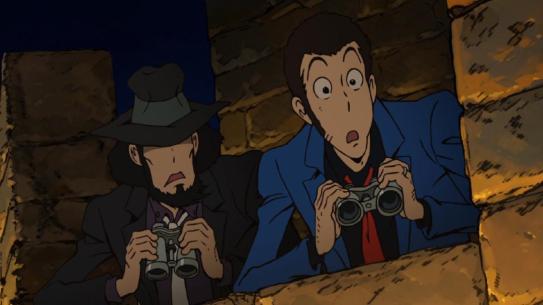
That’s not the shockwave, though, and brace yourselves, because you’ll be making the same face our friends Jigen and Lupin are making above. Although it was praised for its great animation by critics and fans, most fans had something else to say about it, and what they said was not pretty. You see, TMS was going through budgetary problems, which means they had to choose between two things while making the OVA: incredible animation or a beloved voice cast. They chose the former, since all five VAs of the Lupin III main cast were the highest-paid voice actors in Japan at the time, and there was no way they could afford all of them given what they were going through. The new cast, comprising of Toshio Furukawa as Lupin, Banjo Ginga as Jigen, Kaneto Shiozawa as Goemon, Mami Koyama as Fujiko, and Seizo Kata as Zenigata, was not well-received by Lupin fans at the time… and that’s a bit of an understatement.

These actors were just doing a gig (and they had all done incidental parts and one-off characters in Pink Jacket, so they knew the series well enough), but if you were to hear fans of the time react to this change, they may as well have burned Tokyo to the ground. Despite the fact that these voice actors were (and still are) very talented and respected in their own right, fans were very upset at the loss of their much-loved previous cast, and the new cast received a ton of hate mail (particularly Furukawa), so much so that translated scans  of interviews with this cast (from the Fuma program booklet) show that they praise their ‘superiors’ to high heaven and seem downright apologetic to be playing their characters, a clear sign that they knew how much criticism they were going to receive. Sadly, this change also left a dent in the relationship between Yasuo Yamada and Monkey Punch due to a misunderstanding, which unfortunately was never mended fully. Thankfully, even the most die-hard of fans have warmed up to this recasting over time, although it took thirty years and the deaths of two of the replacement VAs for this to happen.

I’m feeling a bit regretful about leaving Part 3 on a sad note, but not to worry, I’m sure the next part will be a lot less sad… I hope. Tune in next time for more Lupin goodness!

Retro Retrospective: Lupin III (Part 2)

animage-07-1978-lupin-iii-interview.jpg

Welcome back! In the previous Retro Retrospective, I went over the basic premise of Lupin III and introduced the core cast. Now that you’ve had a chance to get to know them better, let’s get right into it. Remember, the names of all the adaptations (as well as important names associated with the franchise) will either be in bold or in italics.

The first installment of Lupin III was, of course, in manga form. The series was the brainchild of Japanese manga artist Kazuhiko Katō (under the pen name Monkey Punch), who became inspired after reading 15 of Maurice Leblanc’s stories, many of which featured Leblanc’s fictional French master thief… Arsène Lupin. According to him, the aim of the series was “to produce a comedy adventure series that reflected the traits of Leblanc’s character”. In addition, he was also inspired by the likes of Agatha Christie novels, James Bond, The Three Musketeers, and the films of Alfred Hitchcock. The Lupin III manga began serialization in the Weekly Manga Action magazine starting August 10, 1967. Originally, the series was expected to last only three months, but due to its popularity, it reached up to a staggering 14 volumes (94 chapters), eventually ending on May 22, 1969.

At this time, anime producers were taking note of Lupin III’s success, and wondered if it could possibly gain more popularity as an animated TV show. Thus, the Lupin III pilot film was created in 1969. The 12-minute short film of sorts, directed by Masaaki Osumi, was the first animated adaptation of the series, and was intended to garner interest from the public and secure funding. One notable aspect of this pilot film is that it was shot and recorded twice, meaning it had two different voice casts, one for the CinemaScope pilot, one for the TV pilot. Also notable is that only two of the voice actors were retained for both pilots – Kiyoshi Kobayashi (as Jigen) and Eiko Masuyama (as Fujiko).

Eventually, the first TV adaptation began airing on YTV in the fall of 1971 – Lupin III Part 1, otherwise known amongst fans as Lupin III: Green Jacket, for obvious reasons. It was broadcast for 23 episodes, the last one ending on March 23, 1972. At first, it was directed by Masaaki Osumi (director of the pilot), but he was later replaced by then-newcomers Hayao Miyazaki and Isao Takahata. Sound familiar? Keep those names in mind!

5c80ba953641c906658e3f4d51ce224e018eadc8_hq.gif

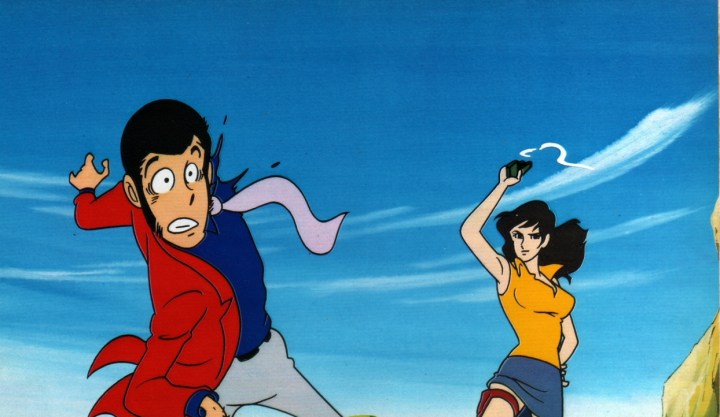
Here comes the money! It didn’t take long for the actual film industry to catch up to Lupin, either. Lupin III: Strange Psychokinetic Energy, released in the summer of 1974, was both the first theatrical and first live-action film of the series. In contrast to the darker themes of Green Jacket, this film was very heavy on the slapstick comedy, insane gravity-defying stunts, and general wackiness. Strangely enough, it included all five cast members… except Goemon. Perhaps he was just too serious for something as kooky as this?

Goemon would not be absent in the next adaptation, however. Lupin III Part 2, also known as Lupin III: Red Jacket, began airing on NTV in the fall of 1977. The longest-running TV adaptation by far, Red Jacket ran for 155 episodes before ending on October 6, 1980. Red Jacket is one of the more well-known Lupin adaptations, thanks to it being shown on [adult swim] in the US before Green Jacket. In comparison to its predecessor, Red Jacket was a lot more comedy-oriented. In addition, it created and cemented the most famous Japanese voice cast arrangement for the series: Yasuo Yamada as Lupin, Kiyoshi Kobayashi as Jigen, Makio Inoue as Goemon, Eiko Masuyama as Fujiko, and Goro Naya as Zenigata. With one exception, this lineup would remain unchanged for the next 18 years.

While Red Jacket was still airing, two feature animated films were released, one of which would become a beloved classic as the years went by. The first of these films was Lupin III: The Secret of Mamo (also known as Lupin vs. The Clone), released on December 16, 1978. Besides it being the first animated theatrical adaptation, the only other aspect of note is that it is very much science-fiction based. Cashing in on Star Wars, perhaps?

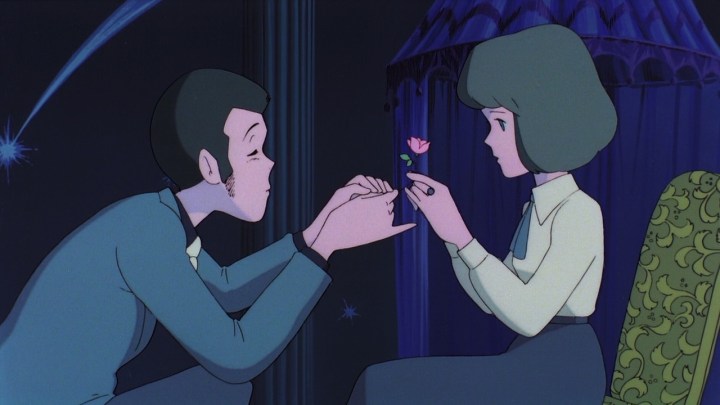
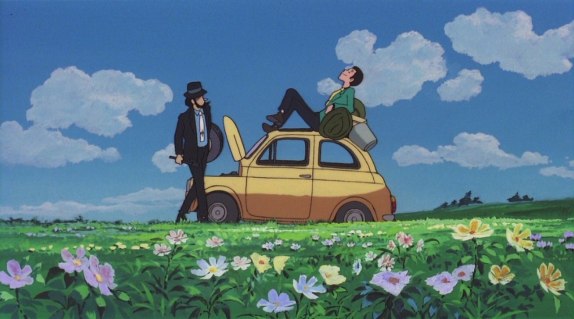
Nevertheless, it was the second of these movies which would prove to be the most well-known amongst anime fans, and this movie was Lupin III: The Castle of Cagliostro, released the following year. It was directed by none other than Hayao Miyazaki, who went on to form the acclaimed Studio Ghibli with Isao Takahata a few years later. While the two had worked on Green Jacket, as well as two episodes of Red Jacket (to be specific, these were episodes 145 and 155), this was the first time Miyazaki would be handed a directing job. While it wasn’t initially considered a box-office success, its charming style and fun animated action sequences, coupled with numerous re-releases, made it incredibly popular amongst people who weren’t even fans of the series!

CastleCagliostro4_757_426_s.png

That’s all for now, folks! Tune in next time, where I’ll hopefully go over the next Lupin series, in which he wears a very different jacket… place your bets now!

Manga Mini-view: Aho-Girl (Vol. 1)

545992._SX1280_QL80_TTD_.jpg

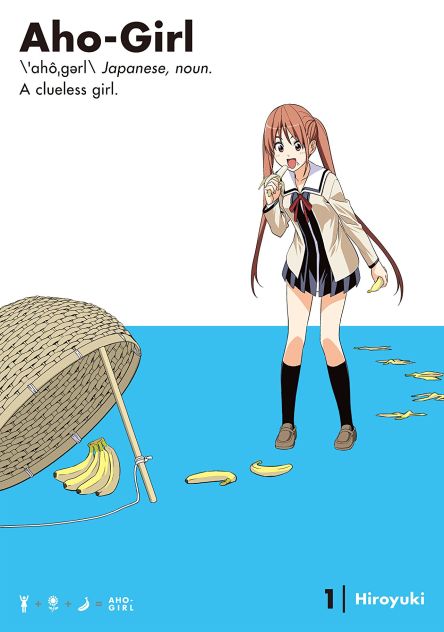
When the anime adaptation of Aho-Girl came out almost a year ago, I paid it no mind. It seemed like just your typical anime slice-of-life comedy that, of course, takes place in either middle school or high school, and involves several wacky characters who, by virtue of simply being who they are, manage to turn everyday events into the most hilarious incidents. It’s a formula that has been done for years, and I’d be here forever if I had to list all the anime/manga guilty of using this formula. However, seeing it’s simplistically drawn cover (as seen above) and it’s (surprising) thickness, I wondered what exactly Aho-Girl had in store for me…

The premise of Aho-Girl, like most other manga, is simple: Yoshiko Hanabatake would be your average teenage girl… except for the fact that she is always hopefully clueless. She never thinks ahead, doesn’t know how to recognize (or get herself out of) a bad situation, always gets zeroes on her multiple-choice tests… and has only one (often fatal) weakness: bananas. Her only friend, Akkun, one of the smartest students in his grade, is more-often-than-not tasked with keeping her in line. However, much to his dismay, Yoshiko’s charm and fun-loving personality only attracts more friends, including the too-kind-for-her-own-good Sayaka, delinquent Ryuichi who is won over by any type of kindness, a head monitor who harbors a strange (to say the least) crush on Akkun, and even a big, fluffy dog.

This four-panel (four-koma in Japan) manga became a surprise hit, and it’s not hard to see why. Fans of helter-skelter slice-of-life gag manga like the classic Azumanga Daioh and Lucky Star will love this series – it’s filled with all the funny, wacky gags that you can expect from something like this, and Yoshiko’s and Akkun’s “crazy guy and straight man” routine gets played up for all it’s worth (and you could say that for the rest of the characters), but the situations they get into are so weirdly hilarious that it’s hard not to crack a grin, even if the characters themselves don’t exactly leap off the page. Of course, Hiroyuki is no slacker when it comes to the artwork; even if this is a four-panel comedy manga, his over-exaggerated character faces and amusing action sequences (it makes sense in context, trust me) only add to the fun. Overall, this equal parts silly, adorable, and subversive comedy was an enjoyable way to pass time, and I hope to read more soon.

Final rating: 7.5/10