
11/6/2018
11/6/2018

It is no secret that Leiji Matsumoto’s works have been incredibly influential in the development and progression of both anime and manga, with his quintessential manga – Space Battleship Yamato, Galaxy Express 999, and Queen Emeraldas, amongst others – receiving countless anime adaptations, becoming what is now known as the Leijiverse. However, one of his characters is set apart from all the rest: Captain Harlock, the iconic space pirate that inspired a myriad of expies and still continues to do so today. For many, Matsumoto’s Harlock is what comes to mind when mentioned – a lanky, rather cartoonish-looking, yet still badass man, who introduced a whole generation of readers to Matsumoto’s unique and one-of-a-kind style. So, after more than a decade of silence, the famous Toei Animation decided to revive the franchise by releasing an all-CGI film, simply titled Space Pirate Captain Harlock (2013). How does this film fare compared to the other entries in the franchise?
The plot goes as follows: After conquering the galaxy, mankind has reached its apex and is now on a steady decline. The resources of the universe are diminishing, and around 500 billion humans begin to return home to Earth. Thus begins a war between the various factions of humans for control of the planet, known as the Homecoming War. Eventually, an authoritarian government known as the Gaia Sanction prevents the re-population of Earth, and declare it a sanctuary. One hundred years have passed, and the legendary Captain Harlock, once a player in the Homecoming War, is still at large, with the ghost battleship Arcadia under his control. The Gaia Sanction continues with their plans for control over the Earth, while hiding its true state. One day, the acclaimed Gaia politician Ezra sends his younger brother Yama to board the Arcadia, in order to act as a spy for the Gaia, who want Harlock and his crew to be destroyed once and for all. But Captain Harlock is preparing for one final showdown with them, which will determine not only the fate of Earth, but the fate of the entire universe.
I would like to start this review by addressing what I thought was going to going to be the problem with this film, which, obviously, was the CGI. Since it has become a long-running joke in the anime community that Japanese animation companies simply cannot animate using CG to save their lives, I was worried that the actual animation couldn’t live up to its awesome promotional artwork. However, I was pleasantly surprised to see that the CG was wonderful, and quite a marvel to behold, and the space battles are nothing short of impressive, especially when done by the prestigious Toei. Although seeing the more realistic, less cartoon-like character designs put me (and probably a whole lot of older fans) off at first, they’re easy enough to get used to, and they fit the darker tone of the film overall. The darker tone was something I was initially worried about as well, but by the time the film was over, I thought it was a refreshing change for the franchise, and has potential to bring in newer fans as well.

Now that I’m done talking about the visuals, it’s time to move on to the “meat” of this film: the characters. A problem that the Captain Harlock franchise has is that, depending on which adaptation it is, pretty much every character aside from the titular Harlock is dull and uninteresting, which added to my growing list of worries. Could they really develop a cast of characters which consisted of both the older cast of the 70s and these newer characters in a film only five minutes under two hours long? Thankfully, every major character is developed well, each of them having distinct personalities and ideals. I was particularly taken back by Yama, the spy who originally boards the Arcadia in place of his older brother Ezra. His character was quite engaging, and it was interesting to see his inner conflict on whether or not to continue to act as a spy for the Gaia and how he struggles to maintain a relationship with his older brother, whose problems he blames himself for. Of course, we cannot talk about the characters without mentioning Harlock, whose individuality and nature are given a special place in the spotlight. Along with his general awesomeness, spectacular fighting style, and stoic, no-nonsense demeanor, this film displays another side of the seemingly withdrawn and aloof pirate – his devotion towards Earth, his feelings of despair that come with his immortality, and his loyalty and commitment towards the crew. In addition, it sheds light on his backstory, and what led him on the path to becoming an outlaw. This film really highlights all the aspects of Captain Harlock: it’s easy to see why he has been adored for decades.
On that note, there are some other elements of note in this film that I feel should be mentioned. While the other entries in this franchise have had their own differentiating themes (once again, it depends on which adaptation it is), this entry has some of the most compelling and engaging themes I’ve seen to come out of this franchise, and that’s saying something. Of course, I’m not going to spoil anything, but the ending completely solidifies these themes, and it (not to sound too sappy here) left a warm feeling in my heart. It is truly a great ending for the film, and I could not have asked for a better one.
In conclusion, although Space Pirate Captain Harlock (2013) is not without its flaws, it is still an excellent film, and one of the better additions to the Leijiverse. The visuals and characters make for a captivating story, even for those who have never watched a single entry in the franchise, or even anything in the Leijiverse as a whole. Overall, this is a fantastic film, and I’m eager to see what new directions Toei will take with Leiji Matsumoto’s works in the future. There is hope.
Final score: 8/10
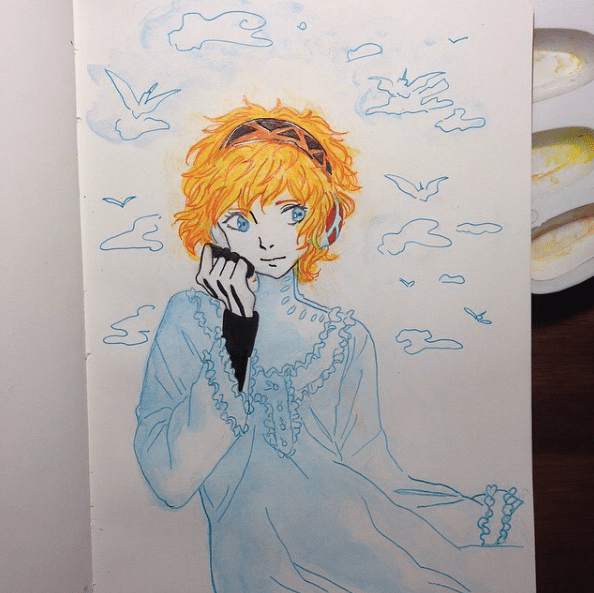
Aigis from Persona 3.
5/5/2018

Ever since the first successful Marvel movie came out in 2008, Marvel Studios have consistently released grand and lucrative films one after the other, all of which have garnered them recognition, appreciation, and acknowledgment from people all over the world . So, after 10 years of building up the Marvel Cinematic Universe, adding unique characters to their ever-growing roster of superheroes, as well as establishing their personalities, quirks, and powers – what was all this leading up to? The answer is: Infinity War; Marvel’s biggest and boldest cinematic outing to date. 10 years of gradual build-up in Marvel movies led to this – but was it worth it?
The plot of Infinity War is easy enough to grasp: a massive purple hunk from outer space called Thanos comes to earth, in a quest to gain ownership of all the infinity stones and use them for mass destruction – specifically, the destruction of 50% of the world’s population. To combat their biggest threat yet, the Avengers, along with their new allies and a few fellow superheroes, must team up to defeat him, but it won’t be easy.
In my opinion, what this movie does best is managing to have an abundance of characters without being confusing or hard to follow. Each character has their own over-arching sub-plot, and the Marvel team makes some interesting choices by having certain characters team up with people they’ve never met before, and thereby showing compelling character interaction, but never having it be too soap opera-y like it was in previous Marvel titles. Each character had their own time to shine, although it is noticeable that some receive less space in the movie than others. However, this is largely forgivable, since there are a lot of characters that had to be in it, and that it is a two-part film. Therefore, I must give a lot of props to Marvel for handling this large cast in a stimulating and enjoyable experience. Seeing these people bounce off each other and figuring out what’s going on was one of the more entertaining parts of the whole thing, and there were some pretty funny moments that came from these interactions. Of course, there were many surprising deaths, but none of them made me feel like that character’s life was “cut short” in any way. In a way, it felt fulfilling, since they’ve already had their stories told in their own films.
What surprised me the most about Infinity War was how Thanos was portrayed. Up until now, nobody really knew much about him, (except for the comic book readers, but I digress) except for the fact that he was a sort of imposing and villainous figure in the MCU. Going into this movie, I expected him to be your standard villain who wants to destroy the world and all that jazz, but I ended up coming out pleasantly surprised by how his character was handled. He’s more than just ‘some villain’ – this movie goes to great lengths, not only to show us how much power he holds over the Avengers and the world, but his justifications for doing so – and his reasons for doing so are never tarnished. What makes him so terrifying is the fact that he never lets anyone stand in his way, or convince him he’s wrong. His raison d’être is one of the more compelling in the MCU, because, while at first it seems reasonable, it’s pure insanity – but Thanos isn’t about to let anyone tell him how wrong he is. As someone who thinks that most of Marvel’s villains are cookie-cutter boring and unmemorable, Thanos gave me hope that the MCU could actually have thought-provoking villains like him in future films, and I’d love to see how his character is further developed in part 2.
Last, but not least, the movie was visually entertaining as well. Usually most Marvel fight scenes look like a child smashing his toy figurines together, but here you get a sense that perhaps these superheroes are not invincible and that their battle is dangerous, mostly thanks to Thanos’ character as mentioned above, and because of the first five minutes of the movie, which certainly does give watchers a good idea of what’s about to come. Overall, the fight sequences are very well-choreographed, and might perhaps be some of the best in all of Marvel cinematic history. While not as aesthetically appealing as, say, Guardians of the Galaxy, there are several striking shots and color schemes, especially for the scenes that take place in outer space. I was worried that something this grand-scale would forget how to look good, but thankfully it was consistent and nothing looked too jarring or out-of-place.
In conclusion, Marvel’s biggest and boldest superhero movie probably sounds really stupid in theory, but they pulled it off – and pulled it off well. All in all, it’s a great and intensely watchable film, filled with everything one could ask for: action, drama, intensity, humor, and even sadness. I can safely say that I am looking forward to watching the next part of Marvel’s most ambitious and supersized crossover yet.
Final score: 9/10

Peko Pekoyama from Danganronpa 2.
25/4/2018

Marvel’s ‘origin’ films tend to be pretty boilerplate. You’re introduced to the hero, they discover they have superpowers, struggle to use them, learn to use them, and eventually defeat a one-shot enemy with them. Simple, right? Marvel still earns plenty of money from these films, so naturally they’d make Black Panther an average origin story as well… right? Well… no.
The plot of Black Panther sounds like any old origin story: King T’Challa (becoming King after his beloved father died in Captain America: Civil War) returns to his homeland of Wakanda, where he officially becomes the legendary hero Black Panther. However, a mysterious outsider, nicknaming himself “Killmonger”, also wants the throne, in order to expose the world to the powerful technology and weapons of Wakanda, which is a nation that hides itself under the guise of a poor third-world country, that have never accepted aid or offered help to other nations. Killmonger’s plans for Wakanda could cause disastrous consequences, not just for the nation, but for the rest of the world as well. It’s up to T’Challa to stop him and take back the throne. However, since this Marvel film is quite different, it isn’t as ordinary as you might think…
What makes this film different from Marvel’s other origin stories is this: it takes place in a completely new and original location; the African country of Wakanda, which has hidden its wonders from the world for hundreds of years. Other than space-ey locations such as Asgard and the various planets seen in Guardians of the Galaxy, a earthly location in the MCU has always been quite samey… but not here! When the characters are in Wakanda, they never gloss over the details – you get to know almost everything about the country: the people, the tribes, the geography, the rituals, the clothing, the weapons, the technology… the list goes on. No wonder the film is more than two hours long! However, this isn’t just “all style and no substance” – there is a large cast of characters to meet here: humble king T’Challa, his genius sister Shuri, his ex-girlfriend Nakia, fierce bodyguard Okoye, ruthless Killmonger, and more. Although most of these characters have the chance to be more developed in the Avengers: Infinity War, they were well-introduced enough here that the audience knows about their personality and goals. Special mention goes to Killmonger (played by Michael B. Jordan), who was a very compelling, not only with objectives, but a reasonable objectives, which definitely makes him one of the more interesting villains in the MCU.
Nonetheless, there were a few things that I didn’t like as much. The casino fight scene, set in Busan, South Korea, while featuring a Stan Lee cameo (something everyone appreciates), wasn’t visually appealing, and didn’t do much for the story. Most of the action sequences didn’t make me feel excited either – probably because there were a lot of them – and the fact that they incorporated rhinos into one of them felt ridiculous.
Now that I’ve reached the end, I can say with certainty that I commend everyone involved in the making of Black Panther – it was a very ambitious project. Even for the blandness of the action and the ridiculousness of some parts, this is one of the better Marvel origin stories I’ve seen, and I eagerly wait to see what Black Panther and Wakanda will provide to the table in Infinity War.
Final rating: 8/10
(Note: originally written in August 2017)
“Dunkirk” is a 106-minute movie directed and written by Christopher Nolan, director of moves such as “Inception”, “Interstellar”, and the “Batman” movie trilogy. The movie is Nolan’s first time directing a movie about real-life events: in this case, allied soldiers from Belgium,England and France being evacuated by hundreds of boats from their home countries during a fierce battle in World War II. Since this movie is Nolan’s first time adapting a real life event, and the second time a movie about the historical event has been made in 59 years, there was certainly a lot going for it, and there was a lot that critics were looking for.
The movie definitely delivers: It tells the story in a very brutal fashion: there is no hesitation is showing death in every way possible. The story is told from three points of view: infantry, naval and air forces, and every force gets their share of destruction. Furthermore, there are no “main characters” in the film, every man standing is a character in their own right, whether they live or die. It certainly was a risky move: even top-billed actors like Tom Hardy only had about 10 lines of dialogue, and there many unknown and rookie actors involved, unlike Nolan’s other films. However, they all did a great job portraying young men in the middle of a war, and even the extras (about 1,500 men) did their fair share of acting as well. The soundtrack, done by Hans Zimmer, also helped set the mood for whatever scene there was: hopeful tones, booming bass lines, or tension-filled ticks.
This movie certainly isn’t for everyone. Not all people want to see a brutal war story, or see scenes of death every few minutes. However, there are scenes of hope throughout. Dunkirk may have been seen as a sign of defeat by the British government, but to the people, it was a sign of hope and what the people were willing to do for their country. You may have come to see death, but you walk out of with hope, even if you feel a little sadness. It is, without a doubt, one of the best movies this summer, and might go on to be one of the best war movies ever made.
WARNING: This review may contain spoilers.
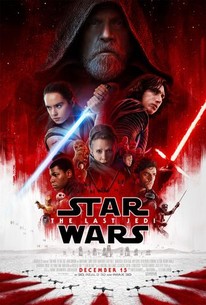
After the exhilarating ride that was Star Wars: The Force Awakens, we were all at the edge of our seats wondering what was going to happen next. What will Luke do? Will Rey’s parents be revealed? Who is Snoke, exactly? When will Kylo Ren stop being an emo? And much, much more.. It was up to Rian Johnson to decide the next sequence of events. For a director who isn’t big, (the only notable films he’s made are Brick and Looper) could he possibly give us the answers and excitement we were hoping for and make those two long years of waiting worth it?
In my opinion, I think Star Wars: The Last Jedi is the most polarizing Star Wars film yet.
Before I get into this, I’d like to mention that this film is not without positives. The action sequences, settings, and cinematography were stunning; this is the most beautifully shot Star Wars film so far. The action sequences kept you at the edge of your seat and provided relief from the slow-moving plot, all while John Williams’ excellent score only added to the already exciting action. The planets we see in this movie, while not all that different from others (except for one, which I’ll mention later), were nice to look at and improved the vibe of the film.
My main issue with this film is that overall, almost nothing is explained or happens. Which, too me, is very surprising, considering its two and a half hours long. Almost all the questions and theories shown in The Force Awakens were completely subverted or, at the very least, barely explained. In addition, there are quite a few nonsense subplots scattered throughout, most of which end up accomplishing nothing, and the characters in these subplots only just learn something from their actions. Furthermore, there are some very strange decisions thrown in this movie, one of them being the casino planet, which not only gave me prequel flashbacks, but also looked awful and did not fit in with the general theme of Star Wars.
In conclusion, The Last Jedi is not terrible, nor is it the worst Star Wars film. However, with all the weird decisions, nonsense subplots, and little to no character accomplishments, I can’t help but wish this film had been handled better. Although I am still looking forward to the next addition to the franchise, I can’t help but wonder if waiting two more years is really worth it. But, as about 20 different characters say throughout the entirety of this film, there’s still hope.
Final rating: 7/10
Creating a superhero movie is quite difficult. Not only do you have to make your main character likeable, his sidekicks favorable, and his enemies heinous, but you also have to make your story work, no matter what genre it is. Thor: Ragnarok has been marketed as Marvel’s first full-fledged comedy film, setting it apart from not only the other two Thor films, but also other Marvel films as a whole, which, while having certain elements of comedy, have never been considered as completely comedic. So, how good is it really?
The plot structure goes as follows: it’s been two years since the events of Avengers: Age of Ultron, and Thor, resident avenger and god of thunder, has returned to Asgard. Upon returning, however, many strange events begin to occur: his father is gone, his brother is up to more mischief than ever, and a mysterious woman called Hela wants to take over Asgard, in a monstrous event described as “Ragnarok”. Thor will have to save his kingdom, but first he’ll have to get through his brother, a junkyard planet, a drunk valkyrie, a death game, and…. The Hulk?
Overall, this movie definitely impressed me, because it really was just that: a stupid comedy film, something you could laugh at and not worry too much about. Every character has their own funny moments and lines, which only serve to make them more likeable than they already are. Some of the events in the story feel like were set up particularly for jokes, and it worked for the film’s advantage.
These jokes are also, surprisingly, used for characterization: a lot of them have to do with the personality of said characters, and we can see the characters grow closer through these moments. For example, Loki, who we’ve previously seen almost destroying New York and threatening to destroy Asgard as well, feels a lot more like a very awkward and arrogant child rather than an evil force, and the two brothers eventually learn to acknowledge each other as well. Overall, while this film may not feel like a Marvel movie for many of the more serious fans, it had everything a Marvel movie should have: humour, fights, and fun.
Final rating: ⅘

Joy from Red Velvet.
24/9/2017
 The Art Archive