Yukikaze: A Troubled Masterpiece (Part 1)

A franchise is a fickle thing. Not every piece of standalone media can become a franchise, and not every franchise can become successful – depending on what your measure of success is, of course – and when it comes to Japanese-produced media, this measure of success is no more apparent when comparing how well it is received in its home country and in overseas territories. To me, no other franchise encapsulates this sort of dichotomy better than Yukikaze, a multi-media series that started out as monthly chapters published in a science-fiction magazine and has since branched out into several different adaptations – none of which have really been that well-received outside of Japan and all of which have problems that hinder whatever possible success they might’ve had. But let’s put in a pin in that for a minute, since you’re probably scratching your head and wondering what the hell a “Yukikaze” is. Let’s get into that.

Continue reading “Yukikaze: A Troubled Masterpiece (Part 1)”

Movie Review: Wonder Woman 1984 (2020)

When the DCEU’s first iteration of Wonder Woman was released 2017, for many, including myself, it was considered the first good (if not fairly decent) DCEU film adaptation of a classic superhero – and not only a classic superhero, but one that inspired generations of women and girls. Of course, a sequel was inevitable, and, after three long years and a global pandemic, it was finally released. So, how does it hold up?

Continue reading “Movie Review: Wonder Woman 1984 (2020)”

Analysis: ‘Macross’ & Idol Culture: 38 Years Strong (Part 1)

NHK reveals the most popular Macross anime, character, song, and mecha
There’s more where all this came from…

Macross. It doesn’t require an introduction. From the airing of its first series in 1982, the Macross franchise has seen very few roadblocks – if the countless sequels, prequels, and spin-offs haven’t already made that obvious. Despite the near infinite franchises in the world of anime that have seen their popularity crash and burn, Macross is one of the few that has managed to stay relevant in the current animanga landscape, and every new entry to the franchise only seems to garner more new fans than the last. But why though?

Movie Review: The Trial of the Chicago 7 (2020)

I’ll admit: I’m a fan of courtroom drama. The theatricals, the stakes, the tension… what’s not to love? There’s something about courtroom scenes in films and other media that really get me on the edge of my seat. However, it is rare that I watch a film (or other piece of media) where the main premise, cliffhanger, and selling point is courtroom drama. Especially when it involves a real-life story that I knew very little about… until now. I’ve watched plenty of great courtroom scenes (acted or otherwise) before: Can Aaron Sorkin’s latest film somehow surpass my expectations?

For the uninitiated: The Trial of the Chicago 7 is, as you can probably already tell, based on a true story. Beginning in 1969 and ending in 1970, the film follows the more-than-100 days long trial of eight (it is lowered to seven later, you’ll see) defendants, each belonging to a different societal or cultural movement, who have all been charged with conspiracy, inciting to riot, and several other misdemeanors regarding the 1968 anti-Vietnam War protests during that year’s Democratic National Convention. A seemingly innocuous trial of eight protestors unfolds, becoming one of America’s most publicized and controversial trials.

First things first: I was blown away by the sheer amount of talent displayed in this film – by talent, I mean both the actors that are displayed and the acting abilities that are shown. I knew little about the cast beforehand, so I was happily surprised when I saw the amount of very recognizable actors casted: Most notably, Sacha Baron Cohen as hippie Abbie Hoffman, Eddie Redmayne as student leader Tom Hayden, and Joseph Gordon-Levitt as prosecutor Richard Schultz, amongst others. But don’t be fooled, these guys aren’t just around for recognition. Every major player is casted and played with pinpoint precision, so much so that you can almost see how this all played out in real-time. Hoffman (Baron Cohen), despite acting like an ostensibly ridiculous, careless hippie, is still given his moments of subtlety, while Schultz (Gordon-Levitt) and opposition prosecutor Kunstler (Mark Rylance) both skillfully play the role of government-servers caught between loyalty and justice with nuance. In short, every actor gives it their all, and by the end you’ll likely be left with many unique perspectives.

Of course, good performances ultimately mean nothing without good writing, and that’s where Aaron Sorkin comes in. Having learned that he’d begun working on the script more than a decade ago in 2007, I’m not surprised by how well the dialogue is written: It’s quippy when it has to be, serious when it has to be, and captures the personalities of every person involved with cleverness and wit. And I believe that it is this writing that managed to make a more than 2-hour long film that takes place almost entirely in a single courtroom pass by all the more quickly.

In conclusion, The Trial of the Chicago 7 may not have the most exciting premise for most people, it is still a well-acted, well-shot, and well-written piece of work that puts a much-needed spotlight on an important cultural and societal event in the history of American protests, 60s movements, and the quest for justice – the last of which is sorely needed today more than ever.

Final score: 10/10

Movie Review: Tenet (2020)

Having seen Inception, and enjoyed it, it would be a lie to say I didn’t have high hopes for Tenet. After all, I enjoyed Dunkirk, Nolan’s prior film, when I saw it three years ago as well. Though I knew little of the plot of this film preceding my viewing of it, what I did know – entropy, time travel, and high stakes – seemed promising, and if anything, it looked to be Nolan’s most ambitious idea put to film yet, and that’s not a statement to be taken lightly. So, what did I think?

The plot is set into motion when the film’s main character, known only as ‘The Protagonist’ (John David Washington), is employed by a top-secret organization known as ‘Tenet’, who are using “inverted” entropy to prevent the outbreak of a possible World War III. After our protagonist tests a couple of ‘inverted’ bullets, he learns that said bullets were inverted by an infamous Russian arms dealer named Sator. To this end, he teams up with Neil (Robert Pattinson) to try and uncover the truth behind Sator’s operation and ensure the future of the human race once and for all.

First things first, I was pleasantly surprised by Washington’s performance, given that he definitely wasn’t as well-known compared to his co-stars. Though his character has no name or even any real backstory, Washington still delivers a great performance of charismatic character that we can all root for. Not to be outdone, Pattinson plays Neil with an undoubtedly equal level of charisma, and the interactions between the two protagonists is fun to watch. While I had some issues with the main ‘hook’ of the film, watching the characters move backwards through time was visually entertaining and definitely impressive, given Nolan’s aversion to CGI, as were the action sequences, which utilized both the actors and vehicles around them in unique ways.

However (and I think this is an opinion shared by many), my enjoyment of Tenet differed from my enjoyment of Inception when the plot started really kicking in. If you couldn’t already tell, the film delves into a lot of difficult concepts, such as entropy & inverted time, and believe me, it does not take either of these concepts lightly. Unlike Inception, where the ideas were still somewhat vague, almost every scene that isn’t an action sequence in Tenet is filled with exposition explaining said concepts, and it can definitely be quite mind-draining at times. Moreover, I found difficulties in enjoying Sator as a villain, since I personally dislike the “homicidal Russian arms-dealer” trope; that, and Branagh’s Russian accent was laughable.

However, despite the obvious reservations with this film, I didn’t dislike it. While at first I was annoyed that the plot wasn’t as well-explained or put-together as it should’ve been, I enjoyed it a lot more when I didn’t try to analyze too much and simply went along for the ride. If you are going to watch Tenet, just keep this in mind: Don’t stress too much, just enjoy it as much as you can.

Final score: 7/10

Movie Review: Inception (10th Anniversary Edition)

Inception - CINEMABLEND

I’m going to be real for a second: I’ve never seen Inception, partly because I wasn’t really ‘into’ film at the time and also because I was, like, eight years old. But that doesn’t mean I didn’t know about Inception; at this point, I don’t think there’s anyone that hasn’t. I knew it was the favourite film of a lot of people, that it had a really dope fight scene in a hotel, and that it single-handedly popularized the use of the DUNNN sound effect you hear in basically every trailer ever these days. So, when it was announced that Inception would be re-released in theatres as a celebration of its tenth anniversary and to promote Nolan’s new film Tenet, I knew this was my chance to actually watch the film that has been talked about non-stop for a decade.

So, what even is Inception about? Described in the least complicated way possible, the story follows Cobb (DiCaprio) and his partner Arthur (Gordon-Levitt), who work as spies… of a sort. In short, they use experimental technology to infiltrate and manipulate the subconscious and extract information through dreams. On one mission, their target, Saito (Watanabe), offers the two a seemingly impossible task: placing an idea in an already subconscious mind. In exchange for convincing the son of a rich man to dissolve his father’s company, Saito promises to also dissolve Cobb’s status as a criminal. Taking on the offer, Cobb assembles a team of experts, including Ariadne (Page), a somewhat naïve but talented architecture student. But the team of six are up against the clock, and it will require more than just luck to make the impossible possible.

First things first, I can definitely see why this film is upheld as a classic of modern cinema. Not only does it present a unique idea (well, for the time at least), but it is able to combine this idea with a tight script and good film-making, something that most ‘unique’ films today lack. The characters, while not the most in-depth, offer no shortage of entertaining quirks and talents, and every actor present gives it their all. The score, composed by Hans Zimmer, is tailored to every scene, and the action sequences are nothing short of impressive; you can tell how much work went into them and I’m surprised at how well they hold up 10 years later. Watching this film on the big screen was definitely an experience!

When you’ve got a film as well put-together as one directed by Chris Nolan, it’s difficult to find a fault. If anything, a scene in the film where the team stake out a fortified mountain base, aside from reminding me of Metal Gear Solid, goes on for a little too long and is rather boring to look at compared to the colorful scenes seen previously. Furthermore, as you may have already guessed from my plot description, it is not a film most people can walk away from understanding everything that happened. It definitely requires rewatches, that’s for sure.

But my complains are merely small potatoes compared to the full-course meal that is Inception – an intriguing story, all-star cast, and never-ending excitement. Though some may argue that it is ‘overrated’, I personally believe that it is ultimately deserving of its spot as a modern classic, if all those imitations of it haven’t already proved that. Now, off to watch Tenet!

Final score: 9.5/10

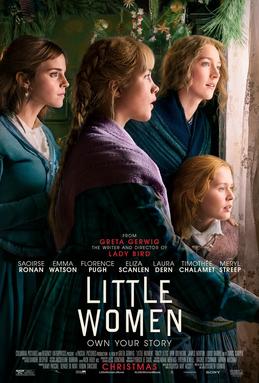
Movie Review: Little Women (2019)

Little_Women_(2019_film).jpeg


It’s safe to say that Little Women is not only one of the most iconic novels of all time, but it’s also one of the most popular go-to’s when it comes to adapting a novel for the silver screen. With film adaptations of Louisa May Alcott’s classic going back as far as 1917 (though, sadly, this adaptation is now considered lost), it is only fact that each generation has their own version of the famous book. It is also a piece that becomes more relevant with the passage of time, and it was clear that yet another film should be added to the collection. So enters 2019 Little Women, directed by Greta Gerwig, a filmmaker with more than her fair share of praise as of recently. But does it live up to that praise?

Although I think most people probably already know the general plot of Little Women, I’ll try and recap it quickly. The story centers around the four sisters of the March household: the oldest, graceful Meg, spunky tomboy Jo, quiet Beth, and the youngest, the artistic but bratty Amy. Unbeknown to these four girls, their lives are about to change – be it because of romance, secret ambitions, or heartbreak. Chronicling their lives from adolescence to adulthood, the film follows the inseparable four as they live, laugh, cry, and struggle together through the challenges and hardships of life.

Right off the bat, one thing that immediately sets this film apart from the rest is its use of structure and pacing. Instead of simply following the story by-the-book, that is to say starting from when the four are all teenagers and ending when they’re all adults in a linear fashion, Gerwig employs interesting techniques that involve the plot cutting back and forth between different time periods in their lives, all the while making it rather easy to follow (at least, I thought so) and not boring. It’s also clear that Gerwig has definitely learned a lot about cinematography and shot composition since her previous film, Lady Bird. This film is simply gorgeous to look at. Another aspect of this production that blew me away is the amount of acting talent involved (as I wrote this, I found out that Laura Dern, who plays the girls’ mother Marmie, won an Oscar for Best Supporting Actress, which is very much well-deserved!) from everyone involved. I was especially surprised by Timothée Chalamet as Laurie, who I felt was really playing a character, not just playing himself. Of course, it would all be empty without Alexandre Desplat’s charming score, which makes the film’s quiet scenes speak the loudest.

Although this is normally the part where I list my dislikes, I find it very hard to think of any particular gripe I had regarding this film. Yes, not everything in the book is present in the film, but all that mattered to me was that the important ones were. Yes, not every sister gets an equal amount of screentime, but all the actresses did the best they could regardless, and Saoirse Ronan as Jo is such a good performance that it doesn’t really matter if the focus is mostly on her.

Overall, compared the previous film disaster I reviewed, The Rise of Skywalker, Greta Grewig’s Little Women is a breath of fresh air. When you combine a rapidly-improving director with a talented cast, beautiful cinematography, and a tight script, you get a once-in-a-lifetime cinema experience. Whether you’re a fan of the book or not, this is certainly one film you wouldn’t want to miss.

Final score: 9/10

Movie Review: Star Wars – The Rise of Skywalker (Spoiler-free!)

Screen Shot 2019-12-23 at 11.20.04 PM.png

So, it finally happened. Six years, two (canon) movies, two (spin-off) movies, and millions of dollars have led to this very moment. Thousands of hours have been spent planning the ending to this grand saga, one that, six years ago, hadn’t been seen for over a decade in the Star Wars universe. It’s definitely been a wild ride, with epic highs and lows (see: The Last Jedi) and leaps and bounds. All that being said, now that it’s finally over, how was it really?

First off, I’d like to say: wow, this movie is not kind to people who have epilepsy. My goodness. Watch at your own risk; my eyes still hurt. By now, I assume you all have a general idea of how the plot will go: Emperor Palpatine (yes, that Palpatine) is back, so buckle up. Rey is growing stronger, but she still is afraid of who she really is. Kylo Ren’s loyalty to the dark side is being tested by the minute, and the Resistance is ready to take a final stand. Amongst tested loyalties and uncertainty, which side will emerge victorious?

Let’s start by listing what I liked about this movie. It’s visually stunning, whether you watch it in 3D or not. The action scenes are intense (if not a bit too fast-paced) and some of the cinematography is downright stunning, which sounds weird when talking about a movie where people fight with giant glowsticks, but it is true. Our main three have some great interactions with one another, which is certainly more than I can say for The Last Jedi, where the main trio was separated for most of the film. Aside from our main trio, the other cast members do a good job as well, with Adam Driver definitely being my favourite new actor from this trilogy. Whether you like Kylo’s ending or not, you have to admit that he’s giving it his all. For old-timey and hardcore fans, there’s plenty of fanservice and cameos, which you will likely enjoy if you’re into that stuff. Overall, there is a lot going on in this movie, but that’s where my problems with it begin.

Due to (I think) the mainly negative response fans had to The Last Jedi, this film feels like JJ Abrams and co. were rushing to undo it by doing pretty much the opposite of what TLJ at least tried to do differently. In short, there’s a bit too much of what hardcore fans like – returning characters, old settings, and epic space battles. Moreover, because the previous story was a bit slow in its plot, this film is trying to cram everything of what I just mentioned above and more into a two-hour and a half runtime. New settings, characters, and plot devices are introduced every moment, and the editing department is trying to finish this story so quickly that you rarely ever get time to breathe before you’re shown the next plot point or chase scene. Aside from a few quiet moments of reflection here and there, the whole film is more or less like this, which left me very confused as to what I was actually supposed to focus on. Personally, although TLJ left me feeling quite conflicted as to how this trilogy would end, it was hard for me to dislike something that honest and ambitious. With this movie, although it doesn’t have the same low points as TLJ, it never hits the same high points as TFA, leaving it feeling bland and watery.

In conclusion: Rise of Skywalker isn’t as terrible as some people make it out to be. On the whole, it’s a serviceable conclusion to this trilogy, and regarding fanboys, there’s a lot for them to enjoy. However, despite the team’s best efforts, its oversaturation of fanservice, action, and story beats leave it feeling lackluster, and I doubt that, ten years from now, people will look back on this finale as fondly as they’ll look back on, say, Avengers: Endgame.

Final score: 6.5/10

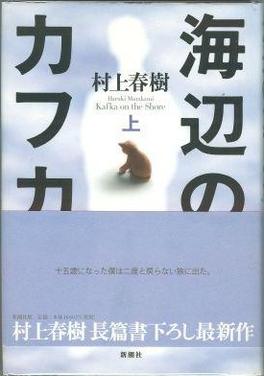
Murakami Mondays: Kafka on The Shore (2002)

Kafkaontheshore.jpg

Kafka on The Shore (lit. Umibe no Kafuka) is the tenth novel by author Haruki Murakami, first published in Japan in 2002 and translated into English three years later by Philip Gabriel, frequent Murakami translator. Its 2005 English version was featured on The New York Times list of ’10 Best Books of 2005′ and it even received the acclaimed World Fantasy Award in 2006. Consisting of 505 pages, it treads the middle ground between a long Murakami novel and a short one, though it leans towards the former.

Organized in a format unusual to the majority of his other novels, focus is placed on whether each chapter is an odd or even one, as two distinct but connected storylines take place depending on this chapter layout. The odd-numbered chapters chronicle the journey of 15-year old Kafka, who runs away from home on a quest to find his missing mother and sister, while picking up several allies along the way. The even-numbered chapters showcase the perspective of Nakata, an illiterate elderly man with the ability to talk to cats, who finds himself far away from the comforts of his home. As the story continues, the plot deepens: Kafka is questioned for murder, Nakata tracks down a cat killer, and plot points thought to be random and inconsequential turn out to hold the biggest clues of all.

I’ll admit, I have a bit of bias towards this particular book, namely because it was the first piece of fictional Murakami I read (not the first – that would be Underground, but that’s for another Monday) and it was the reason I found myself so drawn into his work, not to mention it introduced me to the ‘magical realism’ genre. I still enjoy it after all these years, surprisingly. The characters are interesting, the moments of ‘magic’ feel magical, and the story is one of the better-paced ones. Overall, I highly recommend it, for Murakami fans, non-fans, and fans of a good surreal fantasy story alike.

Murakami Mondays: A Wild Sheep Chase (1982)

Haruki_murakami_a_wild_sheep_chase_9780375718946.jpg

A Wild Sheep Chase (lit. An Adventure Surrounding Sheep) is the third novel by author Haruki Murakami, first published in Japan in 1982, and translated into English seven years later in 1989 by frequent Murakami translator Alfred Birnbaum. It is considered an independent sequel (that is to say, a spiritual sequel) to Pinball, 1973 and is the third (and final) book in the ‘Trilogy of the Rat’; it is preceeded by Pinball and Hear the Wind Sing. Interestingly, this trilogy was released in English out-of-order, as Pinball (the second book) was the first to be translated, followed by Hear the Wind Sing (the first) and this novel. Also, while the previous two were re-translated in 2015, this novel has yet to receive one.

Taking place in a post-WWII Japan, the detective noir-style story (which also includes a chain-smoking unnamed narrator) follows our recently divorced protagonist, who, after posting a photo in a magazine ad sent to him by his old friend ‘The Rat’ (who is a recurring element in the trilogy, obviously), is contacted by a mysterious man representing ‘The Boss’, which control Japan’s elite. Having been told that a sheep pictured in the ad is somehow the secret source behind the power of ‘The Boss’, and that his life will be over if the sheep is not found within two months, our protagonist and his unusually perceptive girlfriend must travel to the north of Japan to find the strange sheep, all while encountering new and old friends, victims – and chasing an immovable force.

Despite being rather short and being part of a trilogy (meaning you’d have to read the other two novels if you want to understand anything thats going on here), A Wild Sheep Chase is rather enjoyable. It blends together both Japanese and English literature tropes in front of a Japanese contextual background, so even if you don’t know or aren’t interested in Japanese history regarding the time period of the book, it still ‘feels’ like a typical American detective story. As a Murakami fan, reading this was a unique experience, as the early Murakami novels have a very different style compared to those of today – a lot more youthful, slangy, and allegorical. It’s like a time machine. That being said, if you don’t mind reading the previous two, A Wild Sheep Chase is a fun time.