Murakami Mondays: Colorless Tsukuru Tazaki and His Years of Pilgrimage (2013)

Colorless_Tsukuru_Tazaki_and_His_Years_of_Pilgrimage.jpg

Colorless Tsukuru Tazaki and His Years of Pilgrimage is the thirteenth novel by author Haruki Murakami, first published in Japanese in 2013 and in English only a year later in 2014. It was released three years after IQ84, Murakami’s longest ever novel yet, with more than 900 pages total. The book was released in English by Philip Gabriel, another one of Murakami’s frequent translators.

Unlike the majority of Murakami’s works (including both long and short-form novels alike), Tsukuru Tazaki dials down on the surrealism and mystique that has often characterized Murakami’s writing, choosing instead to focus on a simpler narrative. The story follows the perspective of the titular Tazaki, a 36-year-old railway engineer who has been constantly plagued wondering why his group of high school friends cut all ties with him sixteen years ago. Now a grown man, he is convinced by his girlfriend Sara to seek the truth, and so he decides to go on a quest to mend his relationships with his former friends and get to the bottom of the mystery.

Although this novel is well-written overall, and I can definitely understand why Murakami would choose to write something this simple (especially given that he’s finished an absolutely massive plot-layered story years earlier), for a novel that took three years to write, it’s rather underwhelming. I was excited to see a Murakami protagonist who actually wasn’t a loner (or at least wasn’t formerly a loner), but compared to his other main characters, Tazaki falls rather flat, though only in comparison. Moreover, despite Murakami being a brilliant writer, I felt that much of the writing in this novel was rather shallow, and it was even more disappointing that he chose to leave most of this story’s mysteries unresolved and ambiguous, which is strange considering the great lengths Tazaki goes through in his attempt to solve them.

In conclusion, Tsukuru Tazaki isn’t a bad novel by any means, and if you’ve never read Murakami before, you may enjoy it, but compared to his best works (and even his other novels in this category) it is noticeably weaker in both style and presentation. Ultimately, whether you choose to read it or not is up to you.

Murakami Mondays: The Wind-Up Bird Chronicle

Wind-up_Bird_Chronicle.jpg

The Wind-Up Bird Chronicle (Nejimakitori Kuronikuru) is the eight novel by author Haruki Murakami, first published in Japanese in between the years 1994-1995, and was later released English by long-time Murakami translator Jay Rubin in 1997. The original Japanese edition was released in three parts, while the English language edition (and the most common one today) is a single volume of over 600 pages, making it one of Murakami’s longest yet.

While a few chapters from the novel were published in The New Yorker and a slightly altered version of the first chapter was featured in the short story collection The Elephant Vanishes (not to mention the novel’s protagonist, Noboru Wataya, appears in another short story in this collection), this novel is the where all these characters and story beats are placed together to create something more coherent.

Because of this novel’s (very) large page count, you’d likely assume that it’s rather dramatic and intense, plot and content wise – and it is, but not in the way you’d expect. Beginning with the protagonist (Noboru Wataya) being tasked by his wife to find their missing cat, the plot is suddenly turned upside-down as Noboru discovers one morning that his wife has mysteriously vanished, and the rest follows him as he uncovers the mysteries and intricacies of her disappearance, all the while encountering eccentric allies and antagonists.  Although, yes, the novel does have its moments of melodrama and theatrics, Murakami takes a more subtle and nuanced approach to the situations faced by Noboru, with several scenes focusing on his loneliness and introspection, in classic Murakami style.

When it comes down to it, despite how intimidating its length and size appear, The Wind-Up Bird Chronicle is one of Murakami’s best, and will definitely stick with you a long time after you read it.

Murakami Mondays: After Dark (2004)

Murakami_After_Dark.jpg

After Dark is the eleventh novel by Haruki Murakami, first published in Japanese in 2004 and later in English in 2007, released 2 years after Kafka on the Shore, one of his longest novels. It was released in English by frequent Murakami translator Jay Rubin.

In contrast to his Murakami’s previous novel Kafka on the Shore and most of his other works, After Dark is quite short, with only 201 pages, and in an interesting deviation, the entire story from start to finish takes place over the course of one night, starting at 11:56 PM and ending at 6:52 AM. This concept, especially when compared to his other novels which can often take place over the course of years and even have decades of backstory, is unique for a Murakami book, while the themes and general tone are similar to his other works: several parts take place between reality and dreams and there’s hints of surrealism throughout.

I was worried that, for the absurdly long length most of his novels are, that the short timespan of After Dark would be messy, but thankfully this one handles it well – It has just enough story to keep you invested but not so much that you start to believe this can’t all happen over the course of a night. If you aren’t a fan of doorstoppers, I recommend this one, and if this is your first time reading a shorter Murakami novel, as long as you don’t expect anything too dramatic, you’ll surely enjoy it.

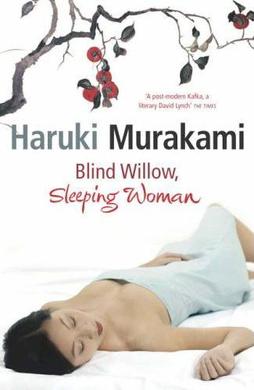
Murakami Mondays: Blind Willow, Sleeping Woman (2006)

BlindWillowSleepingWoman.jpg

Blind Willow, Sleeping Woman is the fourth collection of short stories by renowned author Haruki Murakami. First released (surprisingly) in English in 2006 (4 years after the release of his previous collection After the Quake), it later received a Japanese edition in 2009. For the most part, the short stories are split evenly  between two translators: Philip Gabriel and frequent Murakami translator Jay Rubin.

Running at a generous 362 pages, this novel is Murakami’s biggest and most impressive collection yet, containing 24 stories spanning from the years 1980 to 2005, which were originally published in literary magazines and periodicals such as Harper’s, Granta, McSweeney’s, and The New Yorker; several of which allude to or are incorporated into his later long-form novels.

Although he has currently published 5 short story collections as of 2019 – his latest one, Men Without Women, was published in English in 2017 – this book is, in my opinion, one of the best examples of Murakami’s incredible and broad range. Filling the pages are stories of love, loss, dreams, alternate realities, and sometimes absurdity – everything is top-notch here and really demonstrates his writing capability and talent. A reason for this may be because Blind Willow, unlike his other collections, doesn’t focus on one particular theme (i.e Men Without Women is mainly about men who have ‘lost’ women) and thus the full extent of his range is able to shine through.

Despite the length of this one, it is a great introduction to the master and his storytelling; if you are someone who prefers reading short stories over feature-length novels, I highly recommend it.

Murakami Mondays: Dance Dance Dance (1988)

image.png

Dance Dance Dance is the sixth novel by acclaimed Japanese author Haruki Murakami, which was first published in 1988, a year after the release of Norweigan Wood. After the release of Norwegian Wood, which catapulted him to both national and worldwide fame, Murakami was initially not able to cope with the sudden pressures of being a celebrity, and much of the production of this novel involved him releasing his stress and anxiety,  thus making it a ‘healing experience’ for him. It was translated six years later in 1994 by previously-mentioned Alfred Birnbaum, whose translation is still considered the preferable one and the one I read.

This particular novel started several major themes that would later become hallmarks of a Murakami novel: surrealism, loss, sexuality, abandonment, and making human connections. The protagonist of the story, more or less a stand-in for Murakami himself, is at the beginning of the story alone and isolated, but later meets a cast of eccentric and colorful characters, each with their own unique backstory and ties to the main character; this is also a staple of many later Murakami novels such as Kafka by the Shore and The Wind-Up Bird Chronicles.

One somewhat confusing aspect of the novel is its relation to Murakami’s “Trilogy of the Rat”, a series of three books (Hear the Wind Sing, Pinball, and A Wild Sheep Chase) that focus on an unnamed narrator and his friend known only as “the Rat”. Although this novel is a sequel to the trilogy and shares some similarities to it, whether or not it is considered an actual part of the series is debatable.

Overall, despite the debate over whether or not it’s part of the “Rat Trilogy”, Dance Dance Dance can still be read and enjoyed for the most part, even if the more surreal trappings are a bit confusing to follow if you aren’t familiar with Murakami’s surrealist fiction works. It is 393 pages long, slightly over the length of Norwegian Wood, but as more events and story beats occur in this novel, it will likely feel shorter. Recommended for surrealism fans or those who feel isolated at the moment.

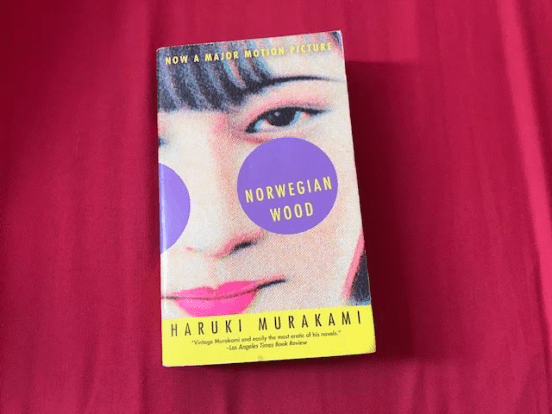
Murakami Mondays: Norwegian Wood (1987)

image

Norwegian Wood (Noruwei no Mori) is a coming-of-age novel by acclaimed Japanese author Haruki Murakami, which was first published in 1987 and was his fifth consecutive novel at the time, written after the release of Hard-Boiled Wonderland and The End of the World in 1985. Despite having released four well-received novels before this, Norwegian Wood is the book that catapulted Murakami to stardom, not only in Japan but abroad, and it’s easy to tell – compared to Hard-Boiled Wonderland, which was published in 1985 but wasn’t translated in English until 1991, Norwegian Wood received its translation only 2 years later in 1989, and since then almost every Murakami book has gotten translated in the span of less than 2 years or so.

Another thing of note is that this book has two translations: the original 1989 translation by Alfred Birnbaum and the updated translation by Jay Rubin in 2000. Although I do not have the 1989 translation, Wikipedia states that it was mainly used by Japanese students learning English and even included an appendix of sorts for several English words and phrases used in the novel. If you are not a Japanese student or if you are comfortable with your English language abilities, I’d recommend the more common Jay Rubin translation.

Despite Murakami’s proficiency and his prolific writing, Norwegian Wood stands out amongst his other novels for several reasons. Unlike most of his other works which often deal with surrealism and fall into the category of “speculative fiction”, Norwegian Wood is a story taking place in average 1960s Tokyo and nothing surreal interferes with the world or its characters. The basic story follows college student Toru as he develops relationships with two different women – the kind but emotionally/mentally unstable Naoko and the outgoing but bossy Midori. Unlike most stories dealing with love triangles, both women are written well, especially in the case of Naoko; despite dealing with an unnamed mental illness, she’s well-rounded and empathetic, which is uncommon when compared to most portrayals of mentally ill people in media.

Overall, even though this is one of his earlier works, it’s one of his best and in general it is wonderfully written. I’d highly recommend this book to new readers of Murakami, so long as you can deal with the 386 page length and the fact that not all of his novels will be as normal and quaint as this one.

Movie Review – Spider-Man: Far From Home

large_far-home-poster.jpg

After pretty much everyone on the planet saw Endgame and put in their two cents regarding the franchise’s biggest blockbuster (including myself), questions began turning to the next anticipated Marvel release – the sequel to the first film that really introduced Tom Holland as Spiderman – Far From Home. Once fans and the general populace heard that it would be set after the events of Endgame, questions turned to speculation and theories. After the incredible epic that was Endgame, how would other films in the MCU even compare? What could possibly be a bigger threat than Thanos? Could Peter Parker of all heroes pick up the pace?

But not too fast. What exactly happens in Marvel’s next film after their biggest and boldest hit yet? As it turns out, it’s quite simple. Peter Parker, still recovering after the effects of  Thanos snap and dealing with average high school problems, is excited about the class trip to Europe – finally a chance to relax, hang out with his friends, and who knows, maybe even confess to MJ! However, his plans are thwarted when mysterious beings known as Elementals start showing up all over the world and causing mass destruction… even his school trip becomes a target! Nick Fury and other agents fully trust Peter to deal with the issue, but he’s conflicted – with great power comes great responsibility after all. Things are made more complicated when an empathetic hero called Misterio offers to work with him and is even willing to understand Peter’s issues. But is Peter ready to leave his ‘friendly neighborhood Spider-Man’ persona behind?

To start off, one thing that I’m glad this movie addresses is the effects of people coming back from the ‘blip’ on society (i.e people being made homeless because of the ‘blip’ and some coming back the same age but with previously younger family members now being older than them) and the mental toll of both the snap and the loss of his father figure Tony Stark have on Peter. I personally feel like Far From Home handles Peter’s mental state and conflicting emotions very well, and it’s easy to both sympathize and emphasize with him – we’ve all had to deal with choosing between our responsibilities and what we really want. Moreover, we can understand why Peter doesn’t exactly want to be involved in all this Avenger stuff, since at the end of the day he’s just a friendly high school kid in a spider-themed mask who can do cool backflips. Tom Holland’s portrayal of the character gets better with every new release, and even the members of the supporting cast get their own moments to shine. Because this is a Spider-Man movie and by law it should be light-hearted in tone, it is filled to the brim with hilarious jokes and gags, but it still takes the time to let the hard-hitting scenes pack a punch.

Despite this film having come out after the very well-received Endgame and thus some were expecting it to be a letdown in comparison, it is pretty good. But it does have some issues. While I will admit that the visual effects and CGI in Marvel films are improving all the time (and this movie is no exception) and are cool to look at, this one in particular has a ton of action sequences and big epic battles that go on for a long time and leave you wondering when there’s going to be a scene that won’t make your eyes hurt. Also, some characters have returned from the snap with their personalities changed – for example, Nick Fury and the new agents of S.H.I.E.L.D as a whole don’t command as much authority as they used to and Fury is more of a comedic relief than anything (though he still has moments of awesome). Oh, and Misterio’s costume is so ugly it makes my eyes bleed.

In conclusion, Spider-Man: Far From Home is certainly no Endgame, but it doesn’t have to be. As long as you don’t mind a teen high school comedy mixed in with your superhero fare, Far From Home is a surprisingly thematic and engaging film, with plenty of hilarity and fun times along the way. As the first movie to set the stage for the next phase of the MCU, it’ll be interesting to see where this franchise is headed next.

Final score: 7.5/10

TV Review: Good Omens (2019)

0.jpeg

When I first heard that Neil Gaiman and Terry Pratchett’s 1990 collab novel Good Omens had gotten a very well-liked TV adaptation via Amazon Prime, I was more than a little confused. After all, being the incredible legends that they are – or were, in the case of Terry; rest in peace – hardly any of their works have received proper adaptations, if any at all (Coraline is still the bomb, though). Why release it after more than two decades since the release of the novel? Whose idea was this? Why Amazon Prime – doesn’t Netflix own everything these days? Anyway, that’s beside the point. Having seen the show receive glowing reviews from pretty much everyone and their grandma, I decided to give this one a fair shot, given that I don’t watch TV all that often. I bet you’re all on the edge of your seats waiting to hear my opinion.

But let’s back off for a second. What could a story from the brilliant minds of Neil and Terry even be about? As it turns out, it’s quite simple: Aziraphale and Crowley, angel and demon respectively, have been friends for thousands of years (though Aziraphale would never admit to it) and as the representatives of Heaven and Hell on Earth, they are tasked with keeping an eye on the Antichrist, a young boy who is destined to bring about the end of the world as we know it. The unlikely pair want to ensure that the child is raised in such a way that he can never choose between good or evil, thus postponing the End Times for some other day. However, things don’t exactly go according to plan, and with less than a week till Armageddon, the two must find a way to sabotage the end of the world, maybe meet some eccentric side characters along the way, re-evaluate the meaning of their friendship, and answer the question of whether or not Good and Evil will ever be able to co-exist. Fun times and plenty of Queen music ensues!

One thing that I’ll just get out of the way first, I absolutely adored the two leads. David Tennant as Crowley and Michael Sheen as Aziraphale are fantastic actors (no surprise) and they nailed the dynamic between the two polar-opposite protagonists. Truly, every scene they’re in is a joy to watch and it’s safe to say that they steal the show. If anything, watch it for them. Another worthy thing of note is that the show is hilarious. Really. Neil and Terry when put together are a powerhouse of unique comedic storytelling, and despite the dramatic stakes at large, every episode gave me something to laugh about. Not to mention the tight and clever script (done by Gaiman himself!) that certainly kept me invested throughout the show’s six-hour runtime. Production and costume design was very impressive, really showing the creativity of the crew when it came to bringing both the book’s real and otherworldly locations and inhabitants to life. The stark contrast between the grimy and flea-ridden Hell to the pristine, white-washed Heaven is truly a sight to behold.

When comes to the things I didn’t like regarding this show, there’s not a lot to say, honestly. Some people have already made comparisons regarding certain plot points and events from the book being omitted from the show, but as a person who hasn’t read the book (yet), I can’t make these sorts of negative opinions. What I will say, though, is that some episodes have a certain unbalanced quality to them – some scenes go on for too long and some are over in the blink of the eye. Another annoyance that I had a few times was that the side characters were in scenes that dragged on for a while, so much so that I wanted to just skip ahead. Not that the side characters or their respective actors are particularly bad or anything (I think they’re just fine) but I was way more invested in Aziraphale and Crowley than I was with them. But hey, that’s just my opinion.

In conclusion, despite some minor setbacks as mentioned above, Good Omens is an otherwise engaging, refreshing, funny, and thought-provoking show that’s certainly worth six or so hours of your time. With a stellar cast, great performances, fun design choices, and a tightly-knit script, it’s a one-of-a-kind show from a one-of-a-kind writer. You wouldn’t want to miss it. I’m glad I didn’t!

Final score: 8.5/10

Anime Review: I Want to Eat Your Pancreas

93b9cf2c33fdc72b89ada0c77a015686.jpg

Before anyone asks: Yes, that’s the actual title of this film. I know. It’s a weird and silly enough title to turn one completely off on watching it. At first, I was only willing to give it a passing a glance and go “Huh, that’s anime for you” and never touch it again. However, having seen one of my acquaintances watch it and highly enjoy it, I decided to save it for a rainy day and hopefully get around it at some point. As you can clearly tell, I did get around to watching it; otherwise you wouldn’t be reading this review. But before we get into it, what’s this even about?

Directed by Shin’ichiro Ushijima and adapted from a former web-novel of the same name by Yoru Sumino, I Want to Eat Your Pancreas (Kimi no Suizō o Tabetai in Japanesefollows the life of a introverted and reclusive high school boy (who makes it a point never to say people’s names out loud or reveal his own) and his accidental meeting with Sakura Yamauchi, a bright and peppy girl in his class (also his disinterested library assistant). This boy-meets-girl story is twisted upside-down when he realizes that Sakura has terminal pancreatic cancer – and he’s the only person outside her immediate family who knows. Not wanting to waste a moment, Sakura immediately invites him to be her “partner” in her bucket list escapades, to which he hesitantly agrees – but will he be able to stay by her side until the end?

I’m personally not the biggest fan of the whole “sickness romance” genre, and the last I remember consuming of it was when I read The Fault in Our Stars all those years ago. However, this film is surprisingly interesting and subversive in that sense. The relationship between our MC and Sakura is slowly but carefully built up, and it never tries to be too dramatic or melancholic. Sakura herself isn’t all moody about her condition either, and her excitement in crossing items of her bucket list is well-matched with the more down-to-earth MC, who always reminds her of the reality but is never overbearing or annoying about it. This ying-yang pair influence each other in various ways throughout the almost two-hour long film, and their influences can be understood. The animation, although not anything overly special or bombastic, remains consistent throughout, and there are a a few scenes that stand out as being especially beautiful.

Despite this praise, there’s more things that may annoy one about this film other than the oddball title. If the almost two-hour runtime doesn’t already make you bored, it should go without saying that the first third or so is quite slow-paced, and it takes a while before the MC is able to break out of his book-covered shell and get the ball rolling. Moreover, there’s a few extended scenes that consist of little more that characters contemplating in either silence or with soft piano music playing in the background (great soundtrack, by the way) that may leave more than a few people spiritless. However, if you’re willing to stick through these minor issues, it’s an ultimately rewarding experience.

In a way, this film is less about coming to terms with dying but more about coming to terms with living and what that all means. Even though you may not understand it or where its all going at first, everything will make sense in the end. And who knows, you may even have a changed perspective on life!

Final score: 8/10

Movie Review – Avengers: Endgame (Spoiler-Free!)

Avengers-Endgame-Banner-2-de7cf60.jpg

Ladies and gentlemen and others, we’ve finally made it. After 11 adventurous years, 22 feature-length films, many sold-out tickets, and much hype, the second part of Infinity War and the final film in Marvel’s Avengers series has finally arrived, and our long, arduous journey has come to a close. Now featuring more characters than ever before, speculation-fueled trailers and 181-minute runtime, everyone was both excited and anxious for the ultimate ending to cinema’s ultimate superhero series. After all, the last hurdle’s always the highest. I was able to see it the day after it came out in Vietnam (thankfully), and destiny said that a review must be made. So, how was Endgame?

For the sake of keeping this review as spoiler-free as possible, I am forced to keep the wall of text that usually serves as a plot recap short, but I will try nonetheless. To quickly recap the last film, everyone’s favourite evil purple man Thanos acquired all six of the Infinity Stones and wasted no time going along with his plan: wiping out 50% of the population of Earth and every planet in the galaxy, leading to the deaths of many of our beloved heroes. Now, despite their grief over lost partners, family members, and friends, the remaining Avengers realize that they must set aside their anguish for a chance – just one chance – of bringing back their comrades and ending Thanos’ plans once and for all.

Firstly, many have complained about the three-hour runtime being too long, but personally I did not find it to be that big of an issue, though I think it could’ve been shorter. Whether the scenes in the movie are action-packed or not, each one is able to deliver something that can make you smile, laugh, or cry throughout. Although not every character is given the same amount of screen time (for obvious reasons), every character is given a moment to shine, whether in battle or in dialogue. As always, the special effects and CGI were stunning (no doubt, as this is the most expensive Marvel caper to date), and the action sequences paired with Alan Silvestri’s iconic score are top-notch, giving the best that Marvel has to offer. Also as usual, every actor in this film is putting on a great performance, some that are so great that it made me wonder if it was illegal to have so many actors have such good chemistry and interactions with one another. Despite being marketed as the ultimate, craziest, and coolest superhero flick, it’s genuine heartfelt moments and hilarious call-backs to previous entries in the MCU that remind you how much effort has been put into the series and how this finale really is a love-letter to all Marvel fans.

Of course, being a three-hour long movie, there were bound to be a few slip-ups here and there. A few of the jokes don’t land as well as they should or sometimes feel a bit inappropriately placed, and despite me being one of those people who can sit through long runtimes, I do feel like this film could’ve used a few cuts and edits here and there to make it seem like less of a slog. While most people complained that the first half felt too long for them, I had no problem with the first half as I think that it sets up the story pretty well, but it was the ending that felt a bit dragged on – I almost thought I was watching Return of the King again.

In conclusion, the grand finale of Marvel’s Avengers series may have its setbacks, but it is on the whole a film worth watching – whether you’re a Marvel fan, casual observer, or something in-between. It is a movie that manages to entertain both sides of the spectrum, through great action, heartfelt moments, comedic dialogue, unapologetic comic book-ness, and an ending that will no doubt touch the hearts of many.

Final score: 9/10