Top Lists: My Top 10 Underrated ‘Final Fantasy’ Ladies

So, Final Fantasy. This long-running and critically acclaimed video game franchise has not only produced some of the most beloved RPGs of all time, but some of the most well-known female characters in all of gaming history. Just think about it: how many people (specifically, gamers) have you seen gushing over Tifa Lockhart or putting characters like Yuna and Rinoa on their “Top Video Game Babes” lists? Chances are, you’ve definitely at least heard of these girls, and for good reason. However, this is going to be a little different, since, of course, not all fan love is divided equally, and there are plenty of Final Fantasy females who do not receive as much appreciation as they deserve, which is why I’ve created a list of 10 underrated ladies who I believe need some love from the fanbase. Please note that these are my own opinions!


10. Shantotto (FFXI)

1502802866886

Despite being the main ‘representative’ character for XI; appearing in crossovers, all the Final Fantasy fighting games, and even popular enough amongst the staff to receive her own expansion DLC in her home game, Shantotto still remains as a kind of forgotten character, which is shame, because she’s definitely something else. A supremely powerful Black Mage with a iconic laugh (O-hohohohoho!) and a habit of making every sentence rhyme, she possesses an air of superiority, smugness, and a short fuse, yet she is still loyal to her cause, and sometimes her thirst for knowledge can bring out the best in her. She definitely shouldn’t be judged by her size!

9. Faris Scherwiz (FFV)

dffoo_faris.png

Oh, Final Fantasy V. The fifth mainline entry in the series tends to be overlooked by most fans, given its (very) simple story compared to its game-breaking predecessor and its leaning towards being more comedy-oriented than the rest of the games… but that still doesn’t change the fact that Faris is awesome! Raised as a male from an early age, Faris eventually became a courageous and determined pirate captain, if not a little rude and rough-spoken sometimes. Her introduction (by her kidnapping our main characters no less) changes the core events of the story, and its nice to see her become more protective over her fellow Light Warriors as the game continues. Oh, and she has a neat little twist in her story, too.

8.  Prishe (FFXI)

Prishe_FFXI_Ikeda_Art

Oh, would you look at that, another XI representative character! Like Shantotto, Prishe was popular enough to become a major character in her home game, and was added in one of the fighting games, Dissidia 012 Duodecim (that was a long one..).  And, like Shantotto, she’s something else. At first, Prishe is just a confident, loud, and excitable tomboy who shows hints of being easily agitated and being impatient at times. Oh, and she swears a lot. However, despite initial appearances, she has times where she becomes more introspective and sad, such as when she ponders her destiny and the prospect of immortality. Her revelations over the course of the story even lead her to become more heroic and self-sacrificing because she believes that her life is worth nothing – making her an interesting contrast against most Final Fantasy characters who experience these same revelations, but become more villainous as a result. The mighty Prishe is here!

7. Penelo (FFXII)

wallpaper_final_fantasy_xii_03_1600.jpg

Sometimes, it’s your fellow female characters who upstage you. Of course, often being considered the ‘black sheep’ of the mainline entries, one could argue that all of XII’s characters are in some way ‘underrated’, but I feel that Penelo suffers from this the most, which is a shame. Compared to the more stand-out ladies in the game, such as rebel princess Ashe and the sensational warrior Fran, Penelo’s calm and careful persona may not place front-and-center all the time, but it’s specifically her normalcy that makes her appealing – she provides a humanizing component representing the lives of average people caught in the crossfires of war and strife, keeps the entire party grounded in reality, and even forms and endearing friendship with Larsa, a boy on the other side of the conflict. Be it a helping hand or a proper scolding, she is always reliable.

6.  Agrias Oaks (FF Tactics) 
32111-headhead.jpg

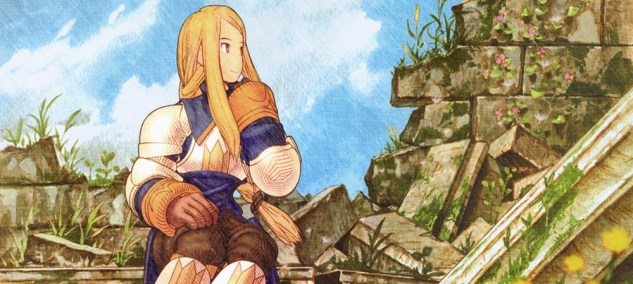
Another contender for ‘black sheep’ of the franchise, Tactics is a spin-off game which greatly emphasizes war, relationships, and, well… tactics. There are dozens of major characters in this game, but Agrias definitely deserves a mention. A trustworthy bodyguard to Princess Ovelia, Agrias is a Holy Knight sworn to the sword through-and-through, and she possesses a strong sense of duty and honor, given her high-ranking position. As characters in the game constantly seem to switch sides and backstab one another, her unwavering loyalty to her nation and aura of justice are particularly striking. She has a really cute birthday sidequest, as well. Who knew the stone-cold knight could be so adorable?

5. Yugiri Mistwalker (FFXIV)

tumblr_oszbcndnew1shn8hmo1_1280.png

Considering XIV and its hundreds of NPCs to try and keep relevant to the story, its a wonder some even get selected at all. While XIV has several prominent female characters in the Scions, I’d like to draw attention to a lesser-known member of the honorary group. Initially a Au Ra refugee from a fallen homeland, Yugiri became an assistant to the Scions out of gratitude, and assists them in whatever they need, be it covert operations or liberations. At first, she is simply a quiet, decisive, yet humble woman who lives on integrity – the pinnacle of what an essential ninja should be. Her steadfast determination in helping others is quite honorable, and it is this determination which inspires the people of other fallen homelands to stand up to tyrannical forces. I’d love to see what she’ll do in the new expansion – fingers crossed!

4. Rosa Joanna Farrell and Rydia (FFIV)

Screen Shot 2019-04-05 at 11.23.57 AMrydia_fmv.png

Aw, am I cheating by including two characters? Well, stay mad, because I couldn’t choose between these two. IV is considered an old-time RPG favorite, so why shouldn’t these characters be treated as such? Both of these ladies are wildly different, not only in design but in personality as well: Rosa is a gentle and polite young woman, while Rydia starts off as a scared little girl who is left shocked after the destruction of her hometown, Mist. Nonetheless, the two show incredible perseverance throughout the course of the game: Rosa becomes an accomplished healer and diplomat, while Rydia starts using her magical abilities as a summoner for the good of mankind and opens up to the rest of her party members. There’s a lot more to say, but this list is long enough as it is. Let’s just say that these two show a lot of character in just a little pixels!

3. Literally all the female class members in Class Zero (FF Type-0)

konachan.com-116541-cater-cinque_final_fantasy-deuce-final_fantasy-final_fantasy_type_0-moogle-queen-rem_tokimiya-ripu-seven_final_fantasy-sice-skirt-sword-weapon.jpg

So, you thought I was cheating when I put two girls for one number? Well, I hope you’re prepared for seven of them! I’ve started to notice a pattern here: underrated game equals underrated girls. As part of the ‘darker and grittier’ Fabula Nova Crystallis spin-offs series (which includes FFXIII and FFXV), the characters are made to look more realistic, which is why this group of ladies may be hard to tell apart at first – but their personalities more than make up for it. From the ditzy oddball that is Cinque to the rude but somewhat sincere Sice, all of them get their chance to shine alongside their classmates and in battle, with many unique customizations and abilities to perform, and segments where you can learn more about who they are and what they stand for. Whether you like the more realistic outlook and style of Type-0 or not, one (or more) of these ladies will certainly take your fancy.

2. Cissnei (FF Crisis Core)

QYWRBWq

All fans of VII will be familiar with the Turks – an elite black-ops squad belonging to the ominous Shinra HQ – which originally only consisted of members Reno, Rude, Tseng, and Elena in the original game. However, with the addition of several more materials that now make up the Compilation Of Final Fantasy VII, we’ve seen several new Turks members, but here I’ll focus on one of the more notable ones: Cissnei. Originally making her appearance as a playable character in the (sadly) now defunct mobile game Before Crisis, Cissnei was made more known to the world with her appearance in the prequel game Crisis Core. Although at most being a side character, her interactions with our protagonist Zack Fair are quite charming, and there’s a lot more going on with her and her involvement with the Turks beneath the surface. Not to mention that she looks real cute in a swimsuit!

1. Freya Crescent (FFIX) 

ix-art-freya-9405.jpg

Wow, we’re finally at the number one spot on this list, and we’ve only just gotten to our first anthropomorphic animal character! All jokes aside, Freya is seriously awesome. I’ve spoken about her before in a previous analysis, but to add on to that: If you take Freya at surface value, she’s a skilled and capable dragon knight (also known as a Dragoon, the best Final Fantasy class – don’t @ me..!) with a sharp and resourceful mind and a neat character design, which is already pretty cool, but how about digging deeper? Not only can she joke around with our butt-monkey (literally) protagonist Zidane, but she is shown to be able to cast aside her doubts and team up with others when needed, even with her former enemies. Moreover, she faces (and has faced) much tragedy throughout her life, yet she still holds out hope and stays humble, by choosing to live for the future by preserving the memories of her past. It’s a mighty shame that the story seems intent on putting her on the backburner after the first half, because, in all honesty, she is one of the most striking female characters in the whole series, and definitely deserves more admiration.


Well, that completes my list of underrated ladies in Final Fantasy, but I’d like to hear what you think. Who do you personally think is underrated and needs more love from the fans? Please feel free to leave a comment and tell me what you think. Otherwise, thanks for reading!


Movie Review: Captain Marvel (Spoiler-Free!)

Captain_Marvel_poster.jpg

After the exhilarating and hard-hitting ride that was last years’ Avengers: Infinity War, fans and non-fans alike were left with several theories and questions in regards to the film and its successor (coming out this April) left unanswered, one of which being: “Who was that person that Fury paged during the end credits sequence?” Of course, die-hard fans of Marvel would recognize the logo on the pager as belonging to no other than Captain Marvel, who has now received her own stand-alone movie as of right now, becoming the first film in the MCU with a lead female character.

I feel that I can’t reveal too much of the actual plot without going into spoiler territory, so lets keep it as brief as possible – the film follows Vers (Brie Larson), a noble warrior from the planet Hala, which is in the middle of a galactic-scale conflict. However, during a mission, Vers is ambushed and brought to mid-90s Earth, where she meets the younger Nick Fury and embarks on a new kind of mission: bridging the gap between her lost memories.

With the plot out of the way, how does the actual movie hold up? Let’s begin with the good stuff: Brie Larson is certainly no stranger to acting, and she did a pretty great job despite what she was given to work with – more on that later. As always, Marvel takes their visual/digital effects and CGI up to eleven in every film they make; this one is no exception either. Most of the character interactions are definitely enjoyable to watch, be it Fury and Vers talking like they’re in an 80s buddy-cop movie or Fury’s normally no-nonsense  composure turning to mush when he meets Goose the cat. Moreover, if you’ve read my Black Panther review, you know I consider many ‘origin story’ films (not specifically Marvel) to be  quite formulaic and cookie-cutter. However, this one decides to mix the recipe up a little bit and as a result, there are a few interesting plot twists to be seen – although I can’t tell you about them!

Nonetheless, there are several aspects of this movie that I found to be lacking, so I must go over the flaws in the system. First, despite Larson’s performance, Vers isn’t all too compelling a character, and she generally feels like she’s just there to keep the plot moving along. To add to that, the movie as a whole never really made me feel anything, which is a shame, because a character of her caliber and importance has as much potential for an emotional core as any other MCU character does. My last point is about the whole movie in general, and it is that this Marvel movie is one that was (mostly) made out of necessity, not necessarily because they were passionate about this character or story and felt the need to share it. I felt that this here film was only released to fulfill one purpose, which is to introduce a character that will (seemingly) be important in the second part of their biggest hit yet, and that without this purpose it would simply have never been released.

In conclusion, despite the flaws I mentioned above, Captain Marvel is an overall entertaining experience which, although could use some polishing, shines just enough to be a somewhat fun and lively distraction from life.

Final score: 6/10

Analysis: 9 Things Final Fantasy IX Taught Me

FFIX-Featured-Image.jpgReleased by Squaresoft (now more widely known as yours truly, Square Enix) in the year 2000, Final Fantasy IX is the ninth installment in the mainline Final Fantasy series, and is, as of right now, one of the most critically acclaimed games in the entire franchise. Praised for  its creative graphics, nostalgic elements, easy-to-learn battle system, and unique characters, the game is nothing short of an engaging experience for all ages and backgrounds. Nevertheless… what is a Final Fantasy game without its moral lessons? From IV’s theme of “everyone and anyone can change for the better” to VII’s message on protecting the planet, this series has always been one thats been able to teach its players valuable life lessons, and let players choose their own interpretations of said lessons. So, I’m going to go over 9 things that the 9th game in the Final Fantasy franchise – as well as my personal favourite; don’t come at me – has taught me.

  1. You must always remain true to yourself. Many of us can relate to the struggle of trying to stay true to your own core values when you are stuck in a situation that won’t or cannot permit it – be it a strict work environment or an unsympathetic family. Garnet, the deuteragonist and lead heroine, struggles with this belief as she is forced to watch her home ravaged, come to terms with her real past, and deal with responsibility as a princess (and later on, the queen) of Alexandria – so much so that at one point she succumbs to the traumatic stress, which leaves her temporarily mute and with a difficulty concentrating during battles. However, despite all this, Garnet emerges from her battles – internal and external – as a confident and more experienced person… still keeping her core values and her strong will with her, and staying true to her beliefs until the very end.

Screen Shot 2019-03-03 at 10.46.13 PM.png

2. What you do for your friends, your friends will do to you. It’s a well-known saying that what goes around, comes around, and it certainly applies to friendship. Of course, almost every Final Fantasy game has the core message of friendship, but I feel that here it is a special case. Zidane, our rebellious and monkey-like protagonist, finds many of his new allies a bit weird and off-putting at first, but gradually opens up and forms bonds with them over the course of the story. This comes to a head when Zidane falls into a deep depressive state when his true nature as a Genome (a soulless being that only exists to cause war and chaos) is revealed, and he tries to cut himself off from his allies, believing himself to be unworthy of their friendship. Nonetheless, his friends are unwilling to give up on him, and remind him of all the things he’s done for them, how him being a Genome doesn’t matter to them, and how they want to do for him what he did for them. This powerful scene, coupled with the amazing You’re Not Alone theme, really drives home the point: friendship goes a long way!

3. You are not your past. All of us have events in our history that we’d rather forget and that we’d rather not tell to anyone. These events can take their hold on us and influence us in their own way. Vivi, the game’s resident Black Mage, is an adorable and well-meaning little fellow, but behind that exterior hides a dark past: all Black Mages were created from scratch by Kuja (our antagonist) to be  disposable footsoldiers for Queen Brahne’s army, and Vivi is the prototype Black Mage, which is why he is capable of showing emotions. Vivi is shocked, and begins to wonder if his entire existence and raison d’être is just to be a mindless killing machine, but as he continues aiding his friends in their journey, he begins to accept himself for who he is now and puts the past behind him for the greater good. Vivi may be one of the most iconic Final Fantasy characters for his unique design, but the impact he’s left on players isn’t just skin-deep! Good job, Vivi!

Screen Shot 2019-03-03 at 10.46.39 PM.png

4. Be accepting of others, no matter what. Accepting other people for who they really are is something that is easier said than done. Zidane has difficulties trying to understand his motley crew of allies at first – after all, is it easy to accept a toddler wizard with philosophical tendencies, a stubborn knight who’s armor clanks every time he moves, and a giant Qu who thinks only of seeking “yummy-yummies”, amongst others? In fact, our protagonist only seems to accept them into his team out of obligation, or because he had no other choice in the matter. Nevertheless, as the game goes on, he begins welcoming his newfound friends for who they are – even if they do happen to be a little weird! This acceptance from him greatly improves their bond, and it is precisely this acceptance that the group thanks him for when he falls into his depressive state late in the game – which proves that getting to know others is insanely valuable. As Zidane himself says: “You don’t need a reason to help people”.

5. Nobody is useless. In this day and age, it’s easy for one to believe that their own efforts are fruitless and that they will amount to nothing. As a matter of fact, our main antagonist, Kuja, admits to feeling like his entire life was misguided and that he feels ‘useless’ after Zidane decides to save him. Zidane, however, rebukes Kuja – despite all the destruction he has caused – and tells him that “no one’s useless”. Not  only does this scene speak volumes about both of their characters, but it’s true: every character in the game, even the villains, minor characters, and NPCs show their skills and prove their worth in the story, no matter how small that role may look like in the beginning. It goes to say that there are no small roles… only (quite literally, in this case) small actors!

Screen Shot 2019-03-03 at 10.47.02 PM.png

6. Sometimes, disobeying orders is the right thing to do. Now, I’m not trying to encourage petty crimes here, but sometimes not following your intended orders – whether they be made up or already set in stone – proves to be an advantage. No other character in the game represents this better than Steiner, the knight captain with a cranky disposition and a near-permanent frown. At the start of the game, Steiner is unwaveringly loyal towards Queen Brahne and will do anything to keep Princess Garnet safe, even if it means joining Zidane – who he resents, Zidane being a womanizing thief and all. However, after the Queen shows her true colours, Steiner is torn and confused on whether he should blindly follow whoever he’s told to follow. In the end, he decides to go against the Queen and place his trust in Garnet, and even forms a respectful relationship with Zidane, telling himself that he’ll think his alliances for himself from now on.

7. You cannot change the past or future, but you can the present. There are moments in our lives where we begin wishing that we could’ve changed something, anything, to get any kind of better result. Other times we find ourselves overthinking the future. A character who exemplifies this is Freya, a Burmecian anthropomorphic rat who regrets not being able to tell her love, Sir Fratley, how she truly felt in the past, and wanders the world in search of him. When the two are finally reunited, she’s heartbroken when he reveals that he lost his memory and doesn’t remember her at all, and she frets over what will happen to their relationship in the future. Be that as it may, Freya makes the decision to quit worrying about such meaningless, and by the end, she is shown with Sir Fratley, who finds himself falling in love with the same woman he left years ago, deciding (at least for now) to continue living in the present and live it to the fullest.

Screen Shot 2019-03-03 at 10.47.30 PM.png

8. Influences help you grow. Our parents have always warned us about people who may be bad influences to us, but what about those who end up becoming our guardian lights? None of the main characters are capable of confiding or placing much faith in each other, as all of them view the others as a bit strange and odd. Despite this, they gradually are able to influence each other in nuanced ways – such as Garnet gaining her courage from Zidane and Zidane coming to terms with his mistakes through Garnet. These subtle yet effective influences certainly show the character development and growth of the main party in a big way, and it just goes on to say that even the people you may not initially trust can have a great effect on your life.

9. The journey is more important than the destination. I know, I know. This here phrase has more-or-less become common sense now, and it is a phrase that has been repeated in several Final Fantasy games. However, this phrase has never resonated with me in other FF games than it has with IX. In this game, although it was important, defeating Kuja and seeking the truth behind Queen Brahne’s chaotic reign was never the focus for me – what I really enjoyed the most was exploring the world of Gaia, listening to the one-of-kind soundtrack (courtesy of Nobuo Uematsu) while going about the various towns (Border Village Dali, anyone?) , and witnessing the lively and entertaining character dialogue and moments with the main cast. When it was all over, I found myself longing for my journey, not my quest, back. These small moments, for me, are forever unparalleled, and this adventure is definitely one I will never forget.

maxresdefault.jpg

Analysis: Captain Harlock 2013 – A Re-Examination

Screen Shot 2018-08-11 at 5.54.26 PM.png

Oh boy, here we go again. You might remember that, around 6 months ago, I wrote a review on the 2013 Captain Harlock film, and most of it was filled with praise. Fast-forward to this summer, where I spent quite a bit of time re-watching other Harlock media. After that, I watched the 2013 film again, and this time I began rethinking my opinions on it, and came to a very different conclusion: Harlock 2013… is not good. And here’s why. Spoilers abound, of course. I’ll try to explain things in as much detail as I can, but if you want the bigger picture, watch the film first and come back to this. Also, I didn’t bother getting screencaps from it, so every cap in this analysis is from the ’84 TV show Endless Orbit SSX, just so you know. Anyhow, let’s get into it.

PART 1: PRELUDE 

Before I really start this off, there’s probably a few of you wondering if there’s anything I actually liked about this film. Well, yes. I praised the animation and cinematography, which is entirely made up of CGI and motion-capture, and I’ll still praise it. It looks fantastic for an all-CG film, and the characters are still visually recognizable, even if you’re an older fan of the franchise. Something else I feel that I should mention is that, on my second watch, I watched the English dub of the film. Now, I didn’t exactly have the highest expectations for it, considering that almost all dubbed Harlock properties are okay-ish at best and bad at worst. Thankfully, dubbed Harlock has been getting better over time, with Cosmo Warrior Zero (released in 2001) and Endless Odyssey (released in 2002) both receiving pretty good dubs (Zero in particular), and luckily this film was no exception. Sure, it’s not the perfect dub (case in point: several characters get their names changed for no reason and the writers can’t seem to decide what to call the Gaia Sanction), but all the voice actors did their job just fine and none of the characters sound off, so overall it’s a generally favorable dub. So, to recap: the visuals and the dub are satisfactory. Now, let’s get into the not-so-great stuff.


PART 2: A STUDY IN CHARACTER ASSASSINATION

(HARLOCK EDITION)

Screen Shot 2018-08-11 at 6.15.31 PM.png

It’s safe to say that Captain Harlock as a franchise has changed over the years. With every iteration of the series, there’s always new characters, new stories, and new experiences. However, there has always remained one constant: the space pirate himself. So, let’s quickly go over Harlock, what makes him human, and what makes him a great character.

To put it simply, Harlock is a rebel-turned-space pirate captain who, alongside his like-minded crew, fight for freedom and independence of Earth from the Illumidas, a race of aliens who want to take over Earth and the rest of the galaxy. He also maintains a valuable relationship with Tochiro Ooyama, his best friend, a computer engineering prodigy who designed his ship, the Arcadia. He allows anyone onto his ship, as long as they fight for their own wishes, and desires, and he never makes them have to share their reasons for wanting freedom to anyone else. Even though he’s viewed as an outlaw and a traitor by the Illumidas and the corrupt Earth government, Harlock will always put himself and his ship in between his home and any outside threat, no matter how dangerous it is. In addition, he has a strong code of honor, free will and self-control, which includes an aversion to taking human life. For example, in EE SSX‘s final battle between Harlock and Dr. Zone (the overarching villain), Harlock refuses to kill him despite Zone begging him to. Why? In his own words: “because you and I are both of Earth”. In fact, it took very serious circumstances for him to even consider such a course of action. Despite how poor the state of Earth is in every series, Harlock never gives up hope that Earth can change, no matter the odds, and he and his crew will do whatever it takes to restore peace to the place they call home.

Screen Shot 2018-08-12 at 6.55.47 PM.png(Harlock and the aforementioned Tochiro)
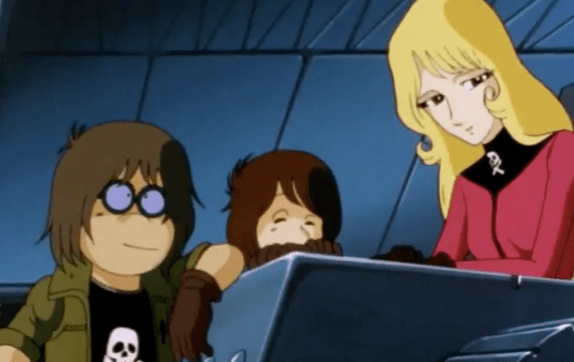
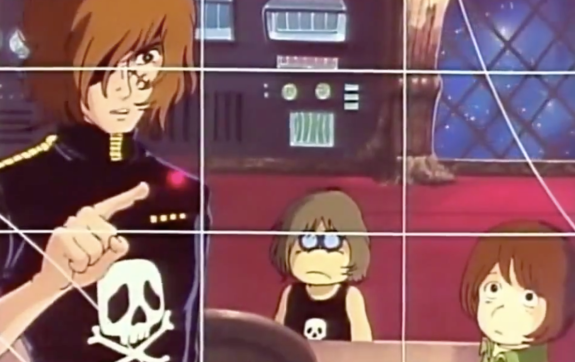
I hope you remembered all those important character traits, because they all take a very heavy blow in 2013 Harlock. At this point, I’ve got to mention something: this isn’t the first time an attempt at a darker and more threatening Harlock has been made. The 2003 Endless Odyssey had Harlock be a more stoic (almost to the point of self-parody) man who had no problem killing humans, but other than that, he was still mostly the same person. However, the best I can say about him in this film is that he’s recognizable from a purely visual standpoint, and, in all other respects, he’s about as far from the original character as you can get.

In this adaptation, Harlock isn’t fighting an alien race – instead, he’s pitted against the all-human Gaia Sanction, a powerful authoritarian government who, like the Illumidas, want to control Earth and are secretly hiding the true state of Earth, which has really become a barren wasteland, from everyone. By pitting Harlock against an all-human enemy, the aspects of his code of honor and self-control are completely thrown out of the window. Likewise, his entire demeanor has changed as well. Sure, Harlock’s attitude has been subject to change, i.e the goofier Harlock seen in Zero, but this time, he’s like the Harlock in Endless Odyssey, only 10 times more stoic, and is rarely ever seen interacting with any of the members of his crew, aside from giving them orders when in battle and the occasional conversations with Yama, the protagonist. Also, remember how I said Harlock would accept anyone onto his ship on the condition that they fight for what they personally believe in? Yeah, no. Within the first few minutes of this film, you see Harlock’s crew send a few men who wanted to enter the ship plummeting to their deaths (it’s okay, they survive somehow) because they didn’t give the crew the ‘correct’ answer for wanting to join them. Something else occurred to me upon rewatch, and that was how little screen time he actually has. In short: I’m pretty sure Jar Jar Binks had more screen time in all three of the Star Wars prequels than Captain Harlock did in a film called, y’know, Captain Harlock. This, in turn, means that Harlock has no real character arc or development, which, in every other adaptation of anything from the Leijiverse, he would get, no matter how big or small his role in them are. Case in point: in Adieu Galaxy Express 999, where Harlock is merely a cameo role, he learns that, in the end, sometimes he can’t save everyone, and he grows more supportive of Tetsuro (the main character) as the story goes on.

But I haven’t gotten to the worst part of his character yet. If that were it, I could argue that he’s still fighting for a noble goal, which is bringing freedom back to Earth, even if he’s got just about as much personality and charisma as a soggy paper towel. However, the filmmakers decided to take a darker approach here too, and it ended up being the worst decision ever made. Take a sip, because this is going to be a bit hard to digest. So, almost around the halfway point, we the viewers learn the biggest plot revelation by far: Harlock himself was the man who inadvertently destroyed Earth using Dark Matter. This comes as a shock to the whole crew, but it turns out that there’s another twist – that Harlock’s cure for all this is worse than the disease. It turns out that, after years of outright lying to his crew that they were going to find a way to reverse time to save Earth, his real plan is to create a black hole using Dark Matter, which will – wait for it – destroy the entire universe, which in turn will trigger another Big Bang, and thus the universe will eventually be reborn. Furthermore, this occurs around the hour mark (like I previously mentioned), and, combined with his scant screen time thus far, new viewers are going to feel very confused, since they barely know him enough to agree with him or want to see him succeed. With this revelation, the Harlock who always believed in hope and would protect Earth with his life is gone, and is replaced with a borderline psychopath. Moreover, the aforementioned Dark Matter incident, like a superhero origin story, gave Harlock the power to accomplish nearly impossible feats and made him immortal. Now I can truly say that 2013 Harlock isn’t even human anymore. He just isn’t, and it’s honestly saddening.


PART 3: A STUDY IN CHARACTER ASSASSINATION 

(EVERYONE ELSE EDITION) 

Screen Shot 2018-08-12 at 6.17.58 PM.png

(Just a small part of Harlock’s crew! From left to right: Tochiro, Tadashi, and Kei Yuki)

Although Harlock is the title character and face of the franchise, Harlock wouldn’t have been half as interesting without his ragtag crew onboard the Arcadia, who are all unique, have their own goals, and have good reasons to be loyal towards their captain. These characters, besides being fundamental parts of Harlock’s quest, also have their own character arcs, and they learn as much from Harlock as Harlock learns from them. Alas, these characters were not spared from this adaptation either. I’ll try not to go into too much detail, seeing as this whole thing is already quite long, but I’ll try to get my point across as much as I can.

First up is La Mime, the last-of-her-kind, harp-playing, alien woman who serves as Harlock’s assistant and one of his closest friends, and who is usually the first to warn the crew of any danger. Although her look here has completely changed, opting for a more green color palette and a pirate uniform instead of her usual alien garb, she’s one of the few more familiar faces in this film. However, she doesn’t exactly have much character, and I could just describe here using one word: “ethereal”. Her role isn’t exactly touched upon, and her relationship with Harlock is barely alluded to. Moving on…

Next is Kei Yuki, the naïve young bridge officer and lieutenant with a passion for science who fights for freedom on behalf of her dead father, who was killed by the Illumidas. In this film, she’s your typical “strong female heroine” who can fire two guns at the same time, has the attitude of a drill sergeant, and, instead of having a solid moral compass, is hopelessly loyal to Harlock, even after finding out about his true plan. Also, fanservice. Seriously, was that zero-gravity shower scene necessary?

Last but certainly least is first mate Yattaran (whose name is changed to Logan in the dub), the socially awkward and introverted man who nonetheless has a great aptitude for physics and a love of building models of ships and airplanes. Like Kei, his character is changed to the typical “boisterous, annoying, and sarcastic nerdy guy” fare. Nothing much to say here.

Special mention must go to Tochiro Ooyama. Poor, poor Tochiro. Now, I could write essay upon essay on why the friendship between him and Harlock is incredible and can move even the toughest guy alive to tears, but point being: Tochiro is probably the second most important character in the Harlock mythos, and the relationship between the two is consistently expanded upon in every adaptation. Even in adaptations where Tochiro has died before the story began, his character as a ghostly presence in the ship’s main computer is at least mentioned, and sometimes there are whole flashback episodes dedicated to telling the two’s backstory, with the 1981 film Arcadia of my Youth being one of the best. Here, he only appears once or twice in Harlock’s flashbacks, has zero speaking lines in said flashbacks, his relationship with Harlock is only given a passing glance, and his ‘ghost in the computer’ shtick is hardly touched upon, making me wonder why they even added that detail in the first place. Poor Tochiro. You deserved better.


PART 4: YAMA AND THE PAPER-THIN CONFLICT

Screen Shot 2018-08-09 at 5.20.34 PM.png

Despite Harlock being a fantastic and iconic character, he, most of the time, isn’t exactly the main character per se. In the original manga, the 1978 TV anime, and a few other adaptations, this position is handed to Tadashi Daiba, a young man who witnessed his father, the famous scientist Dr. Daiba, being killed by the Illumidas. Now filled with a need for fight for freedom more than ever, Tadashi joins forces with Harlock, who greatly admired Dr. Daiba for standing up to the corrupt Earth government. Although starting out as an audience surrogate, Tadashi eventually experiences conflict and grows because of it; by the end becoming somebody that he knows he, his father, and Harlock can be proud of.

Yama (or Logan in the dub), who’s essentially this film’s Tadashi (some fans even call him “CG Tadashi”), goes through a similar process: he starts out as a Gaia spy sent to infiltrate the Arcadia, and for a period of time, acts as an audience surrogate, asking plenty of questions about the Arcadia and the like. When it is revealed that Harlock knew from the get-go that he was a spy, Yama has to deal with the conflict of whether or not to join Harlock (thus betraying the Gaia) or returning to the Gaia and continuing to work for his brother Isora (or Ezra in the dub), thus betraying Harlock in the process. While this is an interesting and unique concept in theory, the way it’s executed completely undermines the whole thing.

Yama betrays both sides of the conflict so often in a 2-hour movie that his character arc ends up looking like sine waves, and neither side is fleshed out enough to make you want to root for Yama joining either of them. Harlock’s scenes with Yama are so few and far between that, when Yama betrays the Gaia for him, you don’t really understand it because Yama barely knows Harlock at this point, though by the end of the film Yama  apparently understands Harlock enough to side with him permanently, and even agrees to take up his identity. Likewise, the conflict between Yama and his older brother Isora is only shown in brief character interactions and flashbacks, so when the big reveal comes that the brothers’ childhood friend is only a hologram and has been dead for years, and when Isora destroys her life support system out of anger that she loves Yama more than she loves him, it’s hard to emphasize with Isora since his character doesn’t have much of a presence. This revelation, like Harlock’s, also comes up at a strange point in the movie, making it a lot more of a let down, though I doubt any amount of good pacing could help salvage such an absurd love triangle. I’d say that the closest real bonding moment the two brothers have is when Isora dies, and he, in his dying moments, encourages Yama to join Harlock, which is… very weird. So, while I would’ve loved to see this conflict get more in-depth, the film’s pacing issues and lack of characterization make the whole contention very underwhelming and disappointing.


PART 5: TO CONCLUDE

Screen Shot 2018-08-12 at 6.06.29 PM.png

In conclusion, I’m not against the idea of changing up long-running pieces of fiction. After all, Captain Harlock has existed for a long time, so I can emphasize with the film executives wanting to take the series in a new direction and shed some new creative light onto it. However, when you sacrifice what made the original property so amazing and beloved in the first place in favor of change, the end result is not going to turn out right. And that’s exactly what happened with Captain Harlock 2013.

Sadly, this film is turning out to be one of the most accessible parts of the whole franchise, even landing a spot on one of the most popular streaming services: Netflix. Because of this, I fear that this film is going to be the first Harlock media that new viewers will be exposed to, and I personally do not want this to happen. Space Pirate Captain Harlock as a franchise truly is something special – it’s hopeful, heartwarming, heartbreaking, awe-inspiring, and much, much more. Of course I want more and more people to know about it, I just don’t want it to start with this film. Six months ago, I truly believed that this was one of the best the franchise had to offer, and I’ll tell you this: if I hadn’t reached out and watched more Harlock media, if my experience ended with this film alone, I never would’ve become a fan in the first place. But I’m glad I did. I’ll hereby end this re-examination with this: if you want to get into Harlock, just keep on searching and never lose hope. You’ll find the perfect adaptation that suits you one day. For now, just continue searching in the Sea of Stars. Until next time.